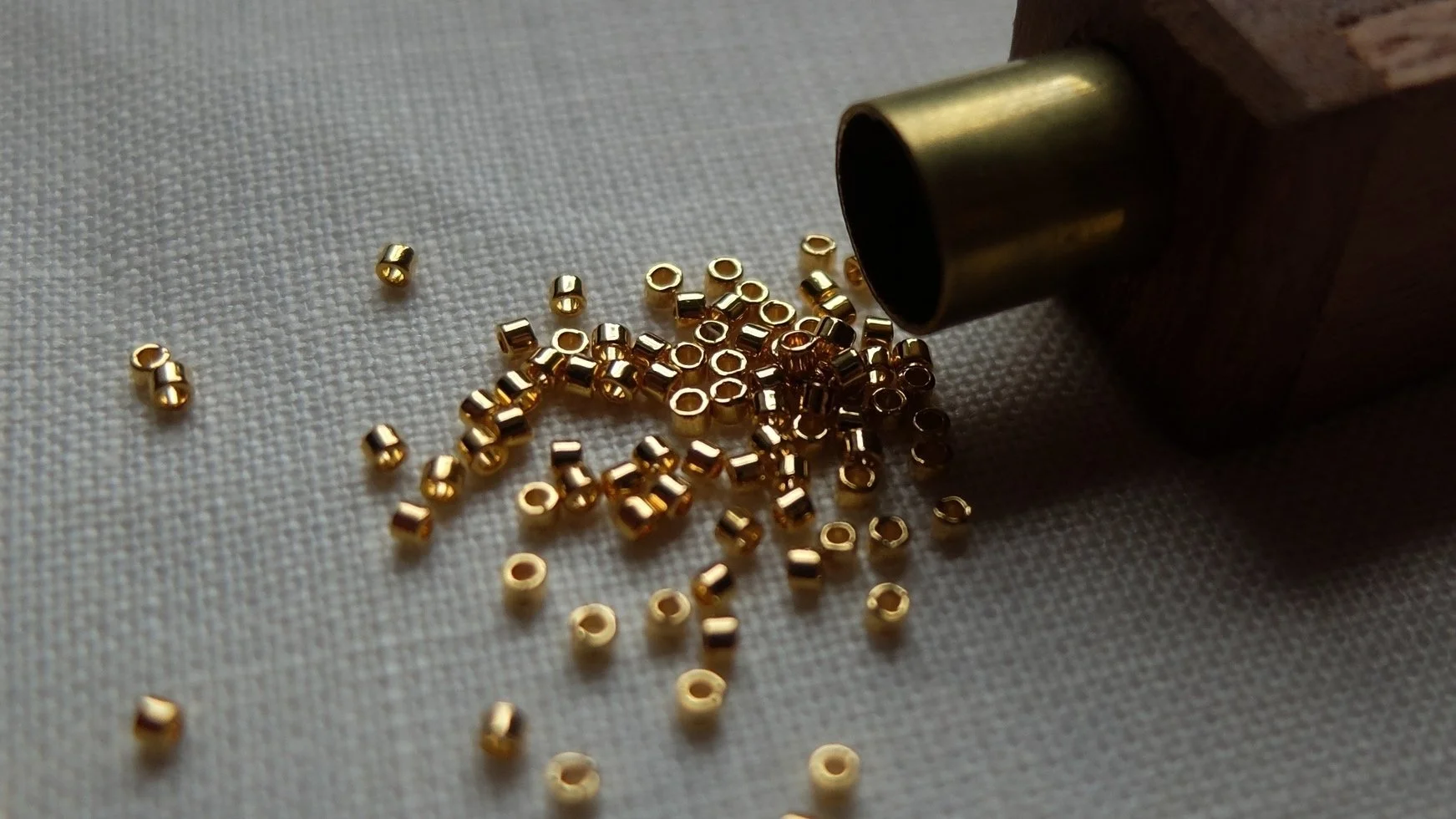
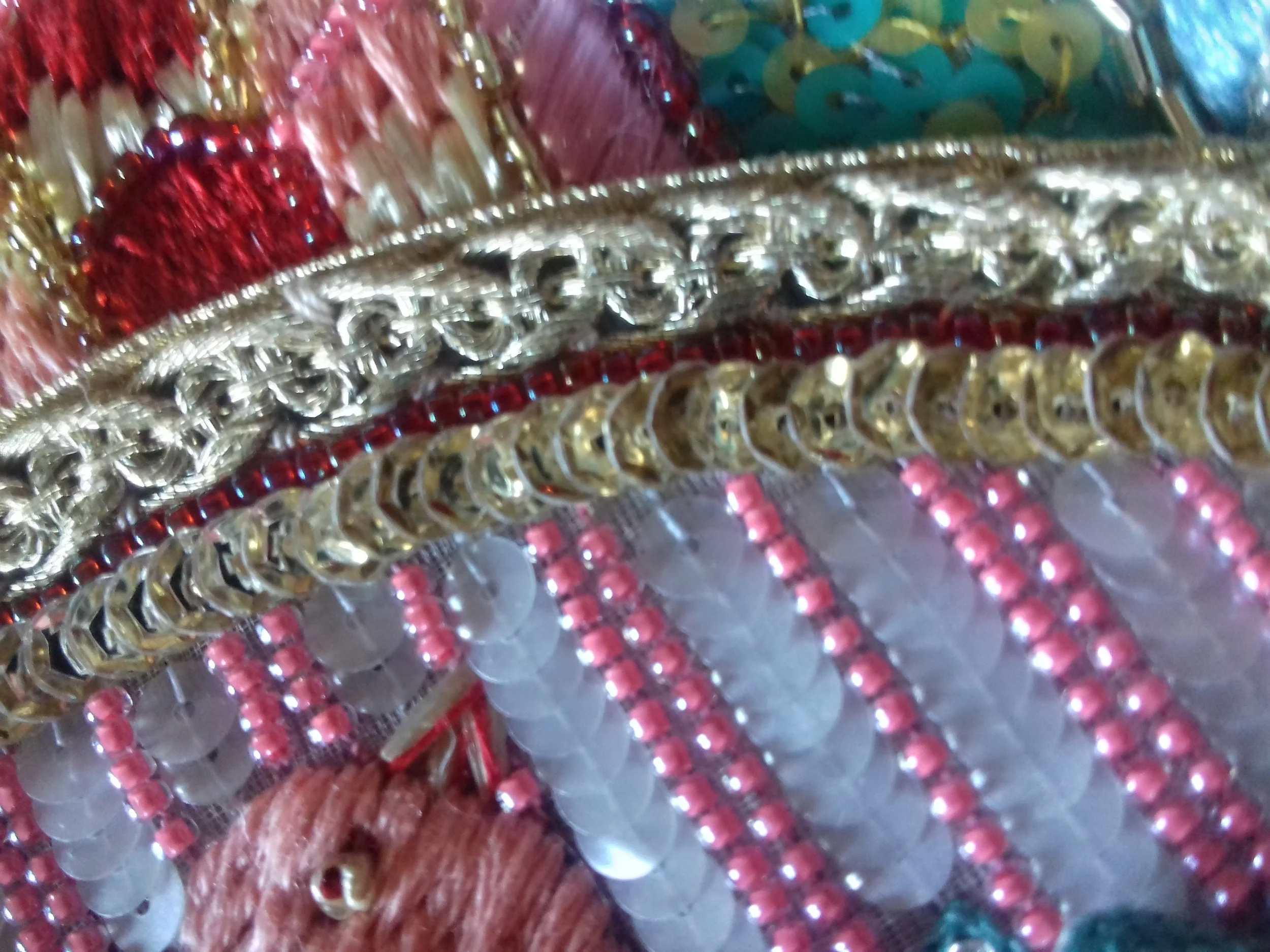
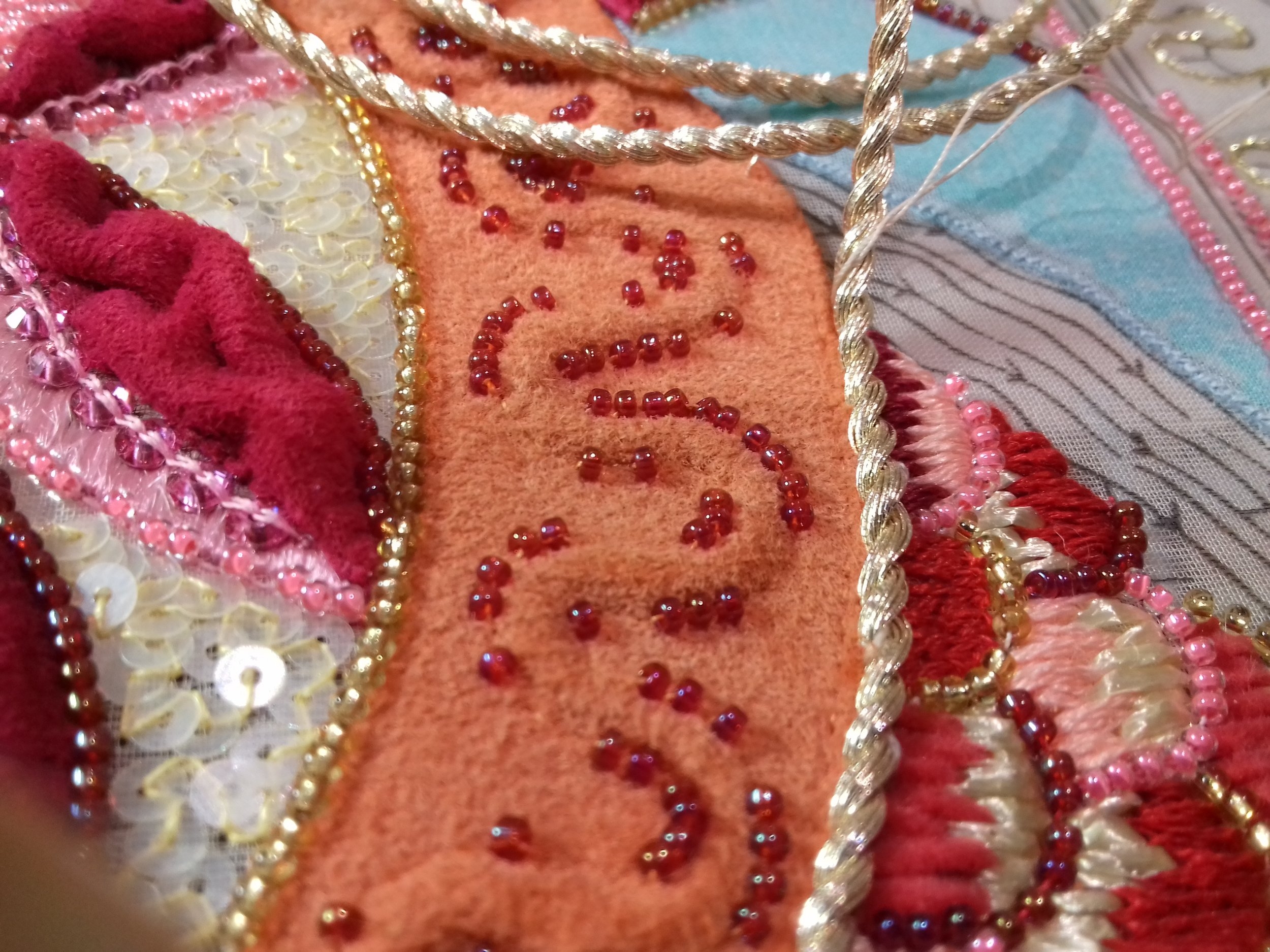
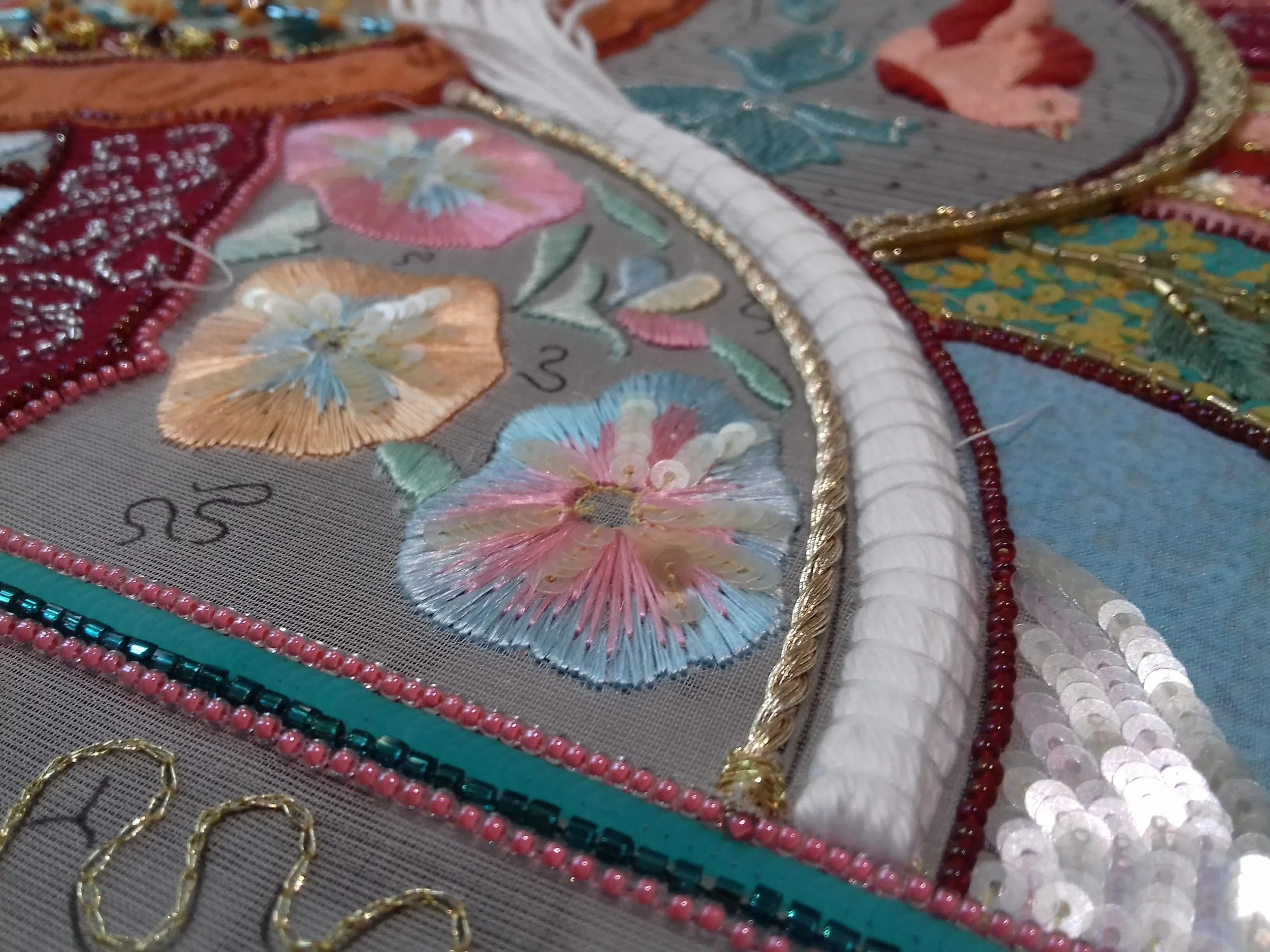
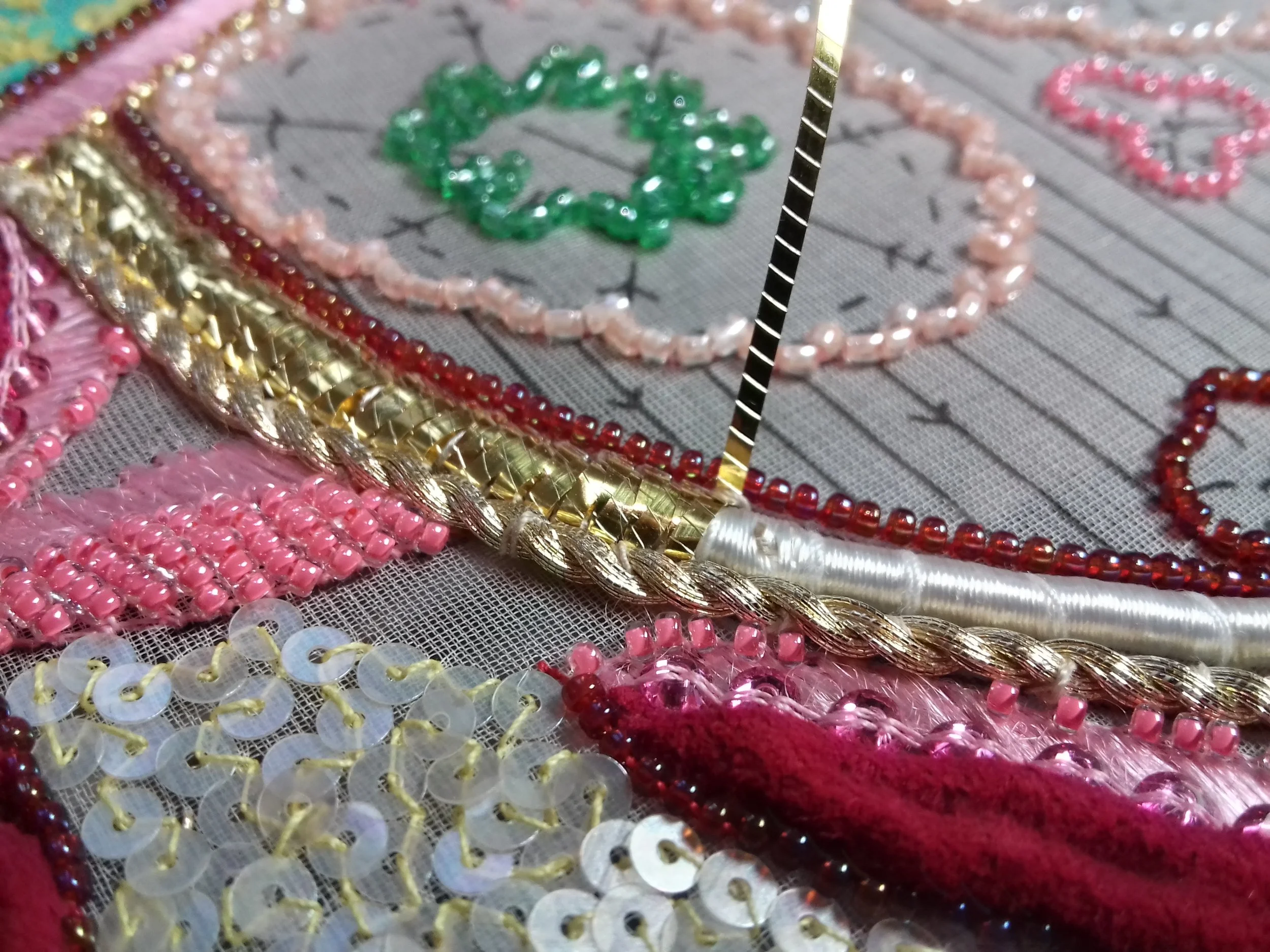
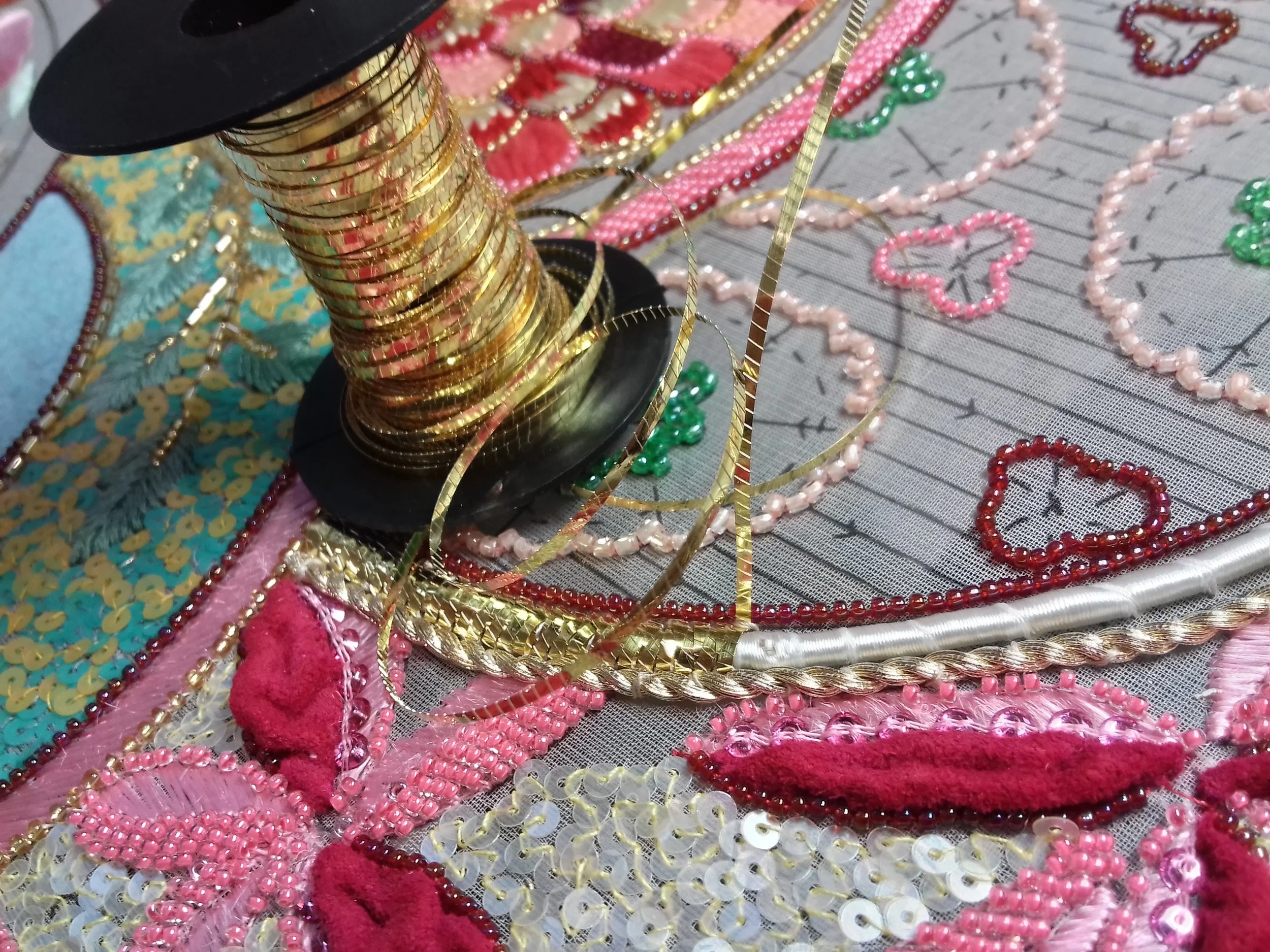
The design is highlighted in several areas with arcs of golden finishings. Each arc is created using a different material and each material required a different technique to apply it, mainly in regards to the stitches used.
Ganse torsadée or twisted braid is made of tiny filaments of gilded threads. I enjoyed using it because there is a pastry called a tornado that is filled with crème anglaise and sometimes chocolate too! It is fixed in place at one end with three stitches, ensuring that each individual filament is enclosed so that the end don't fray. These stitches can be hidden later using gold thread. The thread is then brought up between the two twists and small stitches are used to hold the braid in place. The stitches are evenly placed to encourage the curved arc and they must follow the direction of the braid so that they discreetly disappear behind each twist.
Lame dorée or golden ribbon was applied over padding using the va et vien (come and go) technique. The padding is created first using lengths of cotton thread that are held in place using regularly placed stitches with even tension. The teacher emphasised that if the padding was perfect, with a uniformly curved surface it would be much easier to apply the golden ribbon after. I took the hint and re-did my padding so that the curved surface resembled an elegant chocolate eclair rather than a duty-free toblerone! With the va et vien technique the ribbon is folded over and back on itself leaving small spaces between each pleat. The ribbon gradually progresses over the surface and is held in place with a stitch at the top and the bottom. The idea is to create a smooth surface with the neatest of folds and pleats.
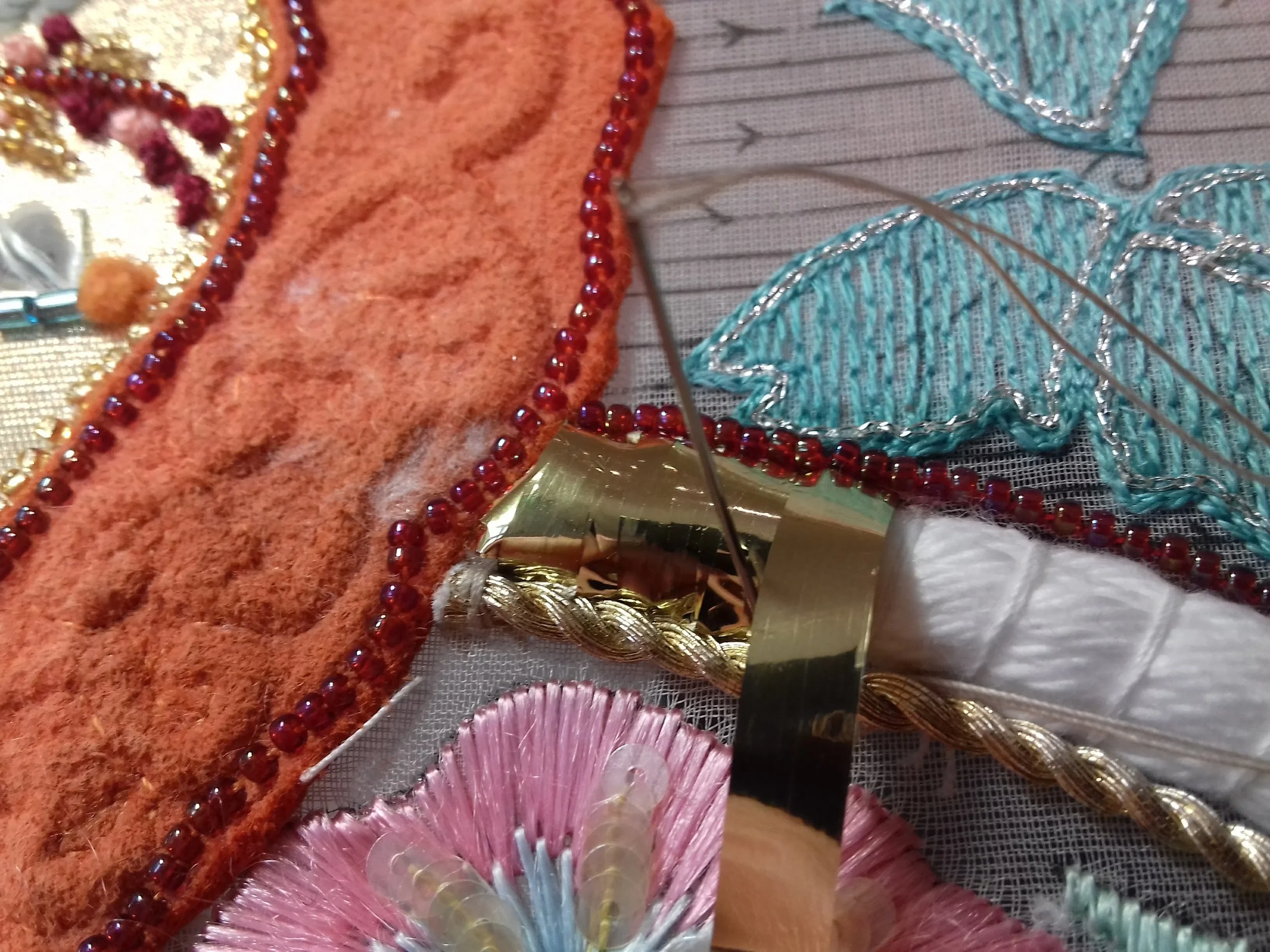
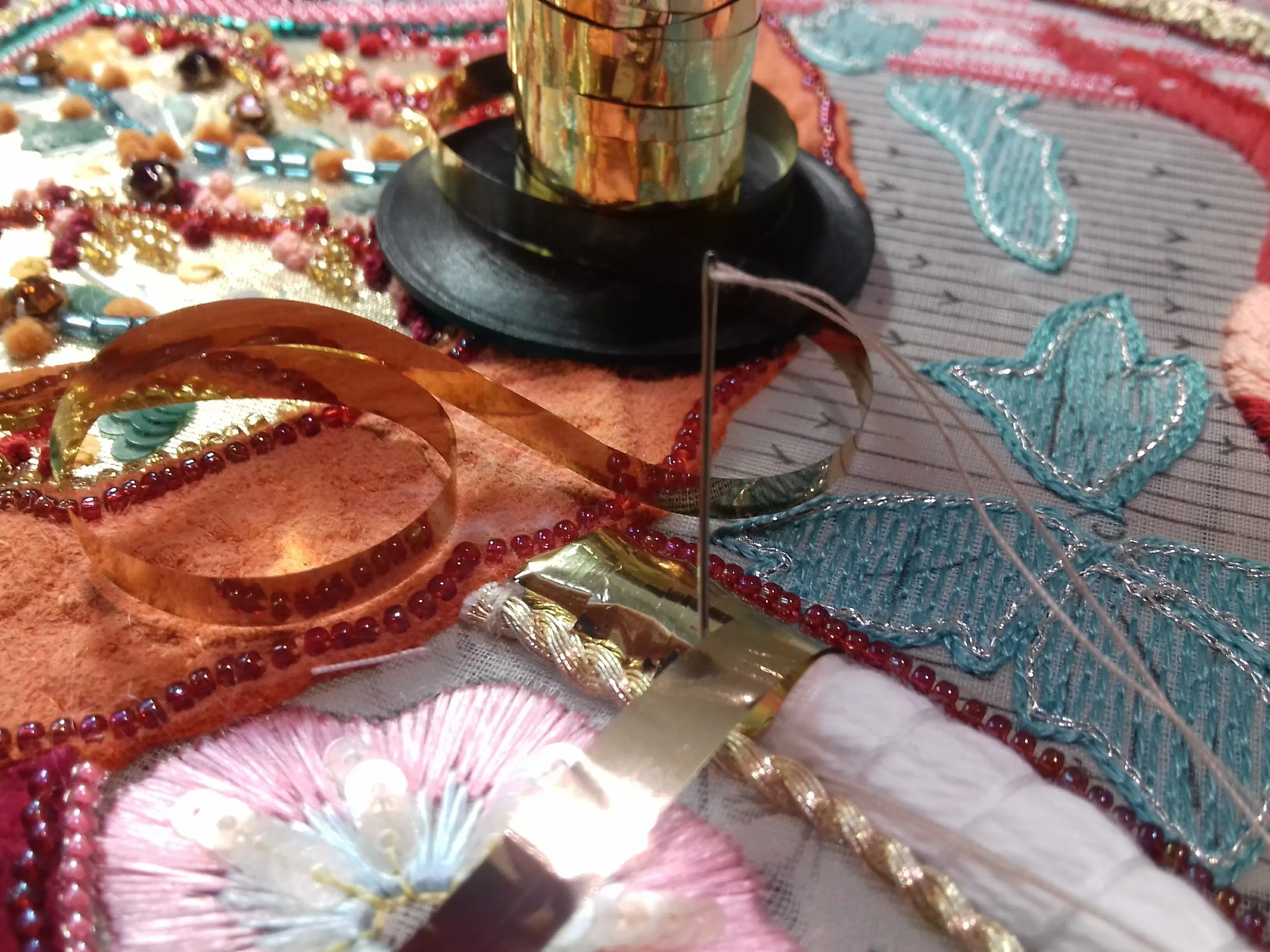
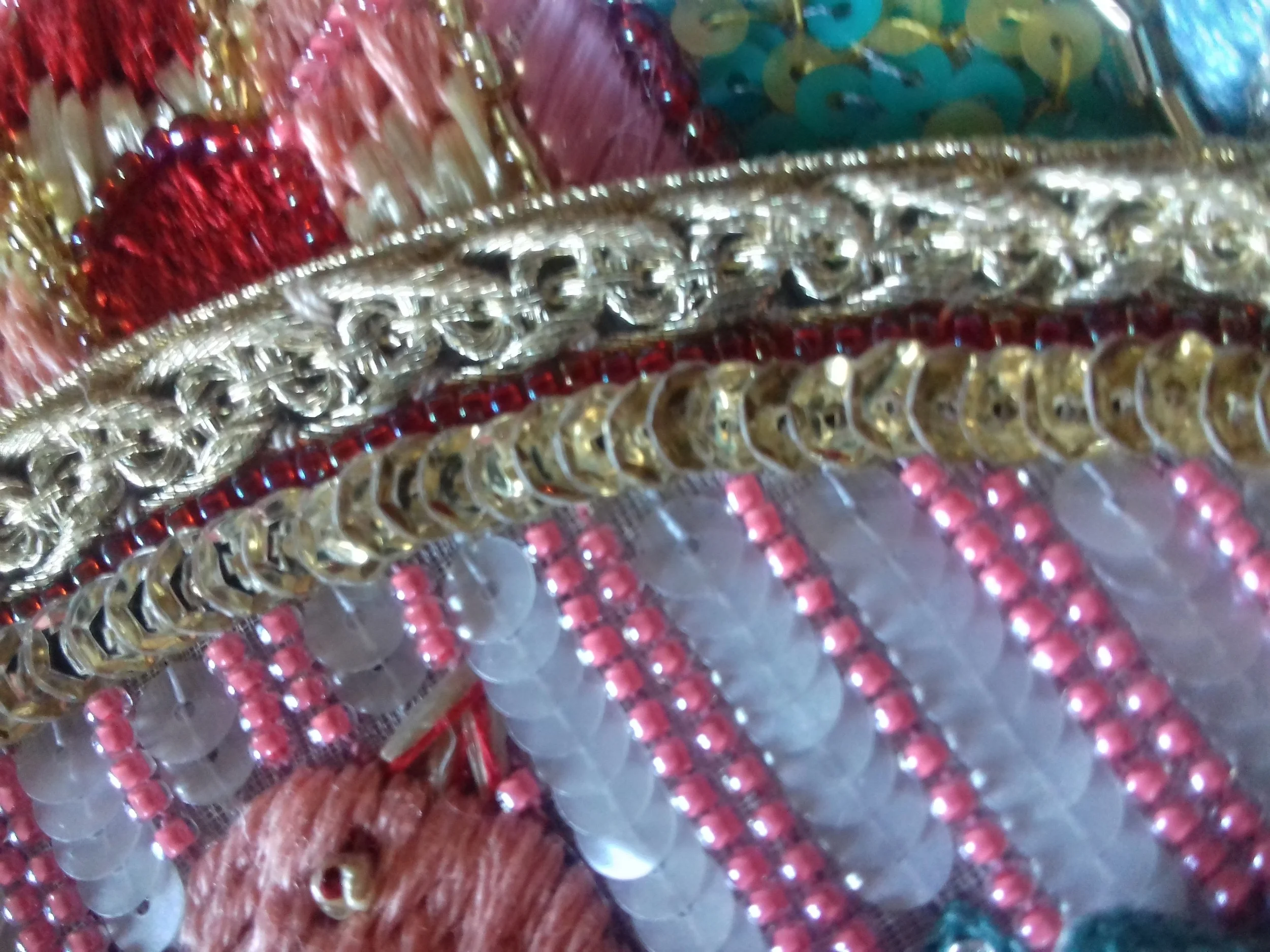
The Soutache or upright braid was an interesting technique because it created a concave relief. An elasticated golden band is stitched in an upright position first by pulling the band and adding tiny stitches to the bottom end that follow the curve of the arc. I was sceptical at first but delighted when it worked! Next the braid is positioned to gently rest against the band at a 45 degree angle from the surface. It is held in place using alternating stitches on the side that is perpendicular to the surface and stitches that come through the top side and are imperceptibly placed between the twists of the braid. Interestingly, it is not stitched to the golden band.
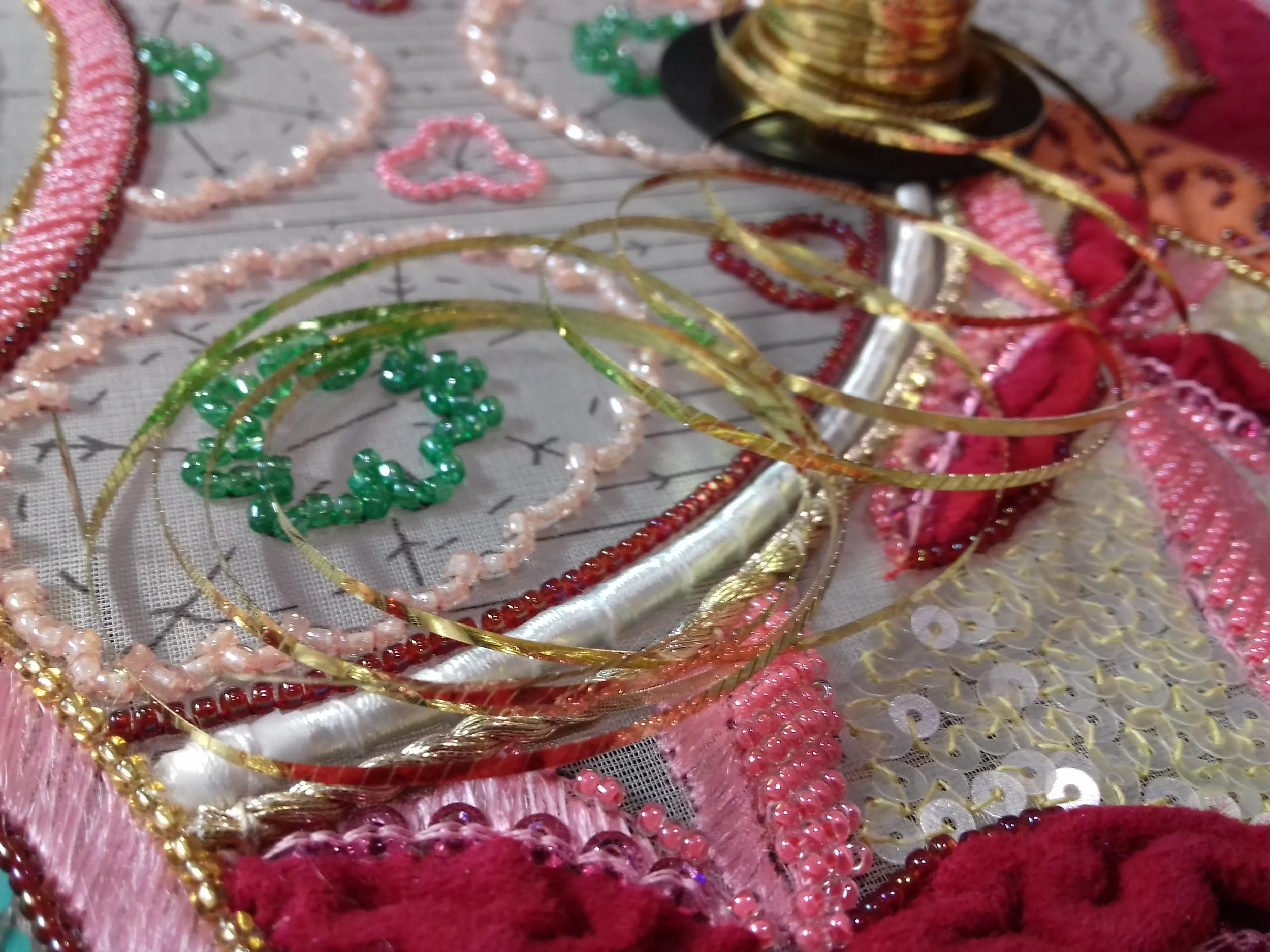
The Queue de Rat or rat-tail cord is applied using the va et vien technique but the padded surface is created using an elastic band. In order to create a smooth and even surface the cord had to be crisply folded with each overlapping layer. The trouble with this was that when I pulled the cord to create the tension needed for the neat folds the linear marks would disappear. I thought I was smoothing over incisions but realised that I was removing tiny decorative filaments in a zig-zag pattern that are applied to the cord. It became a precarious balance between tension and the lightest touch!
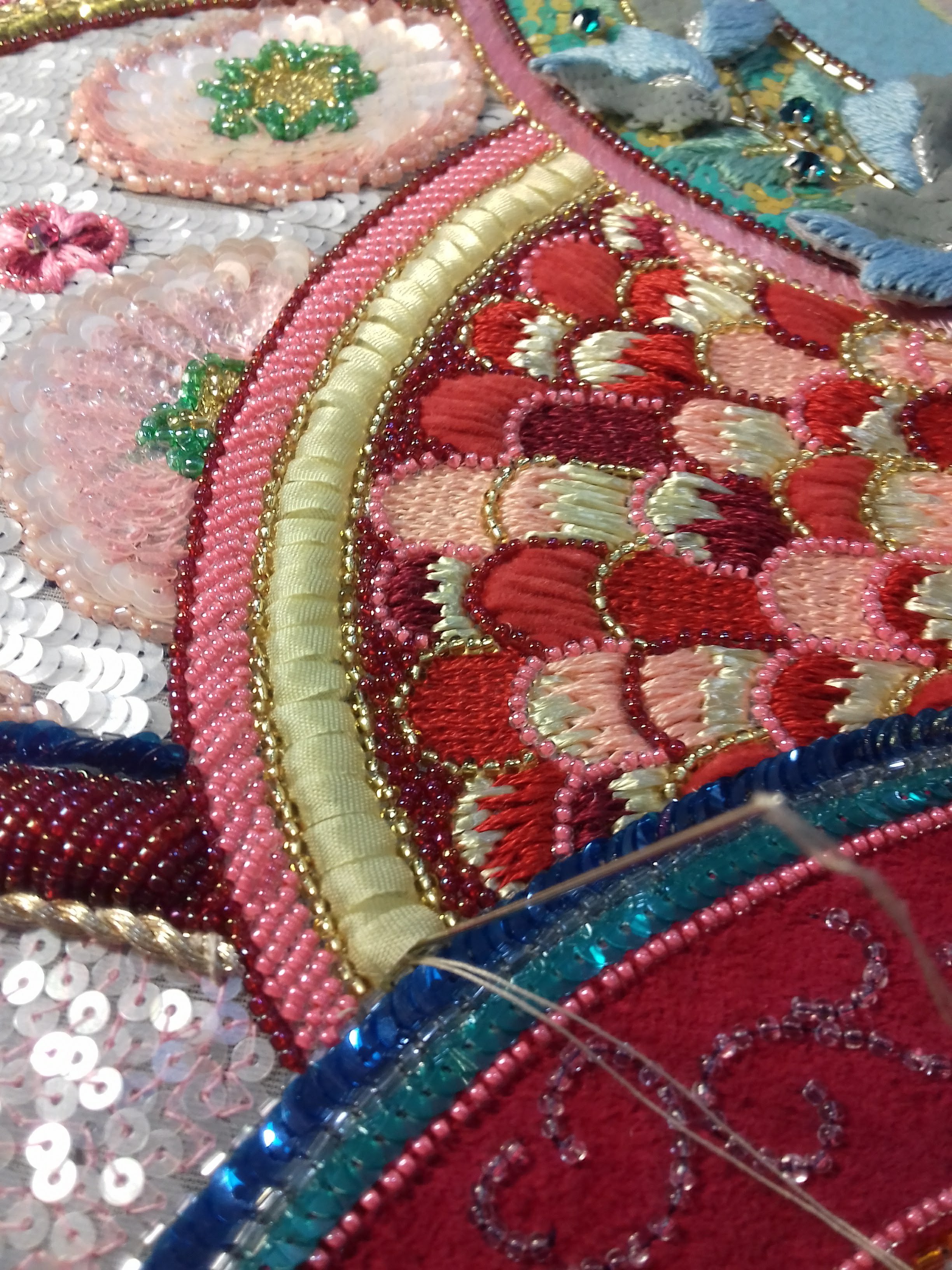
The following techniques were highlighted with outlines of gold transparent beads. The first is the rolled ribbon technique where the trickiest part is keeping the volume equal with each fold. The arc was long enough to involve a centred curve so the folds of ribbon had to overlap in minuscule increments on each side.
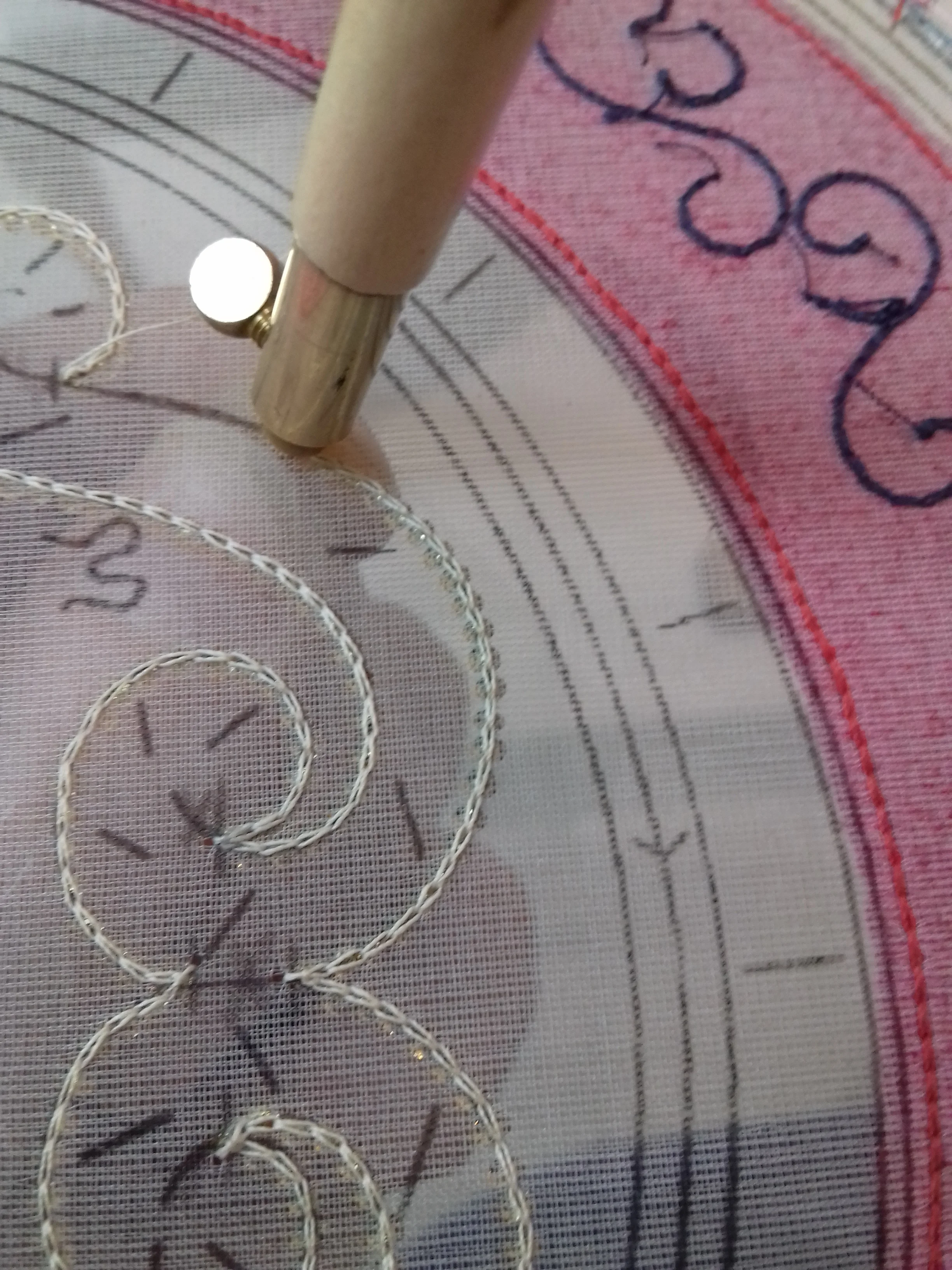
The second was a scroll motif that was made in relief by placing the padding with gradually radiating stitches. Once the padding was completed a light blue satin thread was applied with the direction and length of the stitches emphasising the scroll.
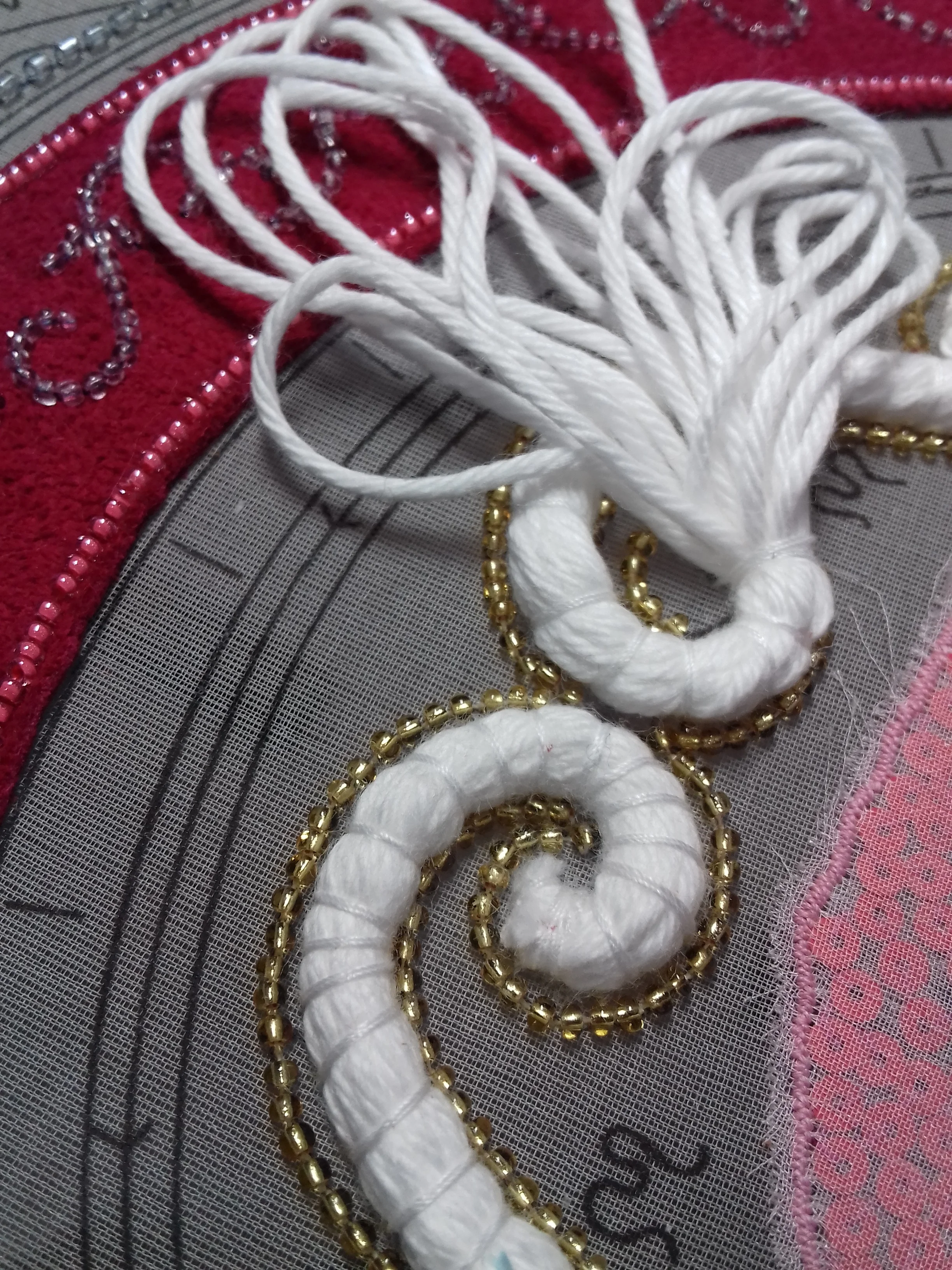
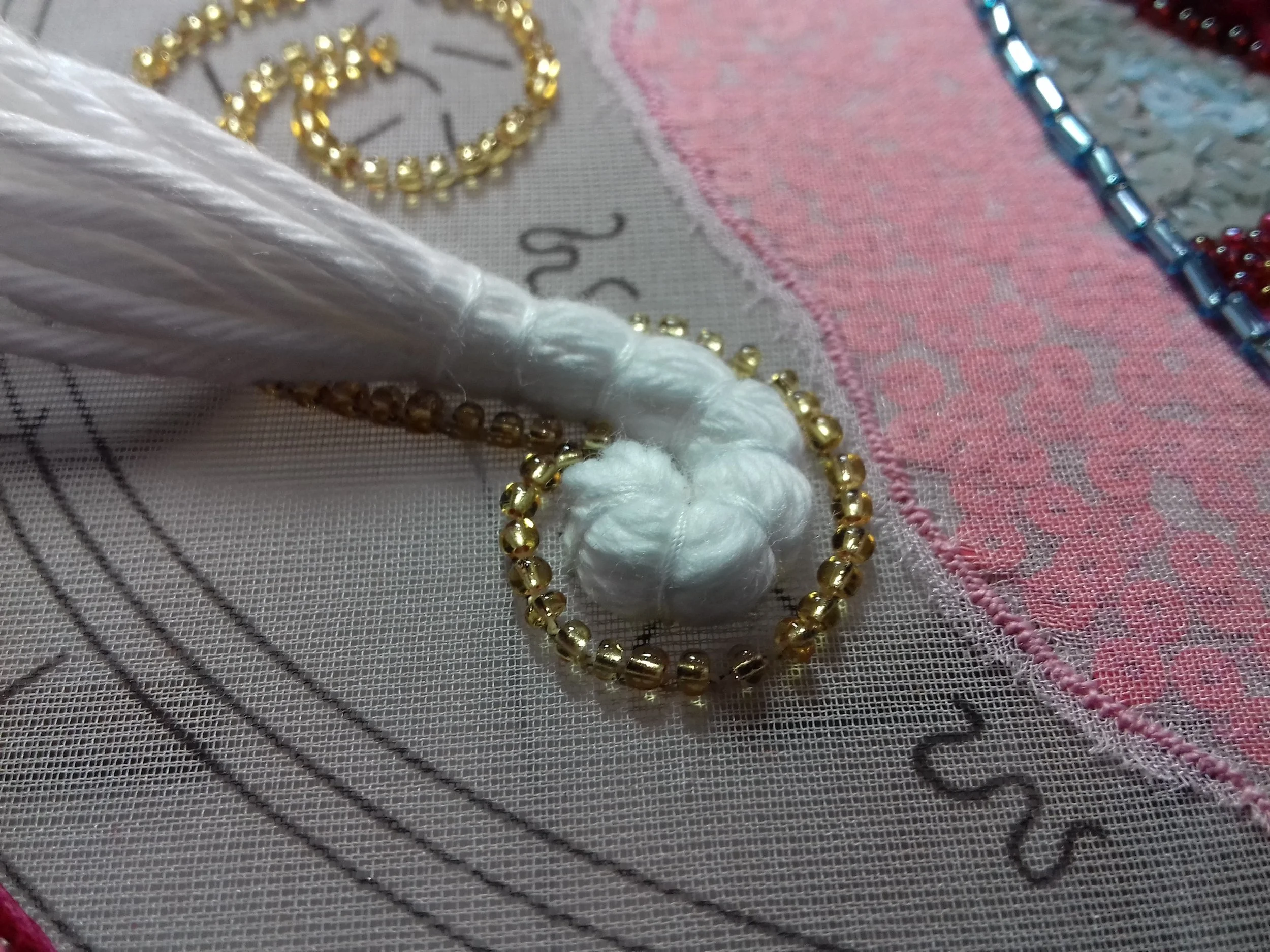
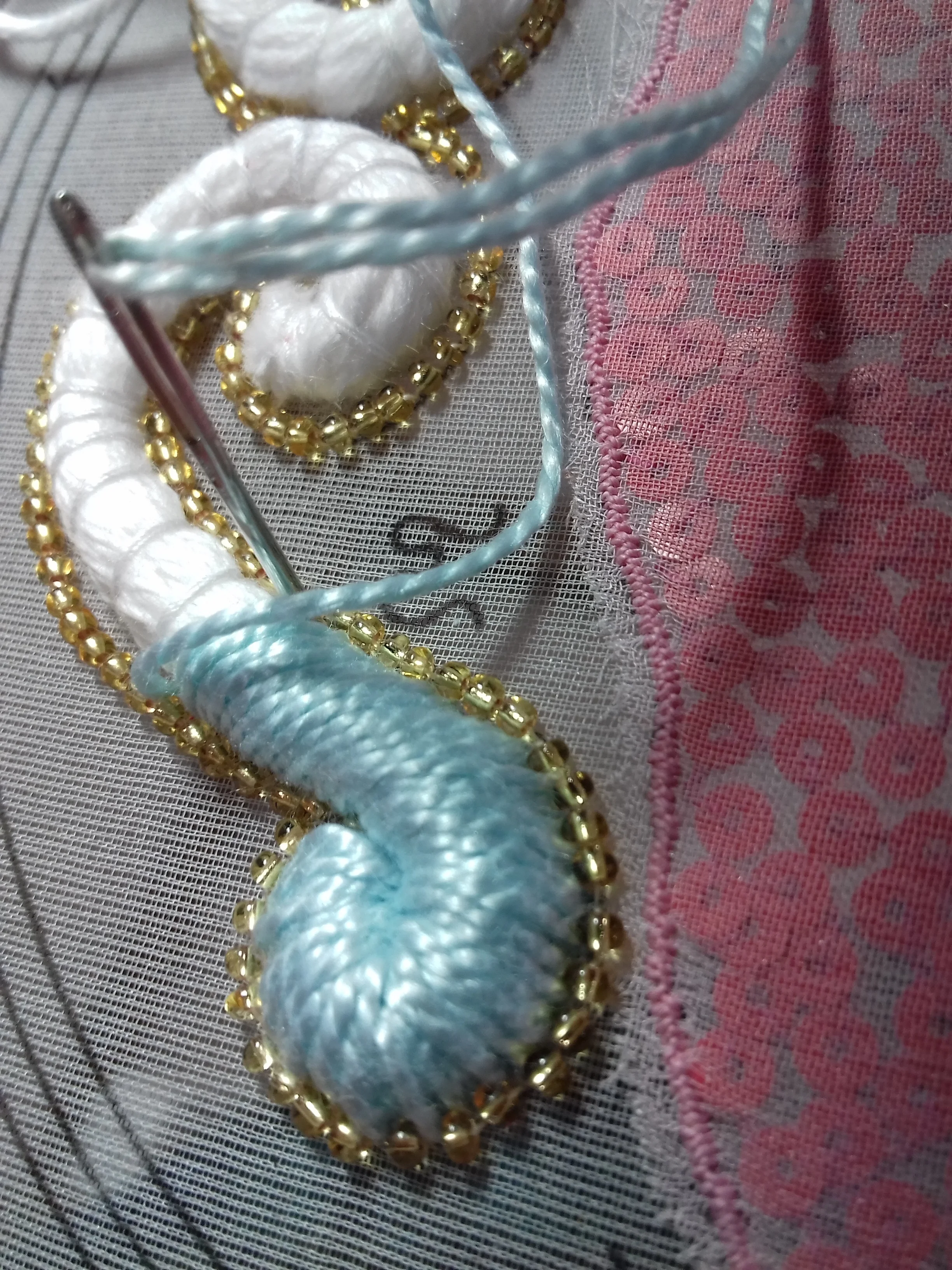
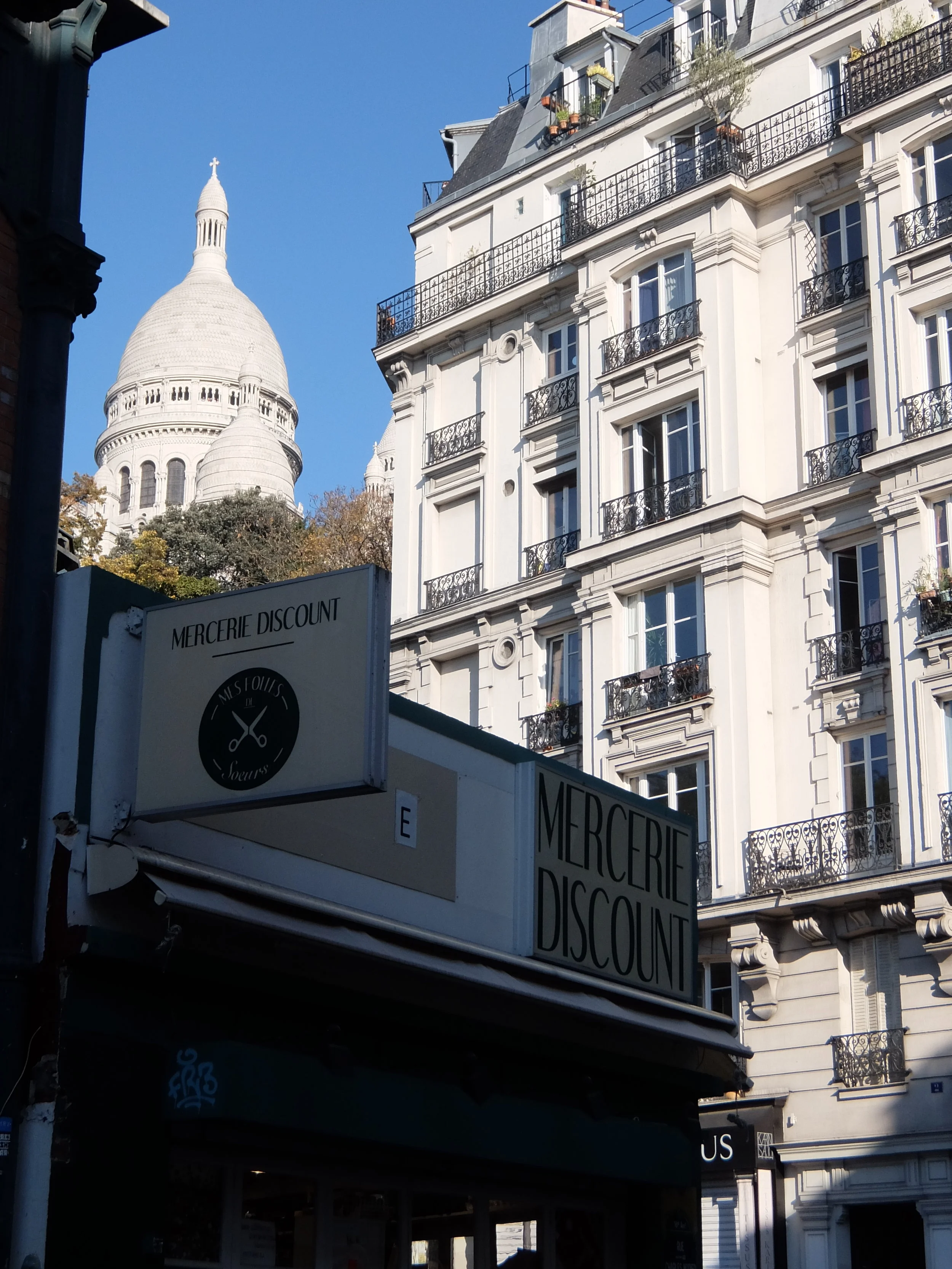
The Mercerie is filled with rolls of these finishings and I would usually walk past with an admiring glance but never considered using Lame dorée, Ganse torsadée, Soutache or Queue du rat in my own work. It's exciting to be introduced to new materials and my head was filled with lots of ideas for future projects to be highlighted in gold!
Textile Tours of Paris
Join Rebecca on a tour of Paris’ charming haberdasheries nestled deep in the winding streets of Le Sentier, the city’s historic textile and fashion district. Enjoy a Sunday morning with Rebecca on a Flea Market Tour as she guides you through the labyrinth alleys of Paris’ oldest marché-aux-puces to uncover hidden treasure troves filled with vintage lace, linen, passementerie, golden threads and gossamer lingerie. To find out more visit Textile Tours of Paris.
