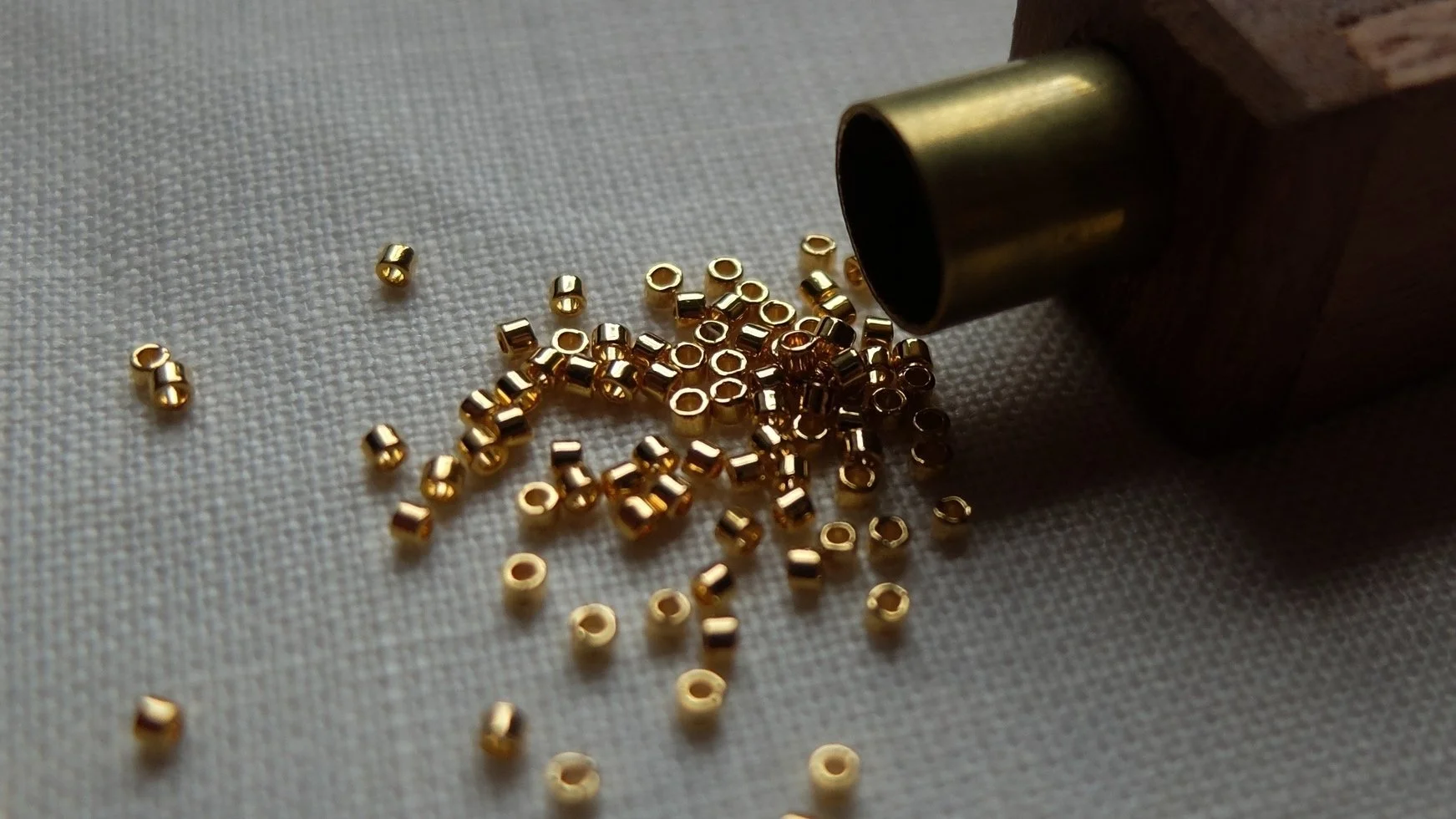
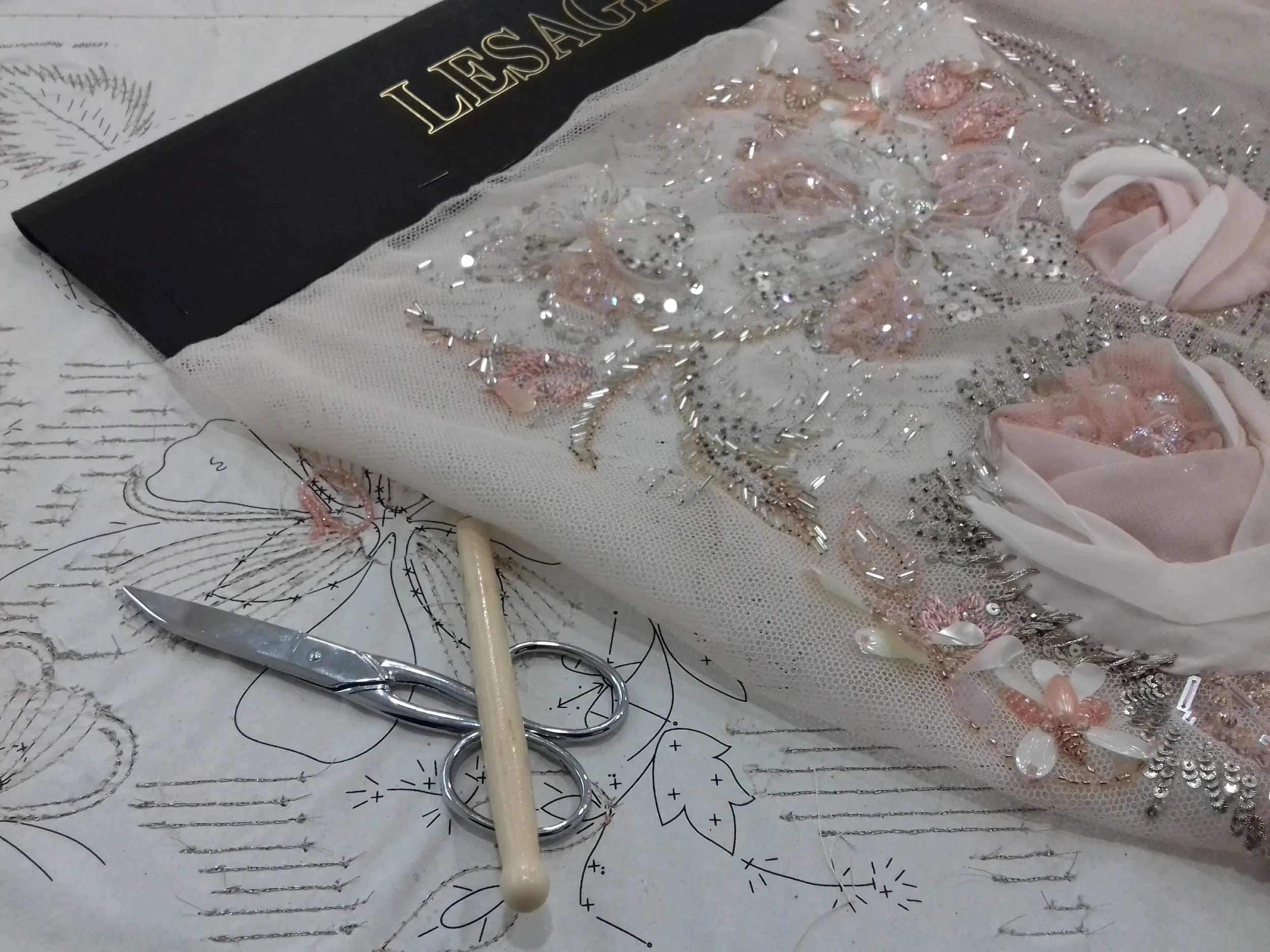
I had decided to stay on in Paris and try my hand at working in the Haute Couture ateliers as a petite main. I was already qualified as a Professional Haute Couture embroiderer and knew that I would need to register with the recruitment agencies specialising in the metier. Before embarking on this next adventure I wanted to complete the Années 50 course as the beautiful design was worked on a tulle background. I had a notion that this would serve me and it transpired much later that I was right…
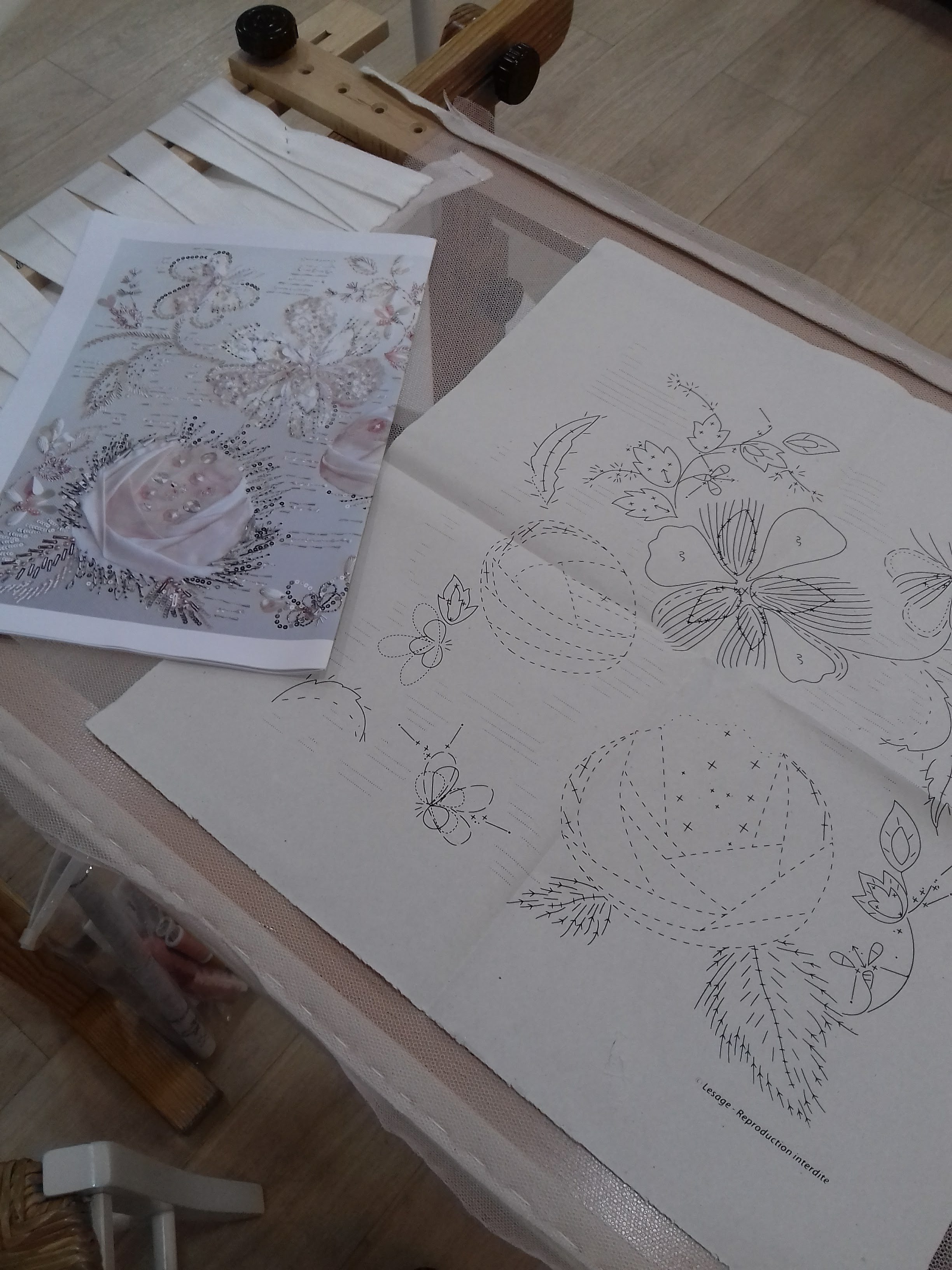
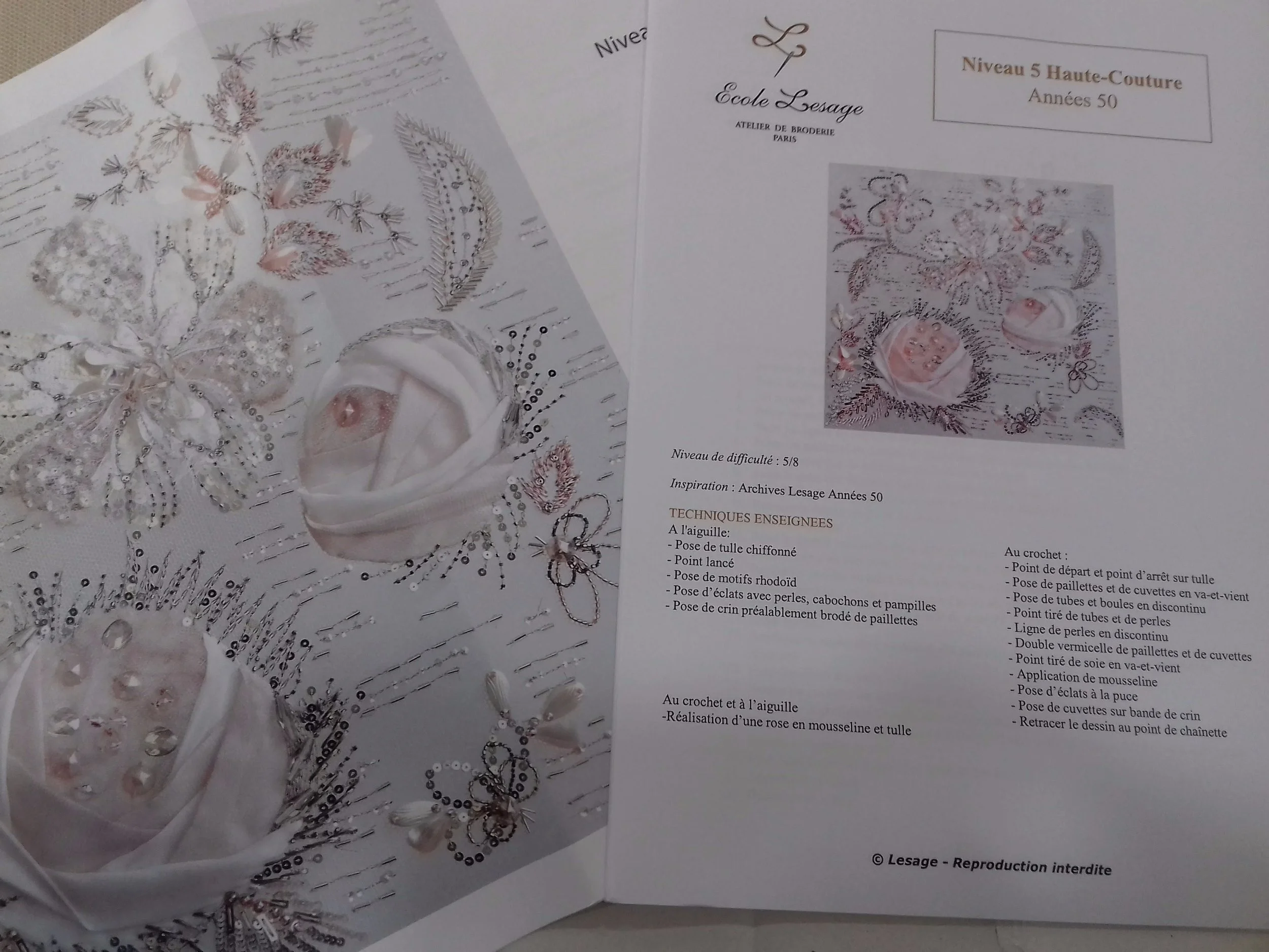
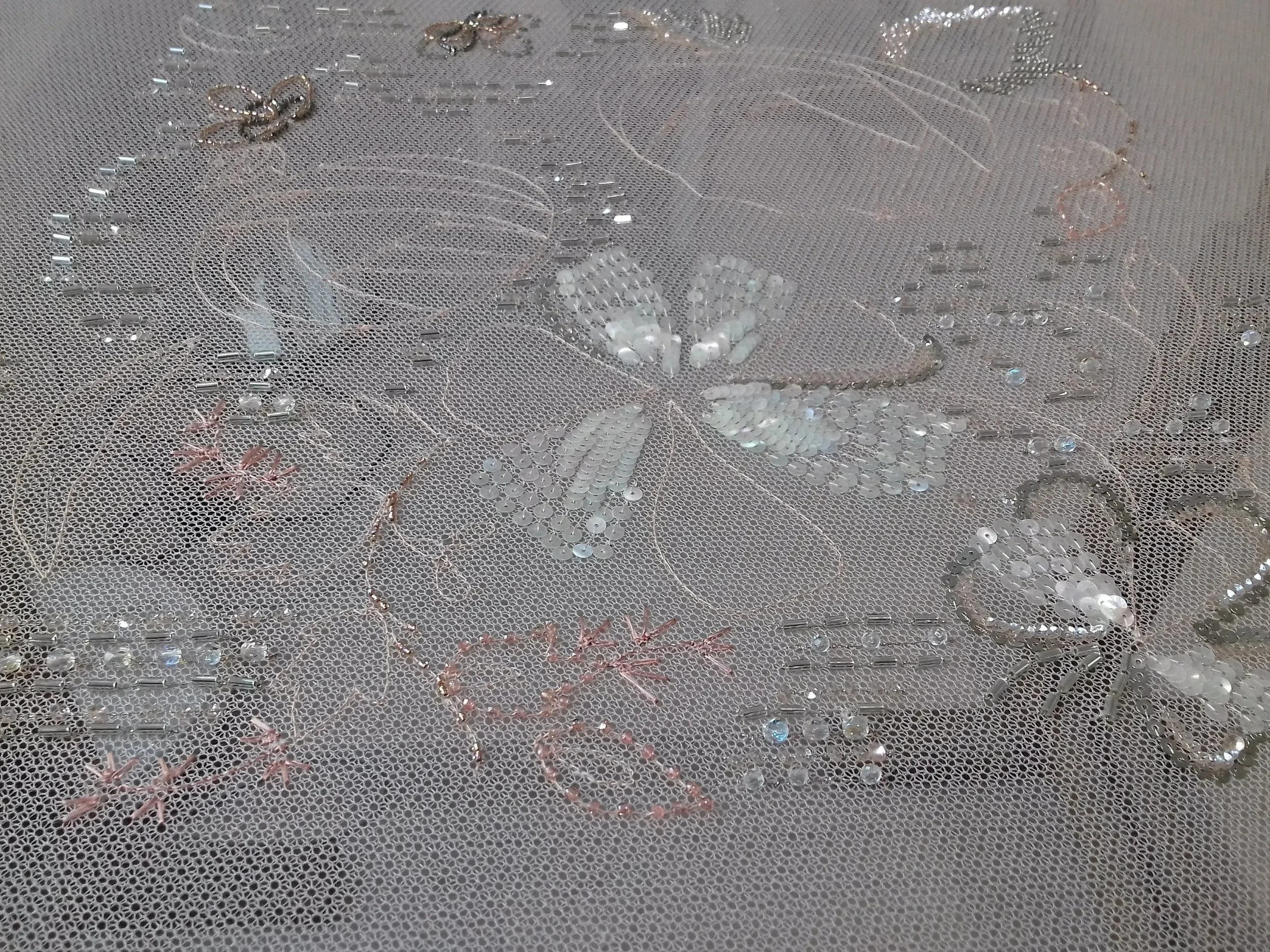
The Années 50 design is inspired by a sampler created for Christian Dior and it is as delicate, ephemeral and feminine as you could imagine. On a background of pink and cream tulle it is a confection of embroidery, beads and sequins in iridescent white, rose pink, antique silvers and transparent crystal.
The first step was to mount the embroidery frame, paying meticulous attention to the network in the two layers of tulle. They had to be perfectly aligned at this stage to ensure the tension was even and I squinted to see the tiny holes, all the time afraid to touch the silk tulle in case I ripped the fragile fibres.
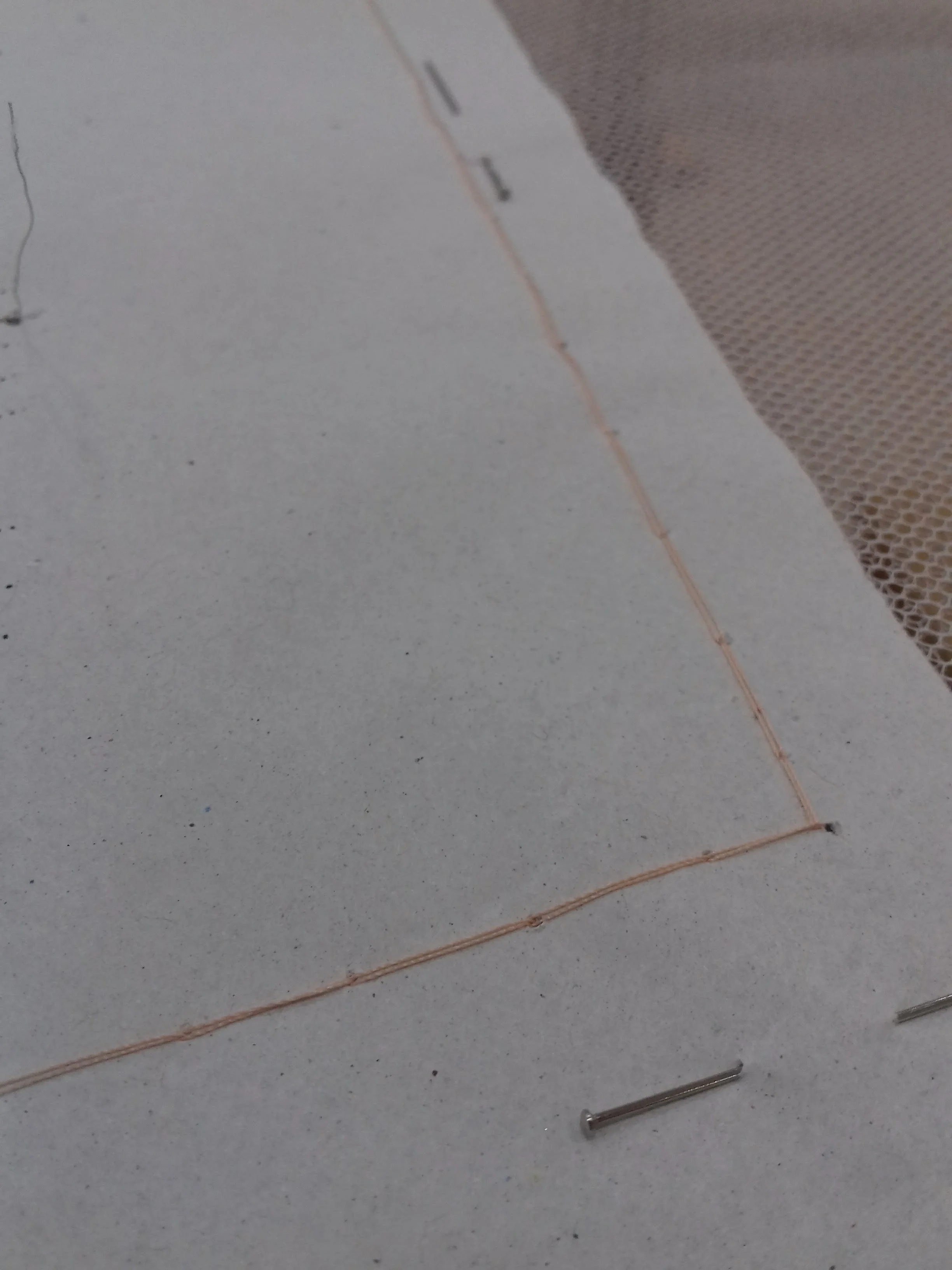
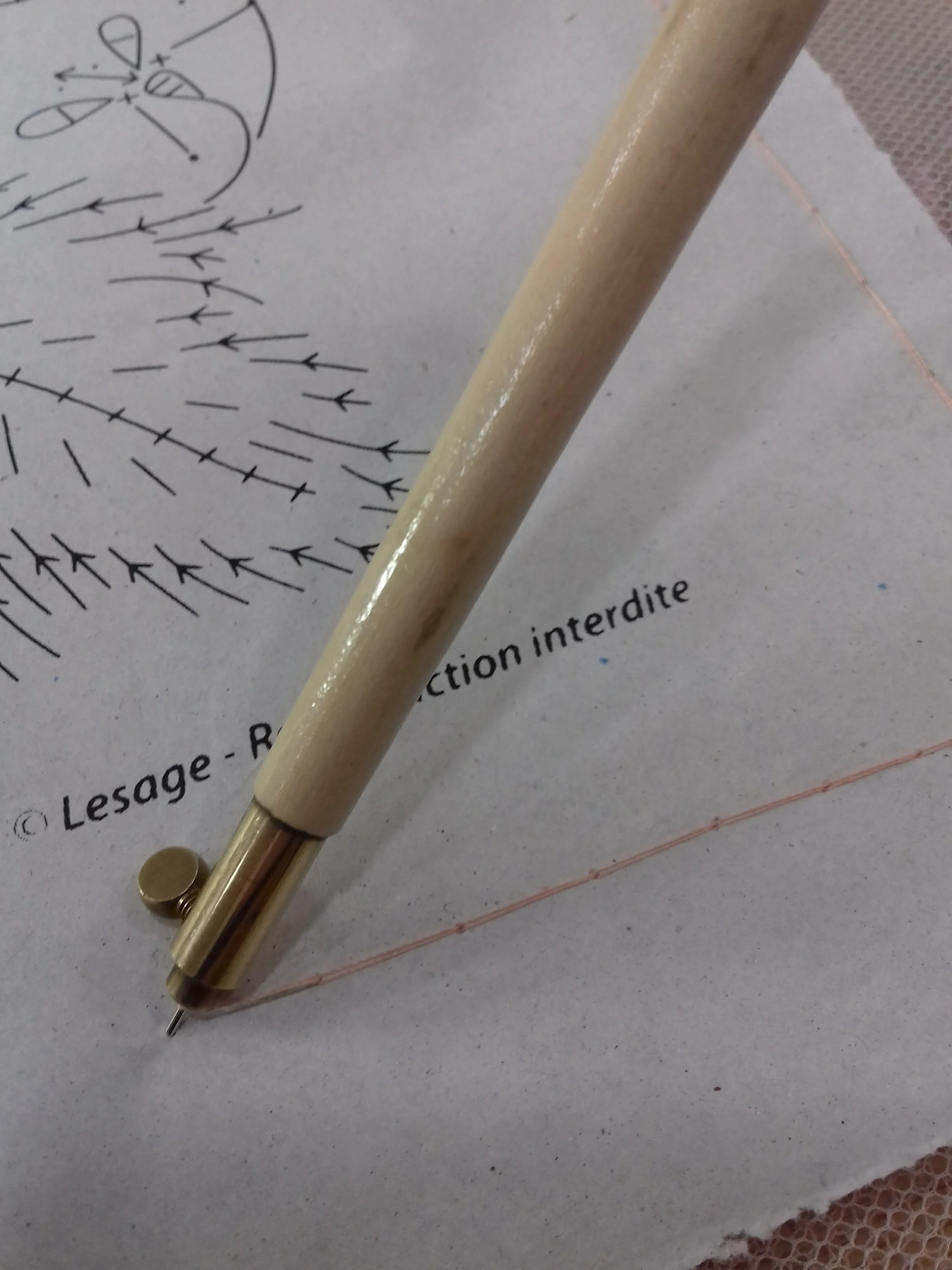
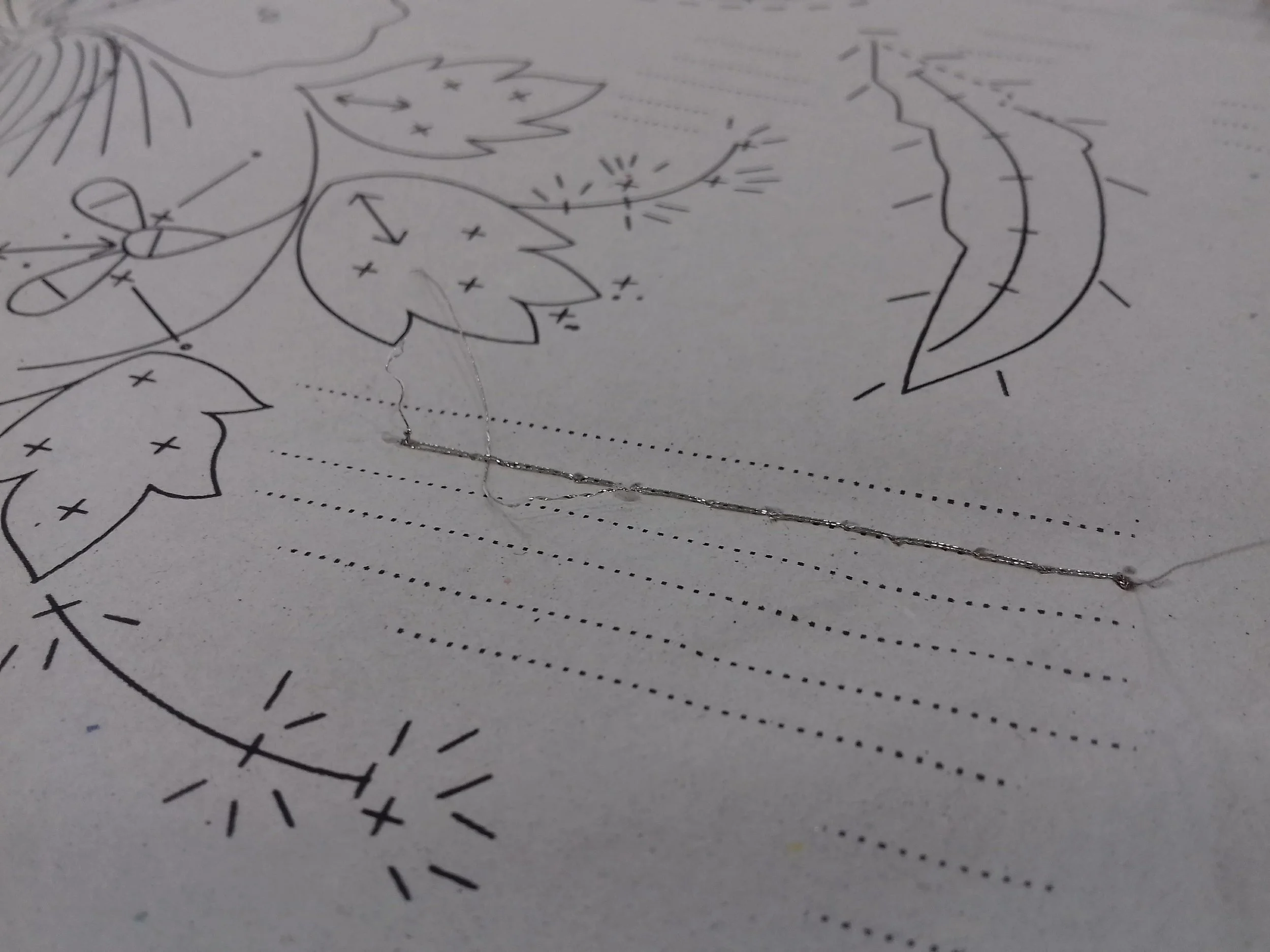
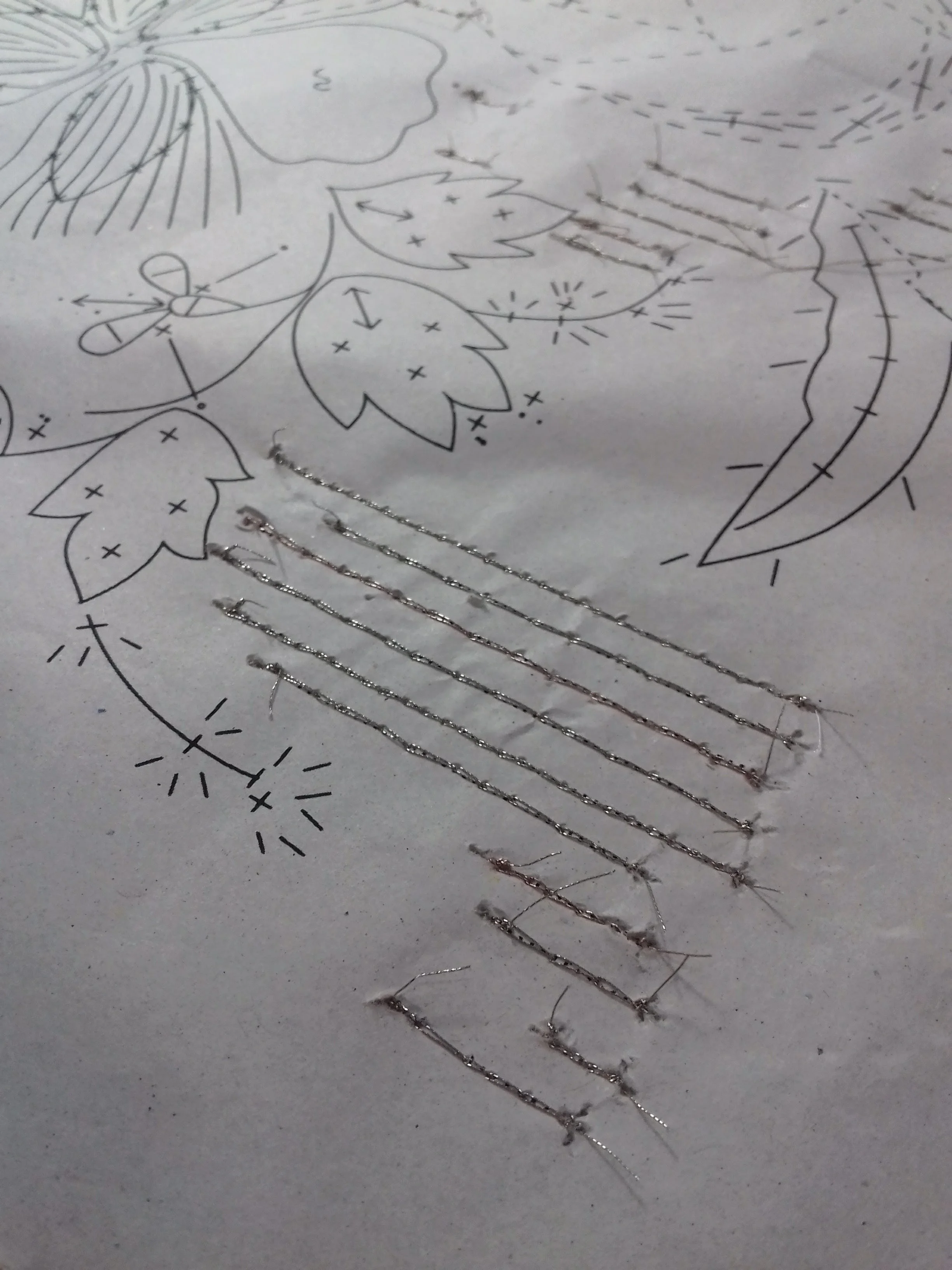
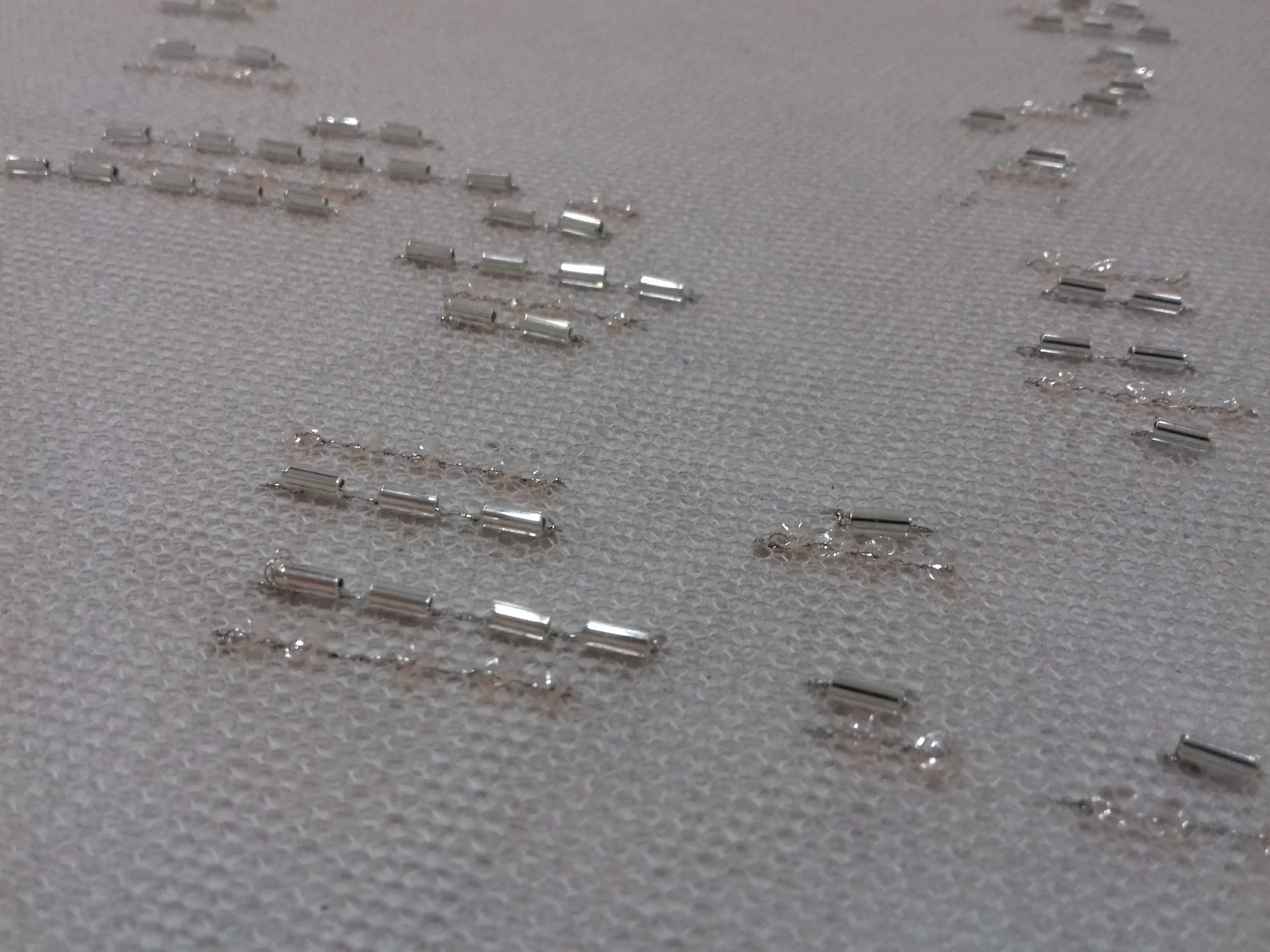
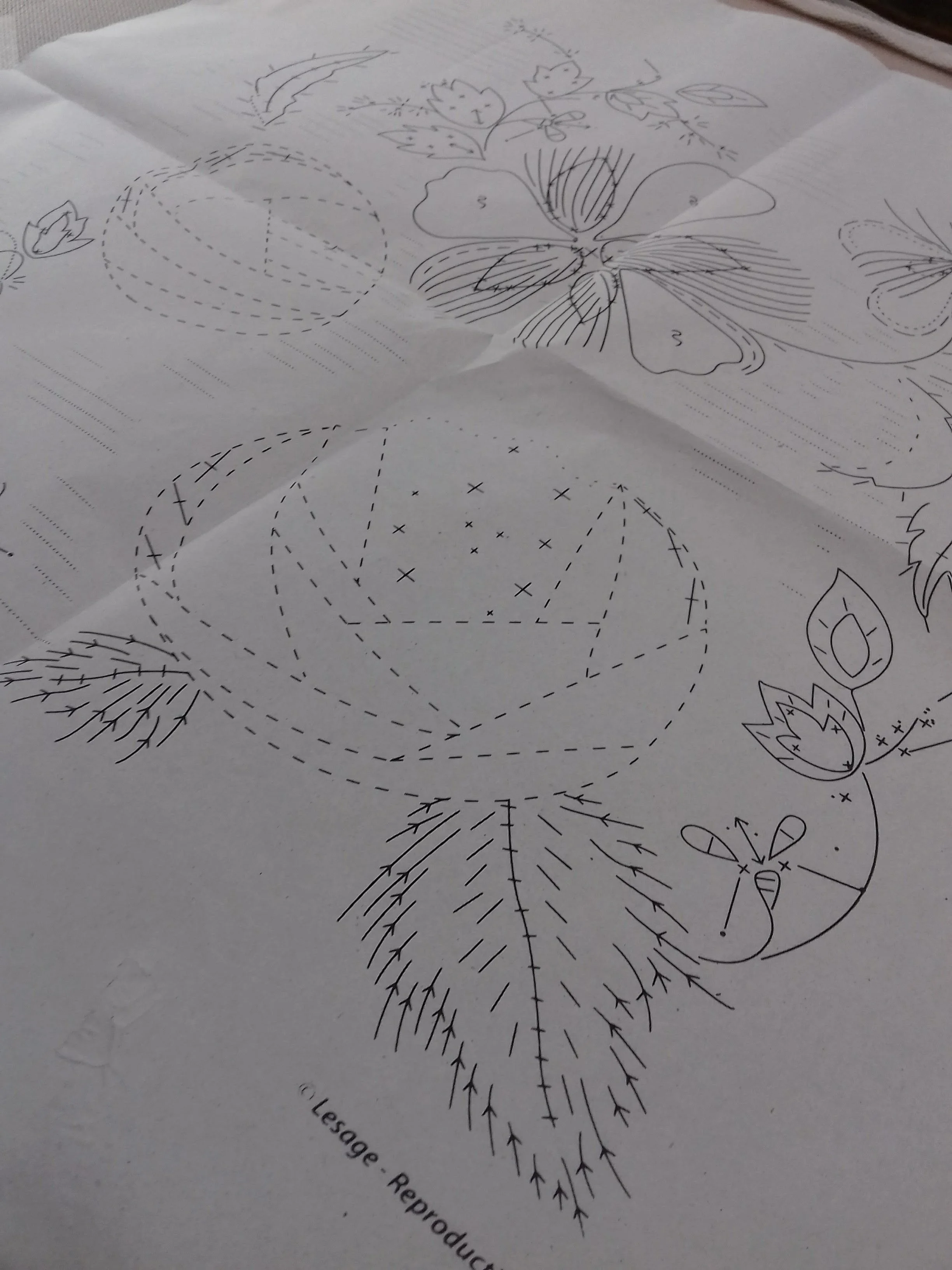
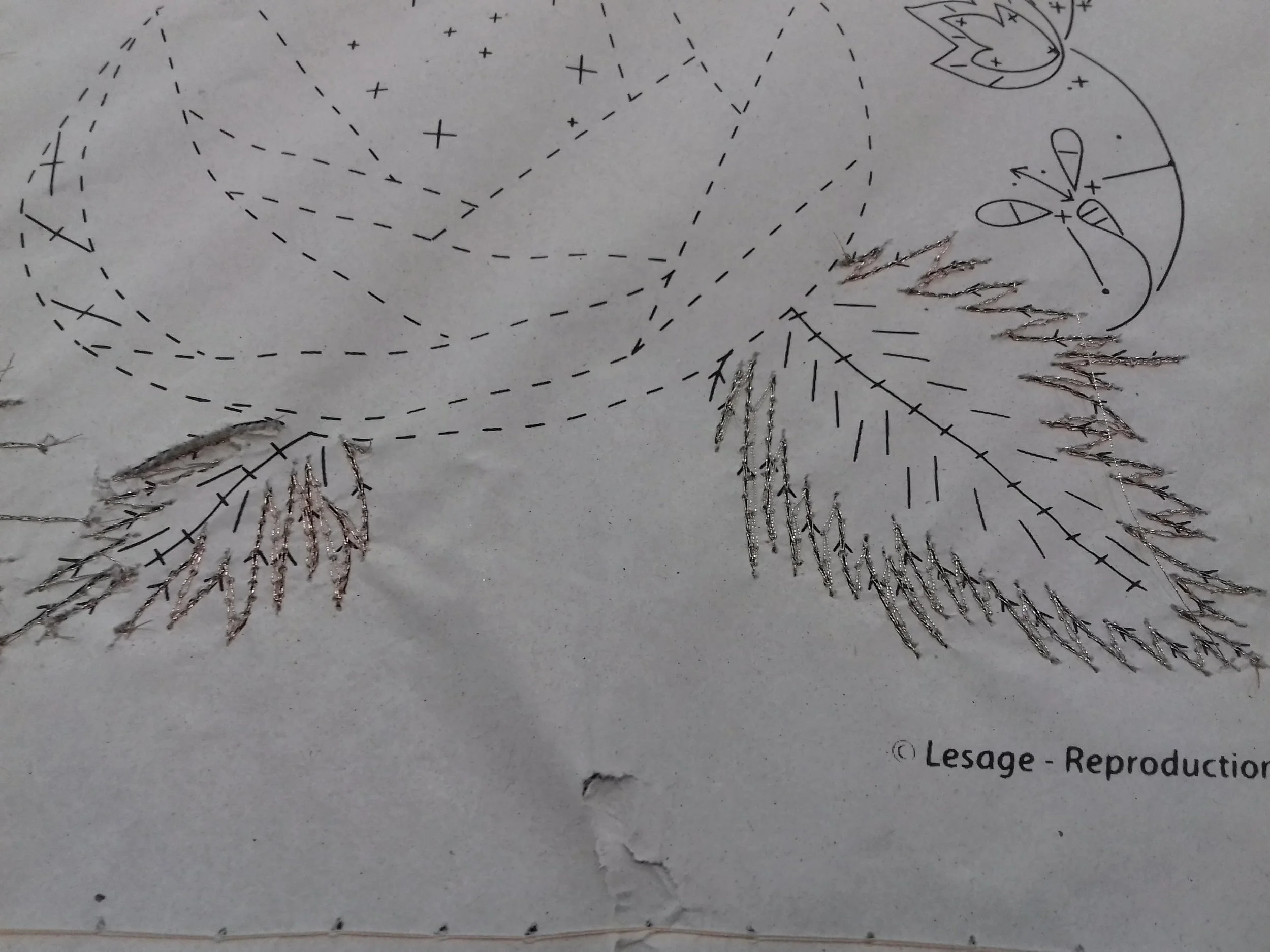
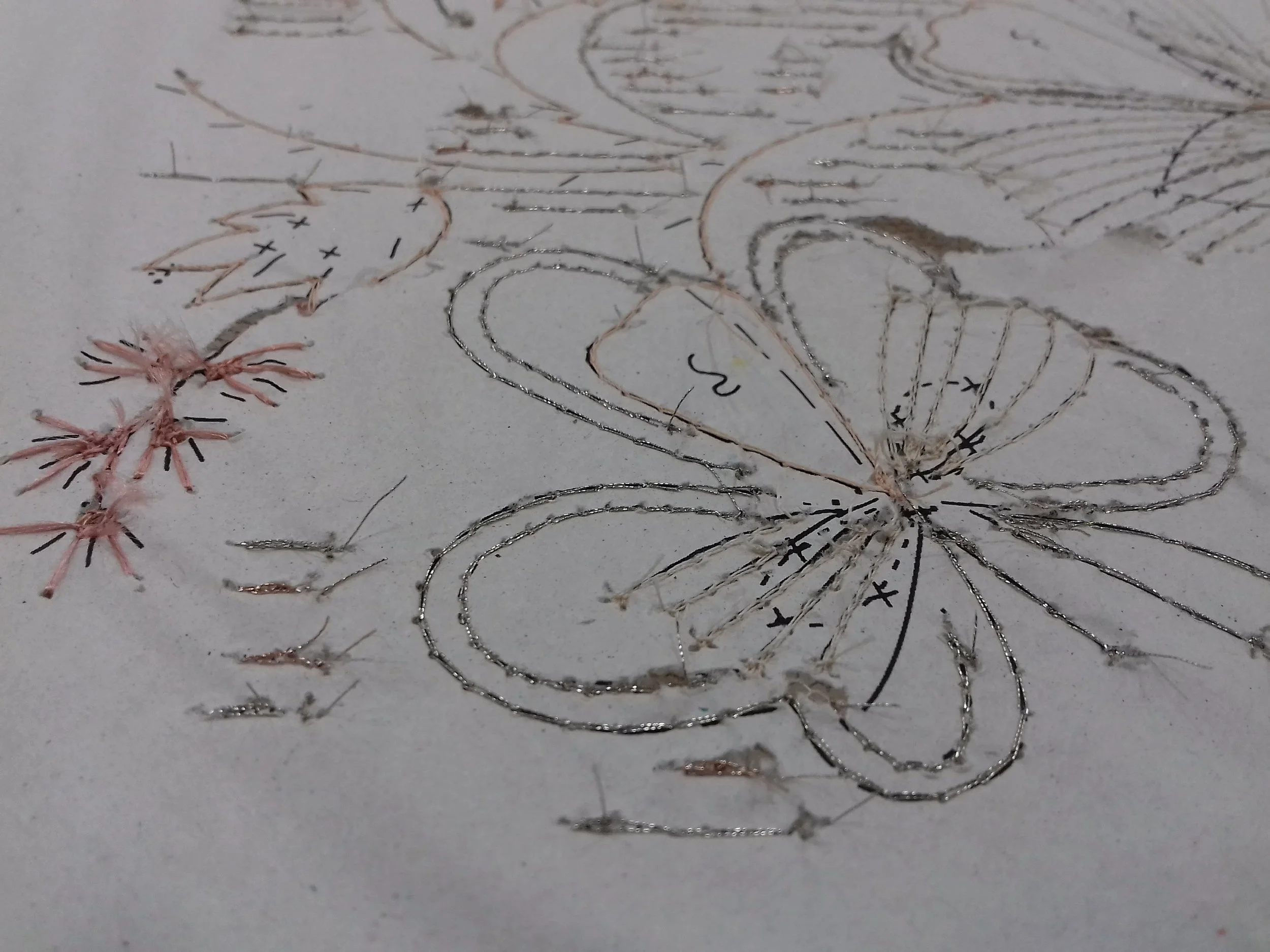
Next, the paper pattern was applied to the background directly using a simple chain stitch. The contours of the two large roses and the stems of the floral sprays were traced as well. Once this was complete it was time to begin with the repeated linear motif around the flowers. This is when it got really tricky…
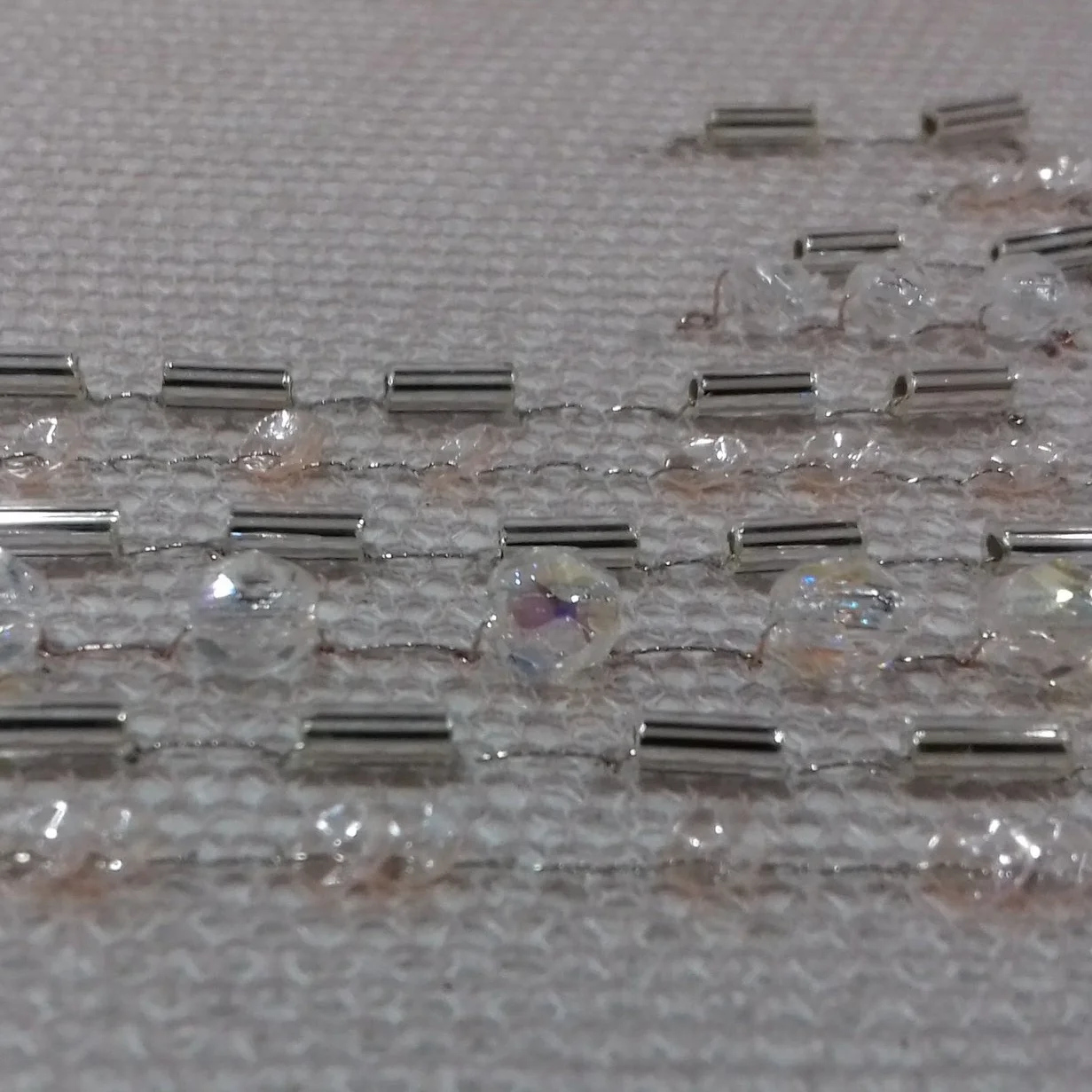
When working with tulle the starting stitch is different, rather than three stitches in the same spot, each stitch must be drawn from a separate hole in the network of tulle, making it more secure. Consulting the pattern I thought that adding the tube beads, curved sequins and large beads would be simple, I had plenty of practice from the previous course however, the idiosyncrasies of tulle quickly became apparent! I placed the first few lines of beads and sequins quickly but when I turned over the frame to check my work I gasped, it looked like a drunk person had done the work - the sequins and beads danced over the tulle in wobbly, haphazard squiggles rather than straight lines. The teacher laughed at my consternation and explained that tulle is formed from a network of relatively large hexagonal holes compared to a standard woven fabric with a grid structure. This causes the sequins or beads move around in the larger spaces. Tension was the key (as always), and I would have to work my stitches more tightly, not so easy as I was still terrified to tear the tulle…
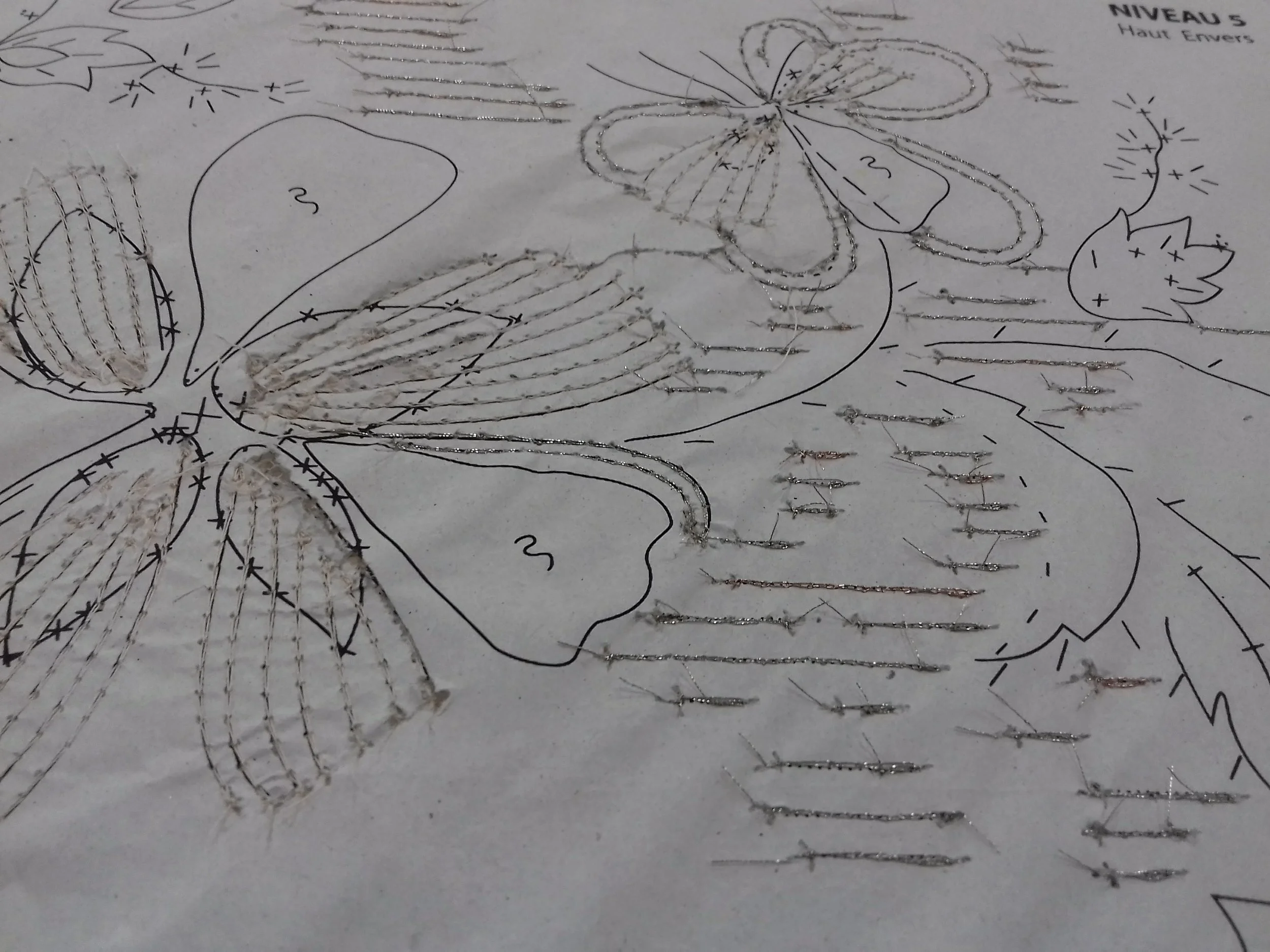
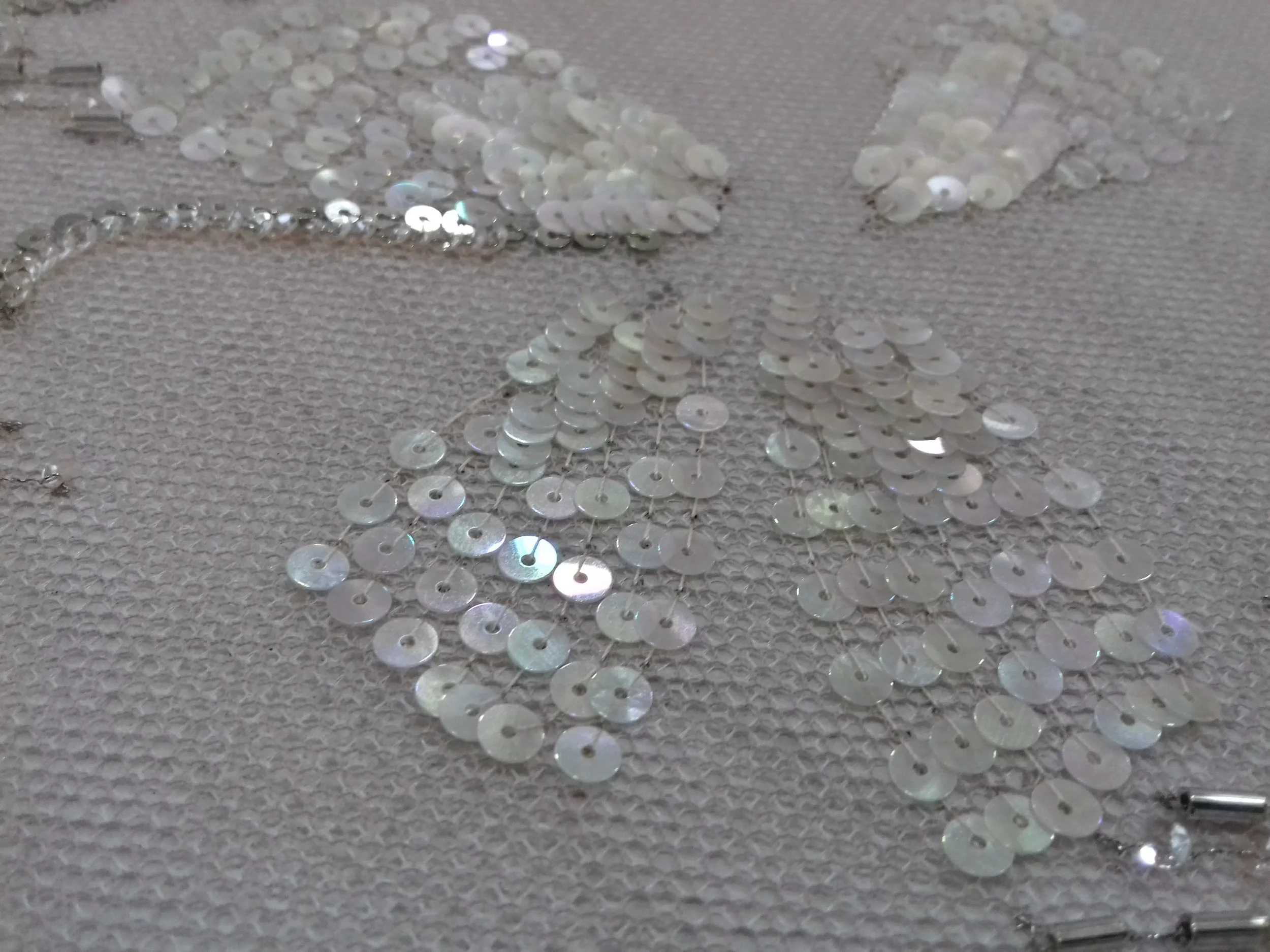
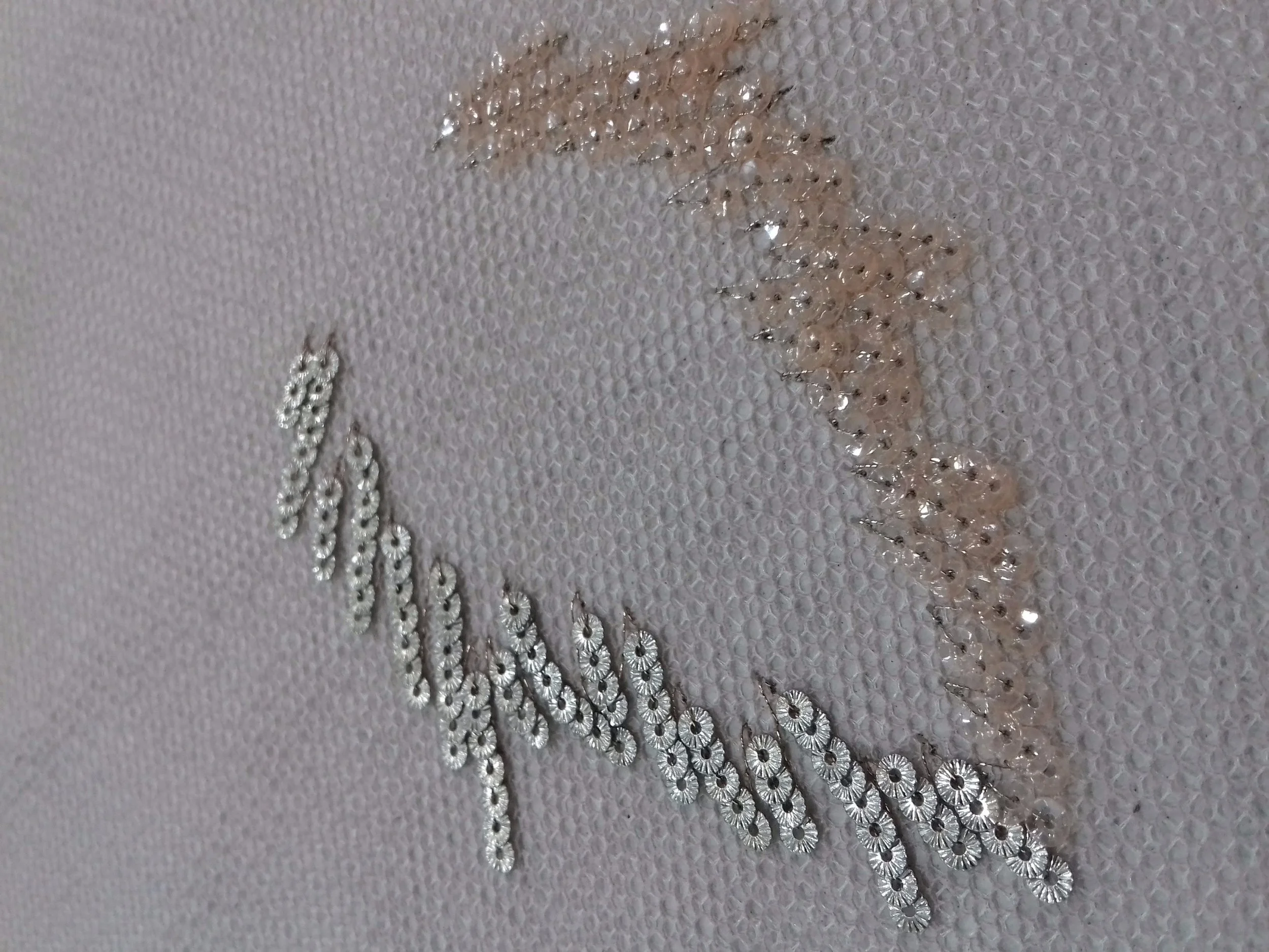
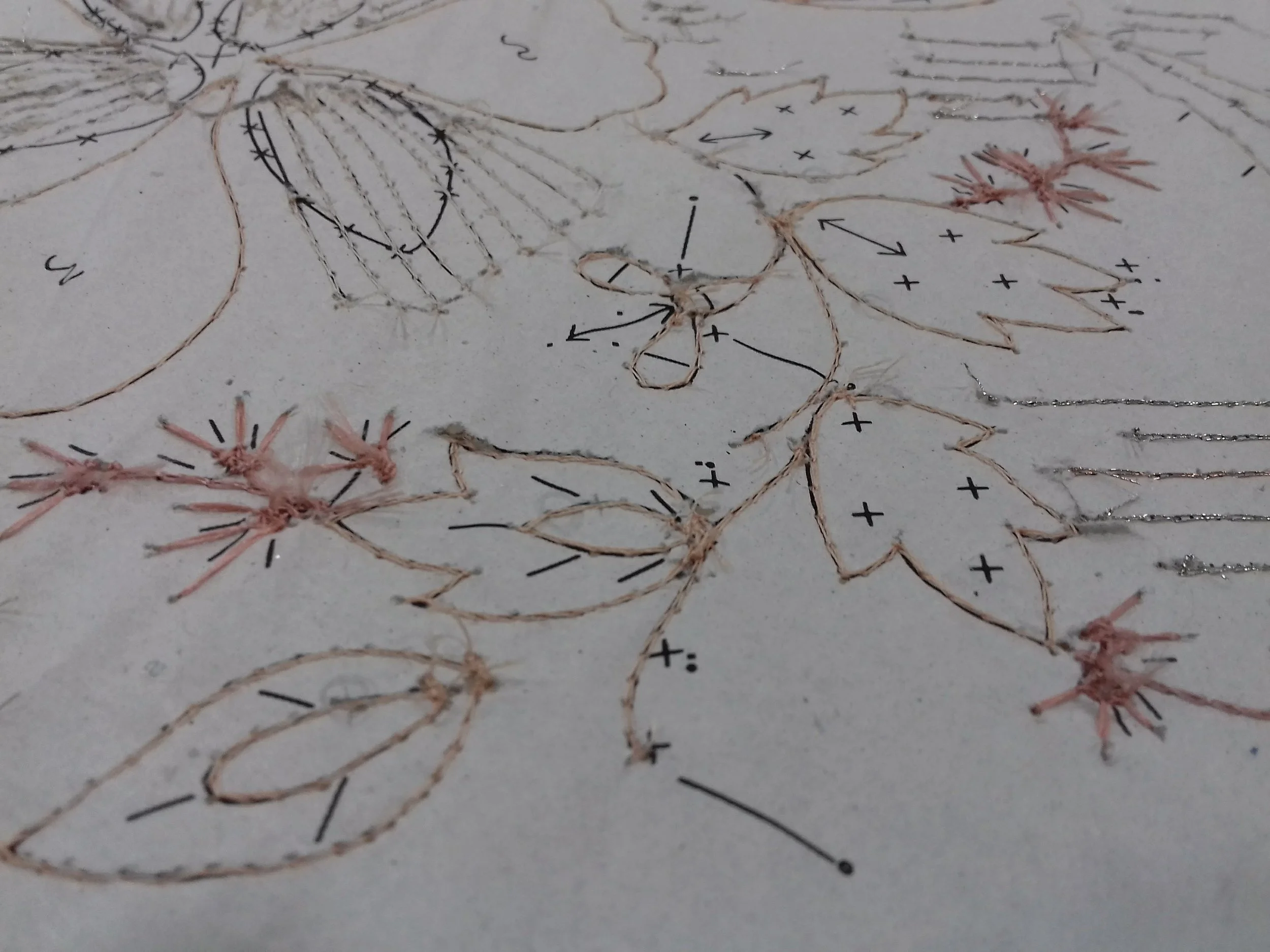
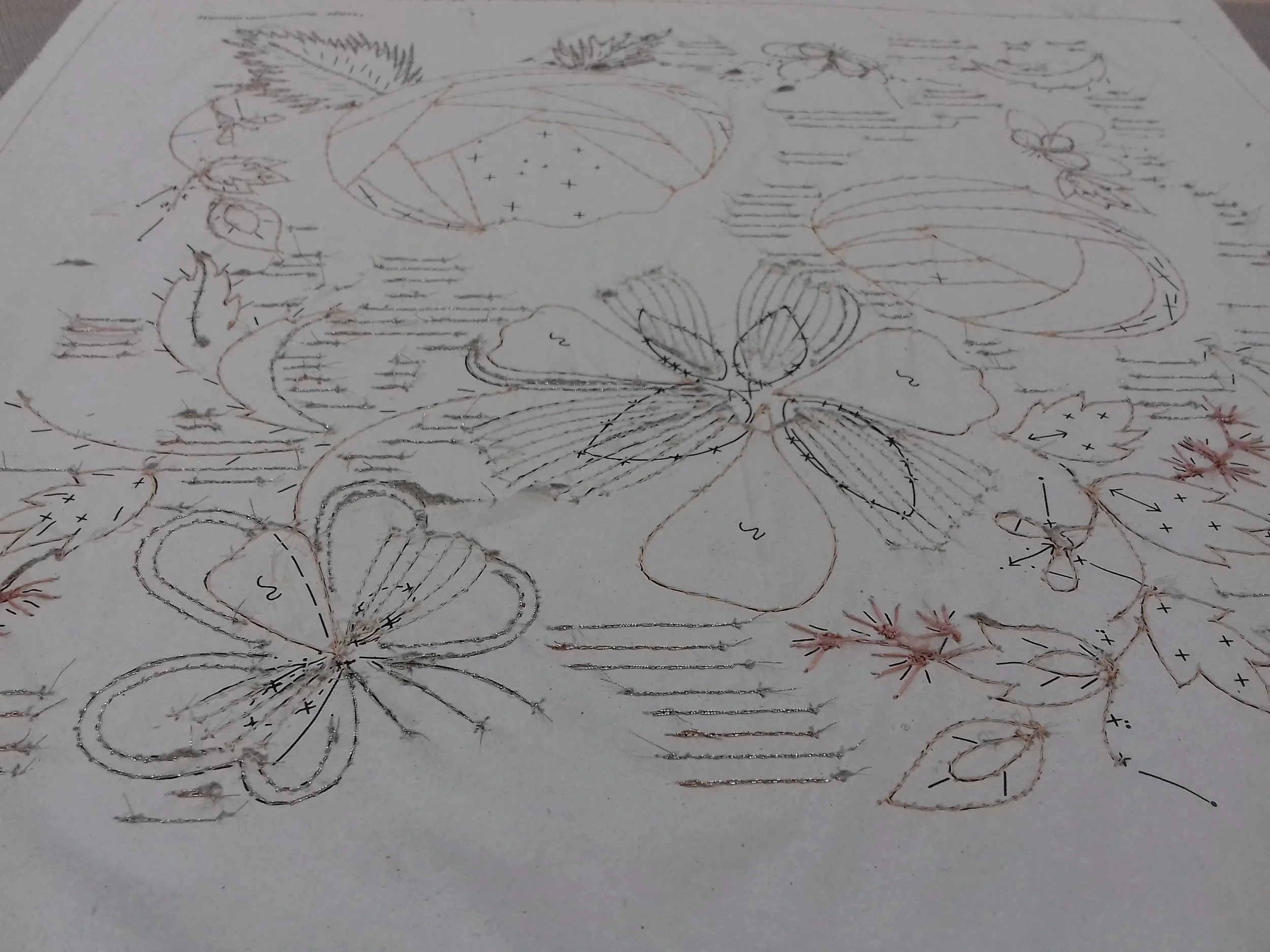
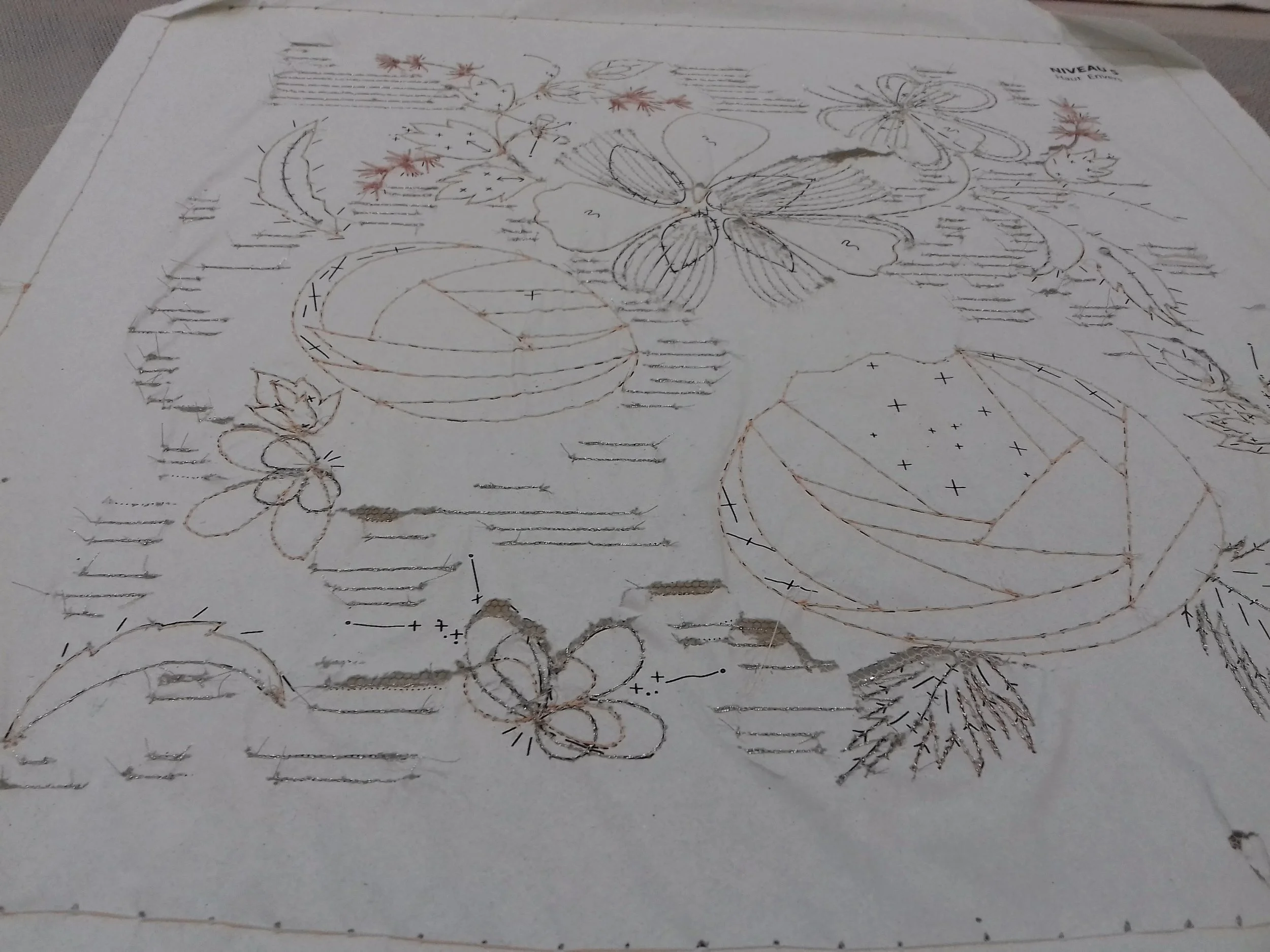
There was opportunity to practice as I continued to follow the pattern. The techniques and materials changed with each tiny section and I had to pay meticulously close attention to the legend. The flower petals contained irridescent sequins, added in overlapping rivers for 2 cms and then spaced for the next 2cms, allowing for tiny metallic tube beads to fill the gaps. The foliage involved overlapping lines of tiny, beautiful vintage ‘sunburst’ metallic sequins which were added alongside lines of curved pink transparent sequins. Small floral sprays were outlined with dark silver, crystal and transparent pink beads, and there were even a few with the dreaded silk thread although thankfully not that many!
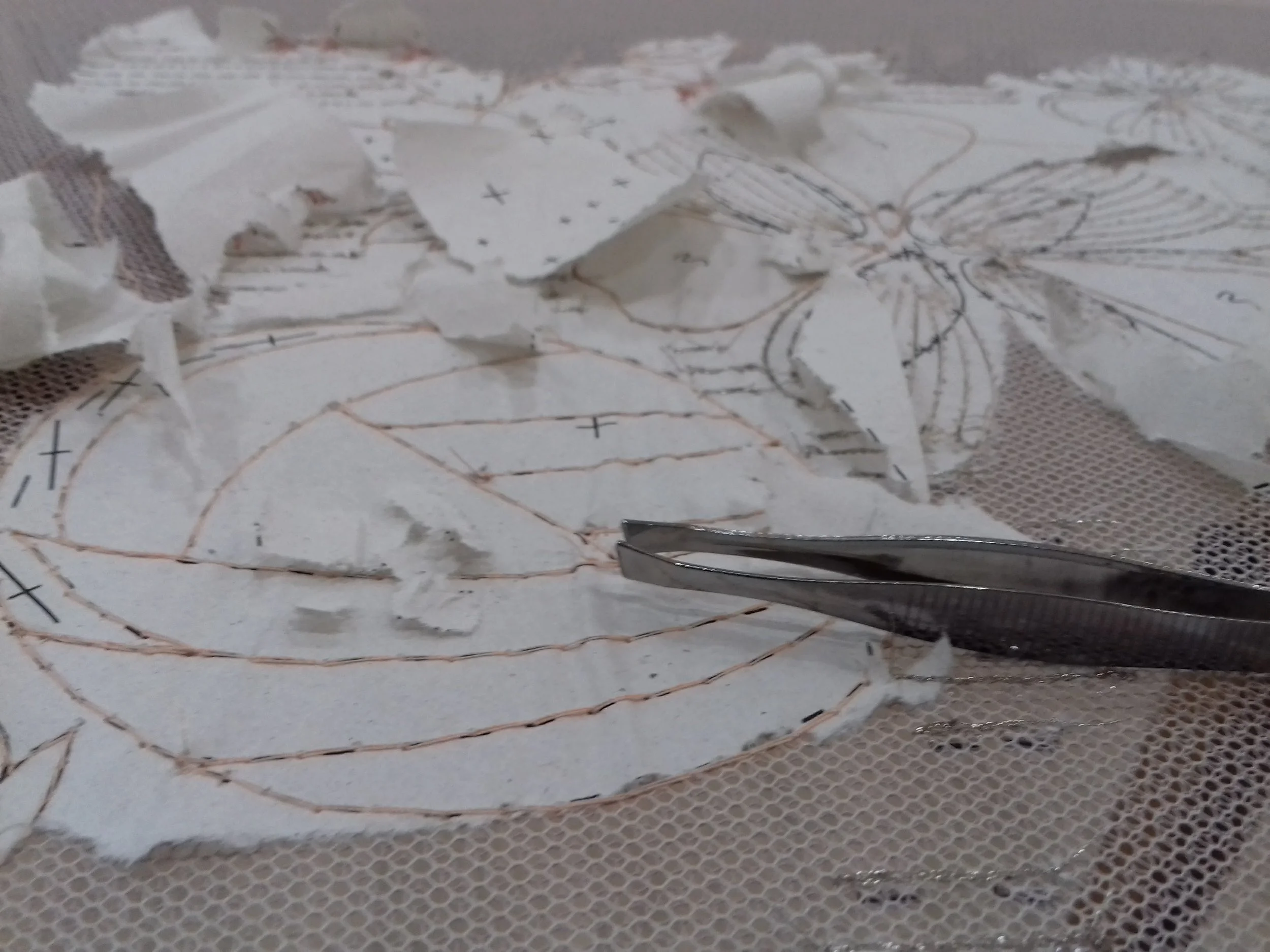
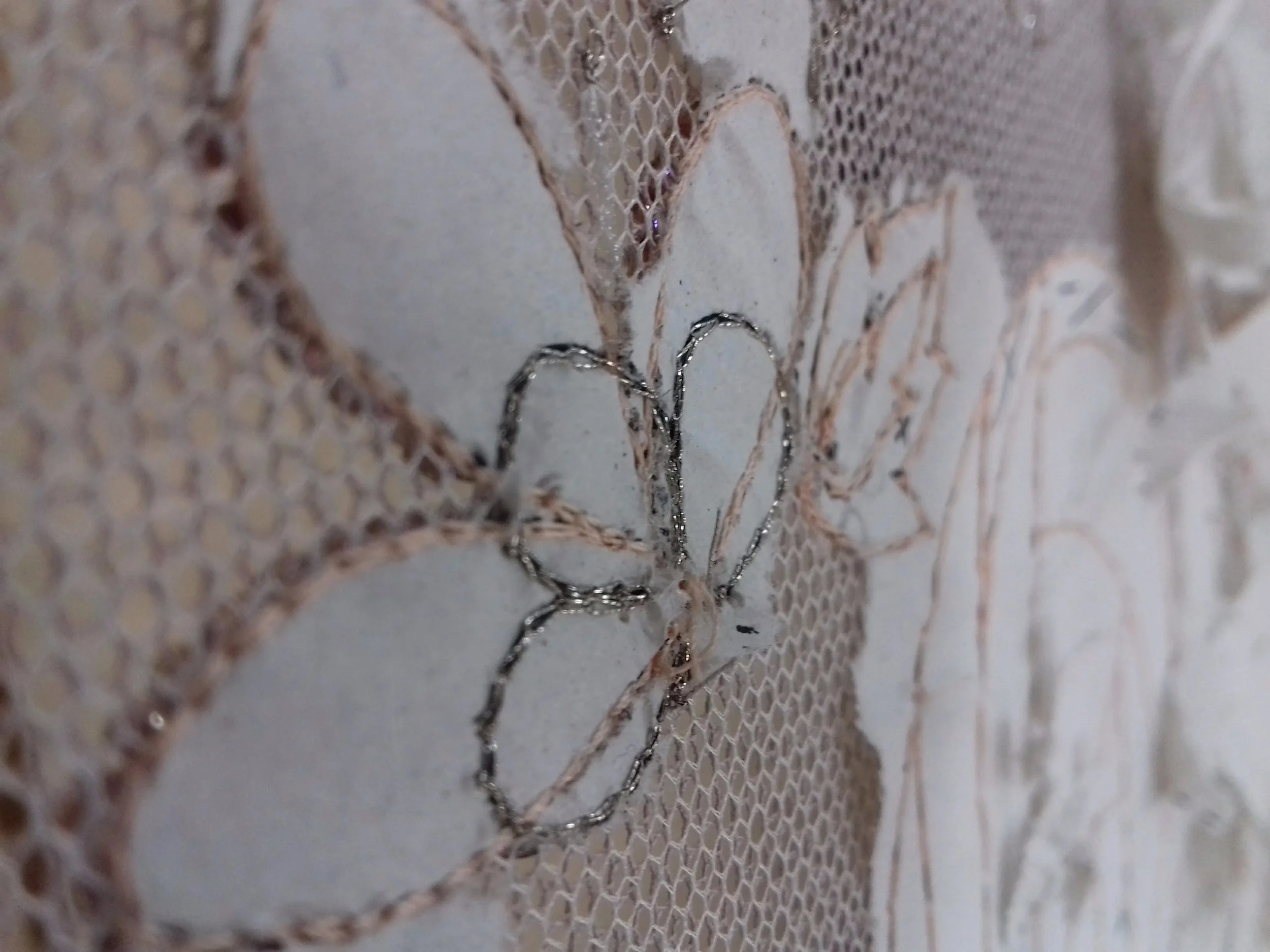
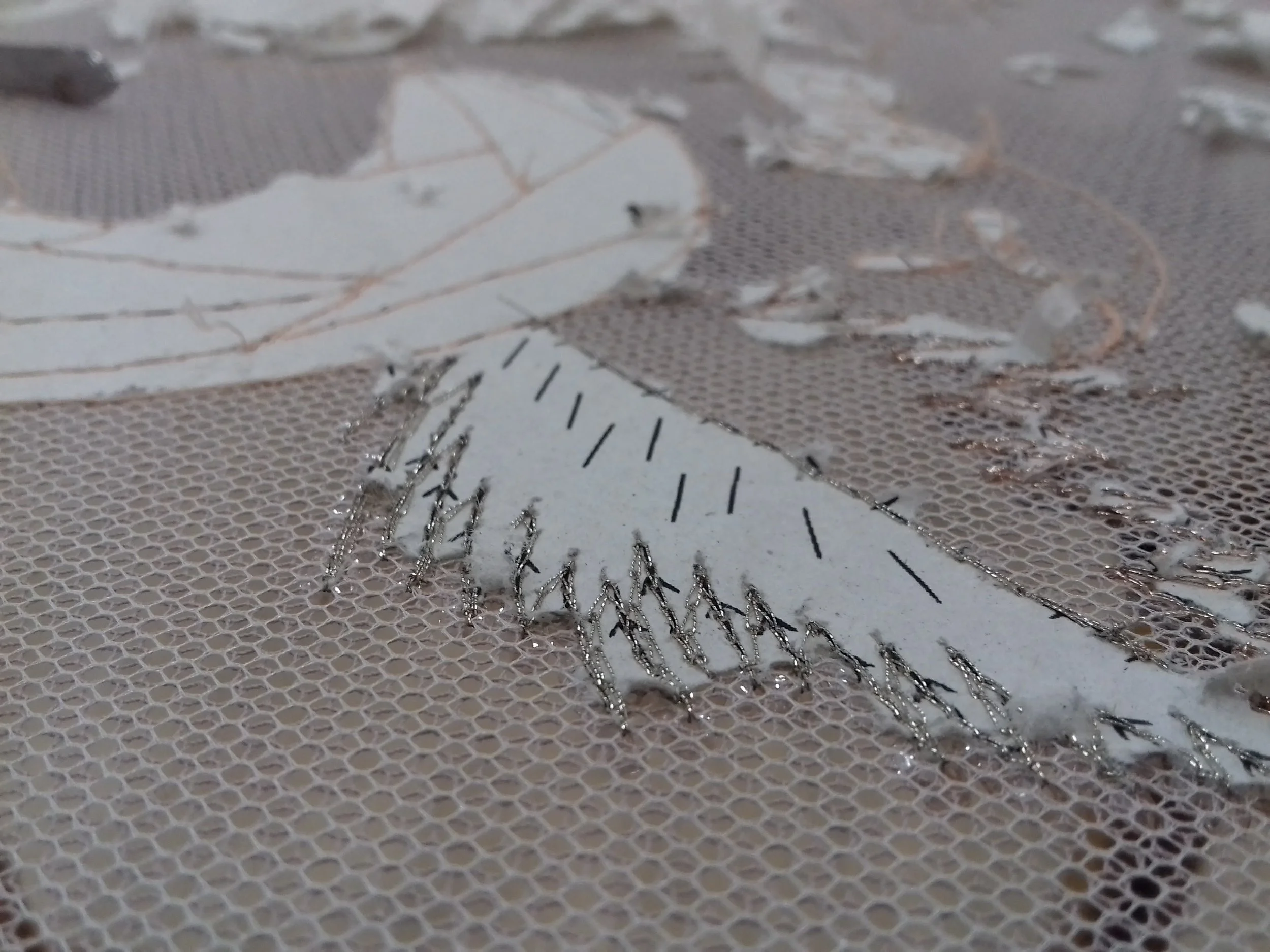
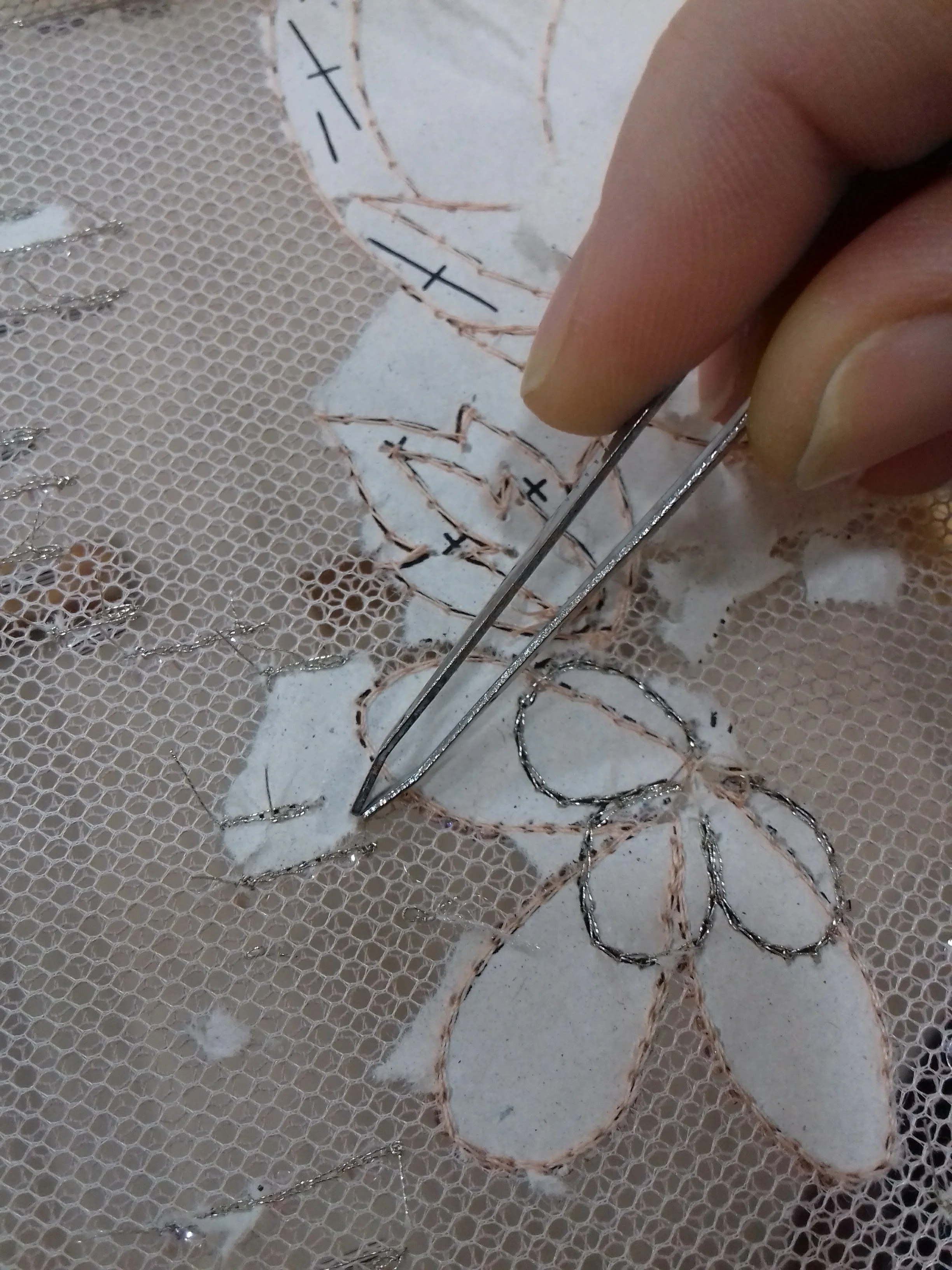
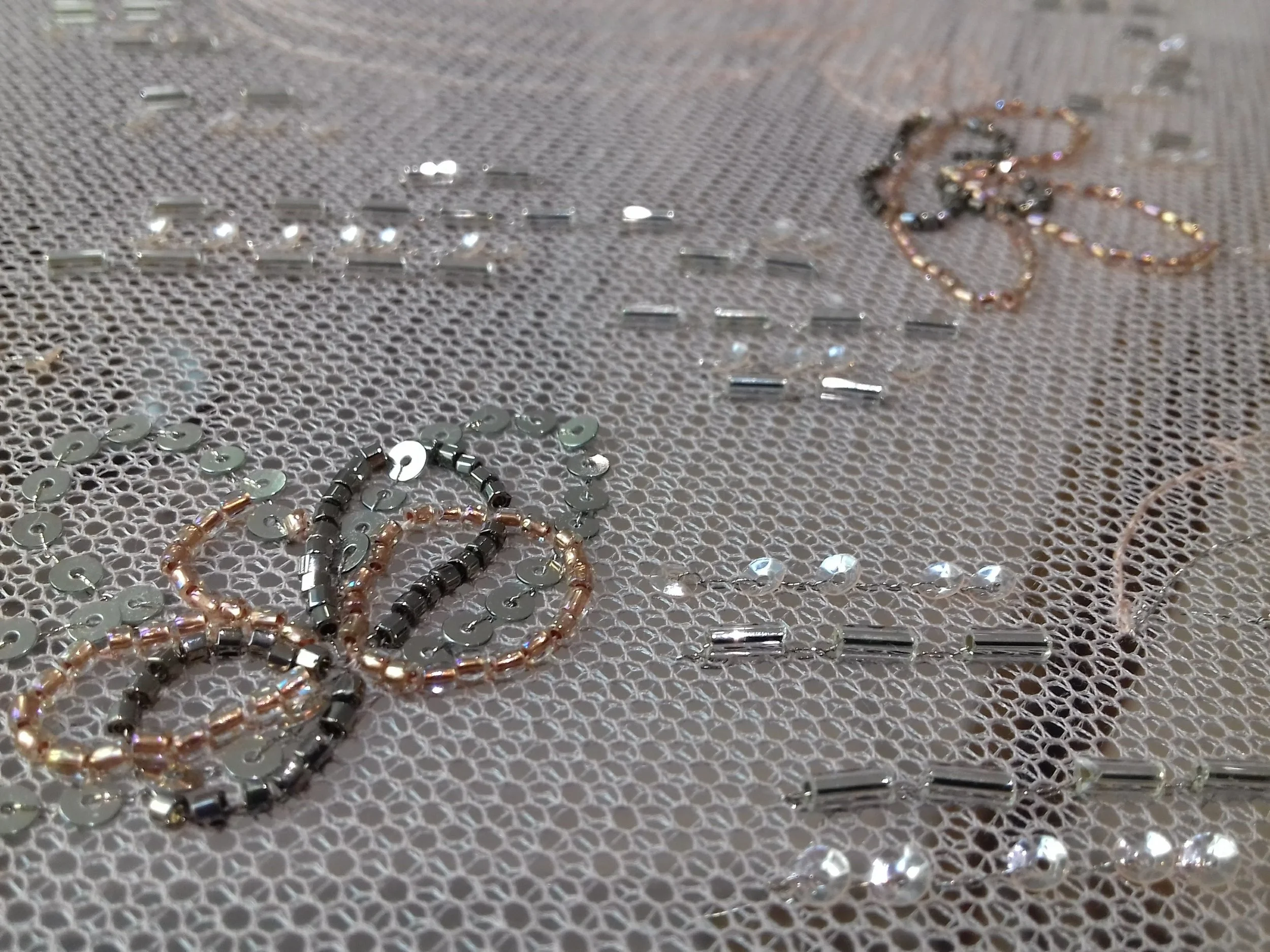
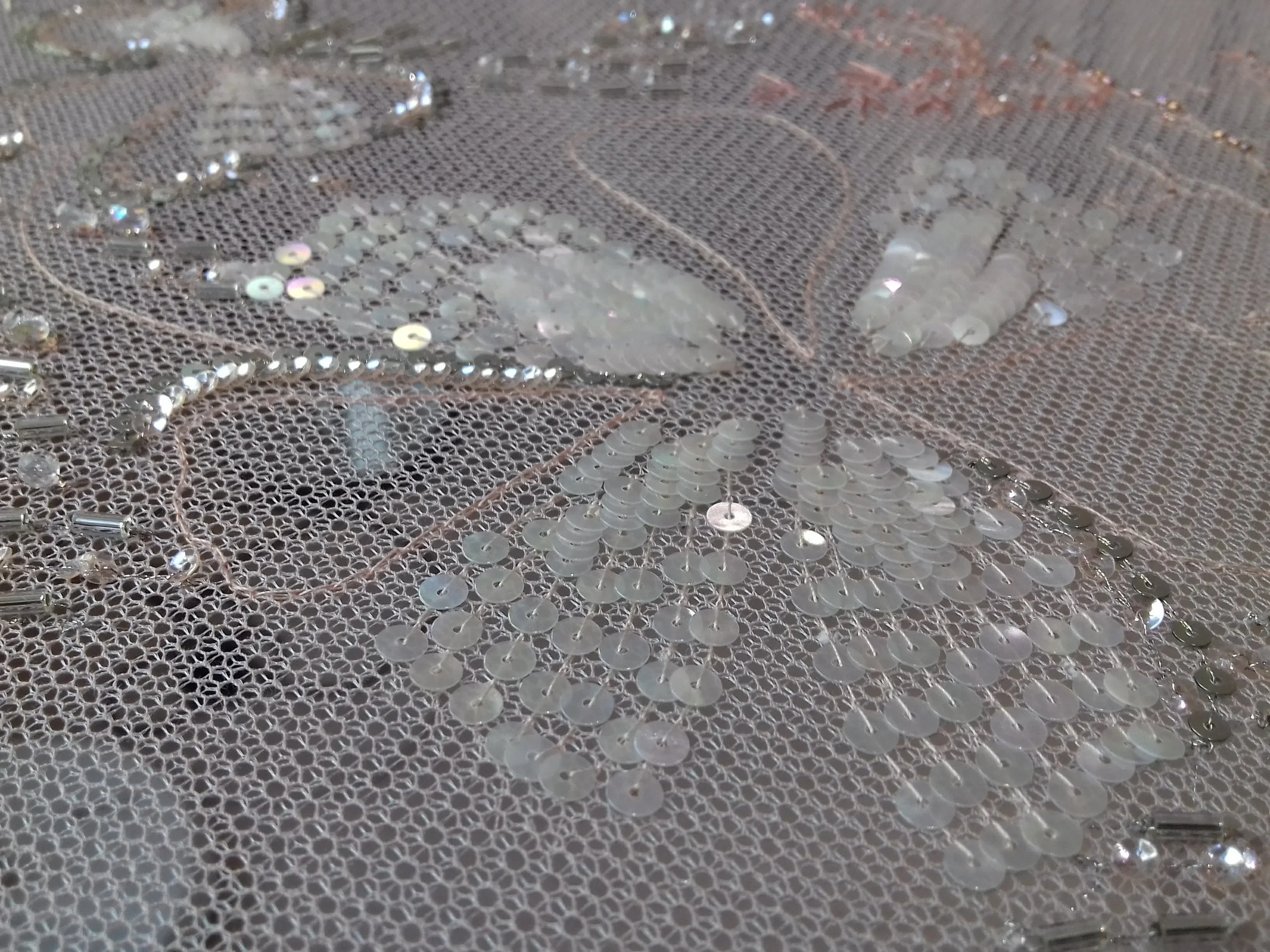
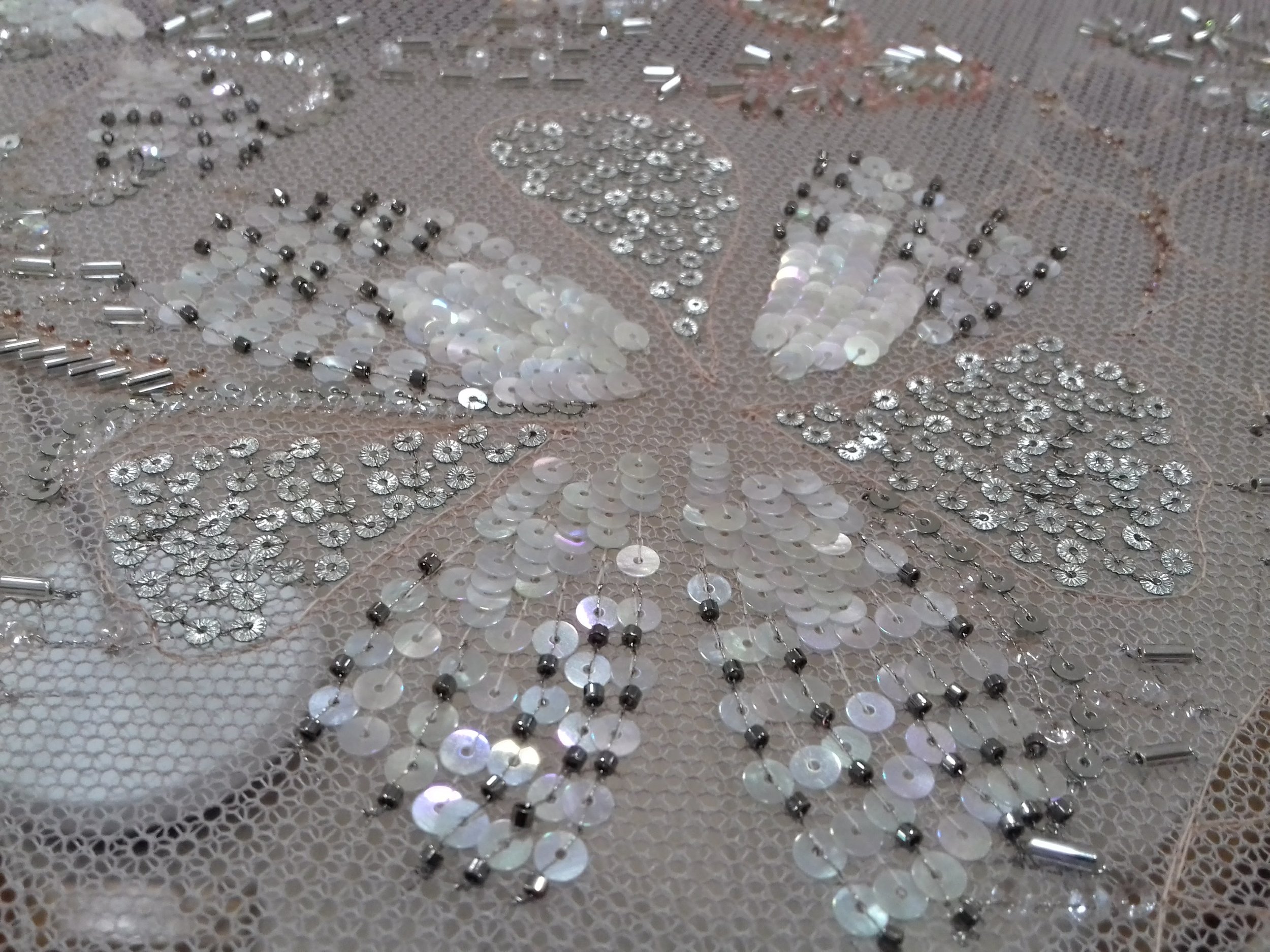
Finally I had reached the end of this stage, the paper pattern looked tired, perforated, torn and literally hanging on by a thread. I checked and re-checked the pattern to make sure I hadn’t missed any sections and then it was time to remove the paper. An incredibly satisfying task!
And when I turned the frame over I was delighted with the results and amazed by the rows of evenly placed sequins and beads. Not a dancer in sight! The next stage would be entirely worked on the surface…
Textile Tours of Paris
Join Rebecca on a tour of Paris’ charming haberdasheries nestled deep in the winding streets of Le Sentier, the city’s historic textile and fashion district. Enjoy a Sunday morning with Rebecca on a Flea Market Tour as she guides you through the labyrinth alleys of Paris’ oldest marché-aux-puces to uncover hidden treasure troves filled with vintage lace, linen, passementerie, golden threads and gossamer lingerie. To find out more visit Textile Tours of Paris.
