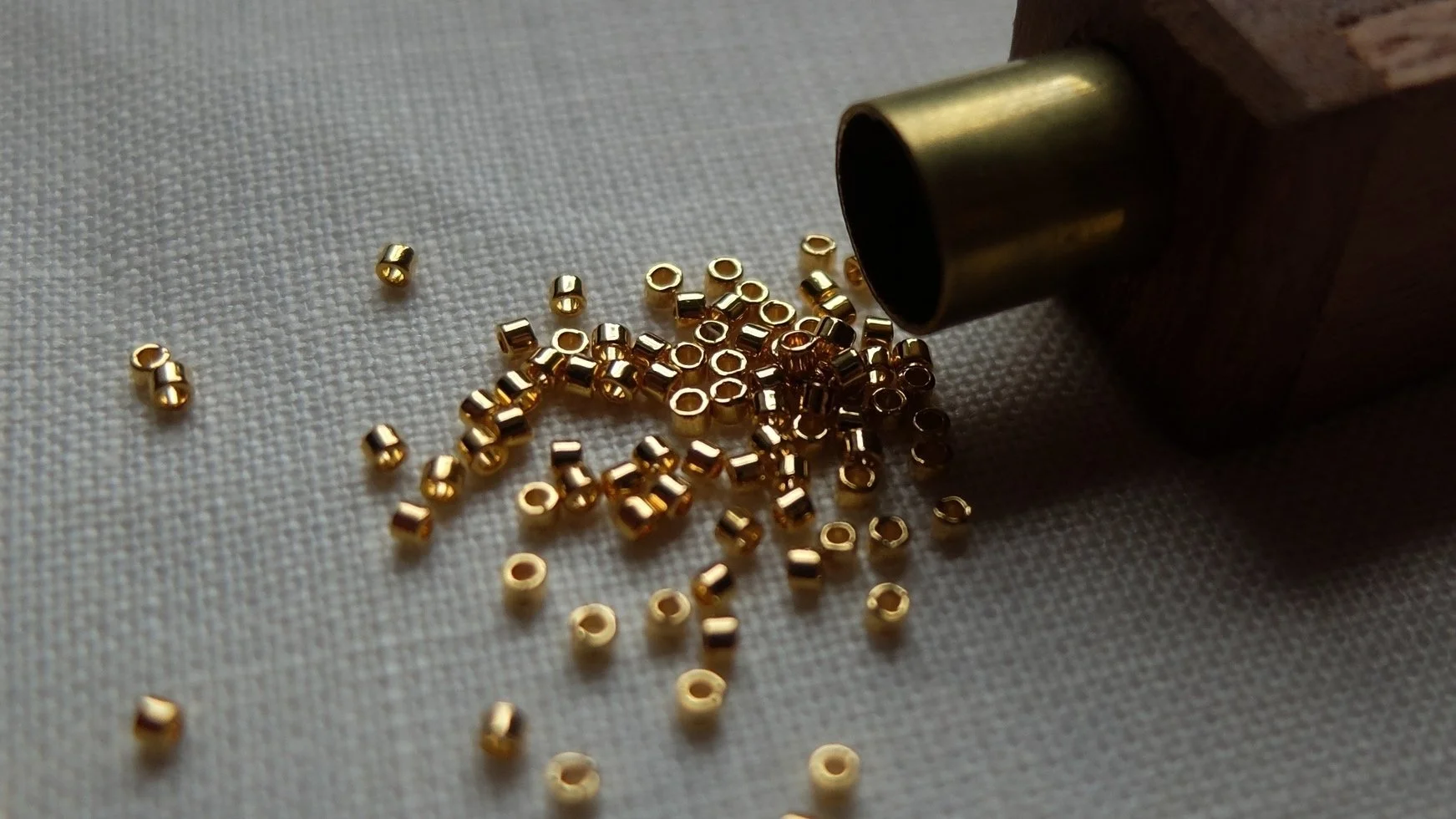
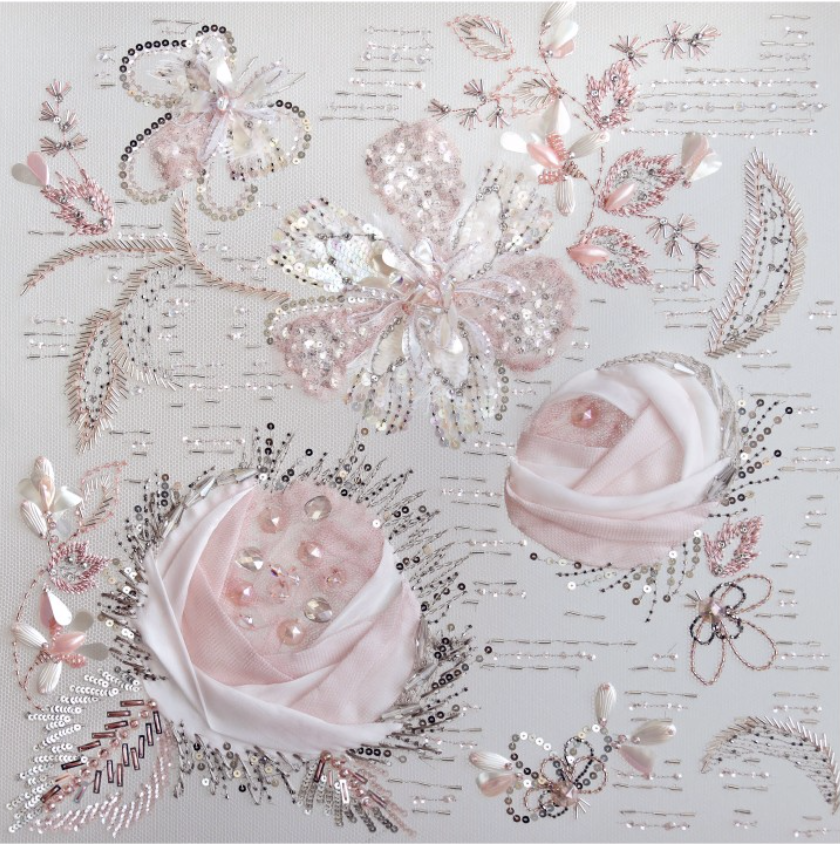
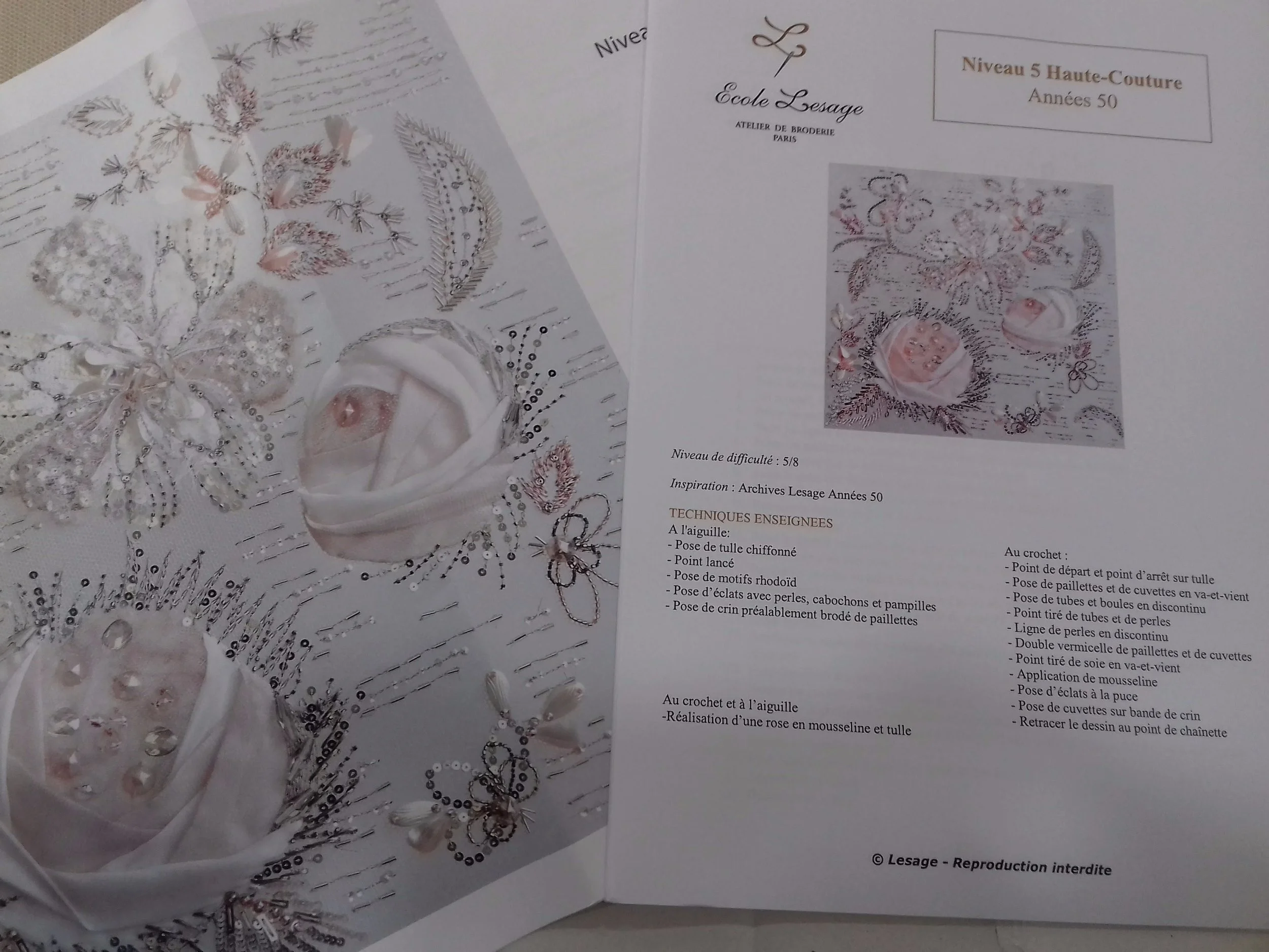
Once the first stage had been completed it was time to work on the surface. This was really interesting as there were several techniques for adding decoration using fabric, large beads, and metallic threads.
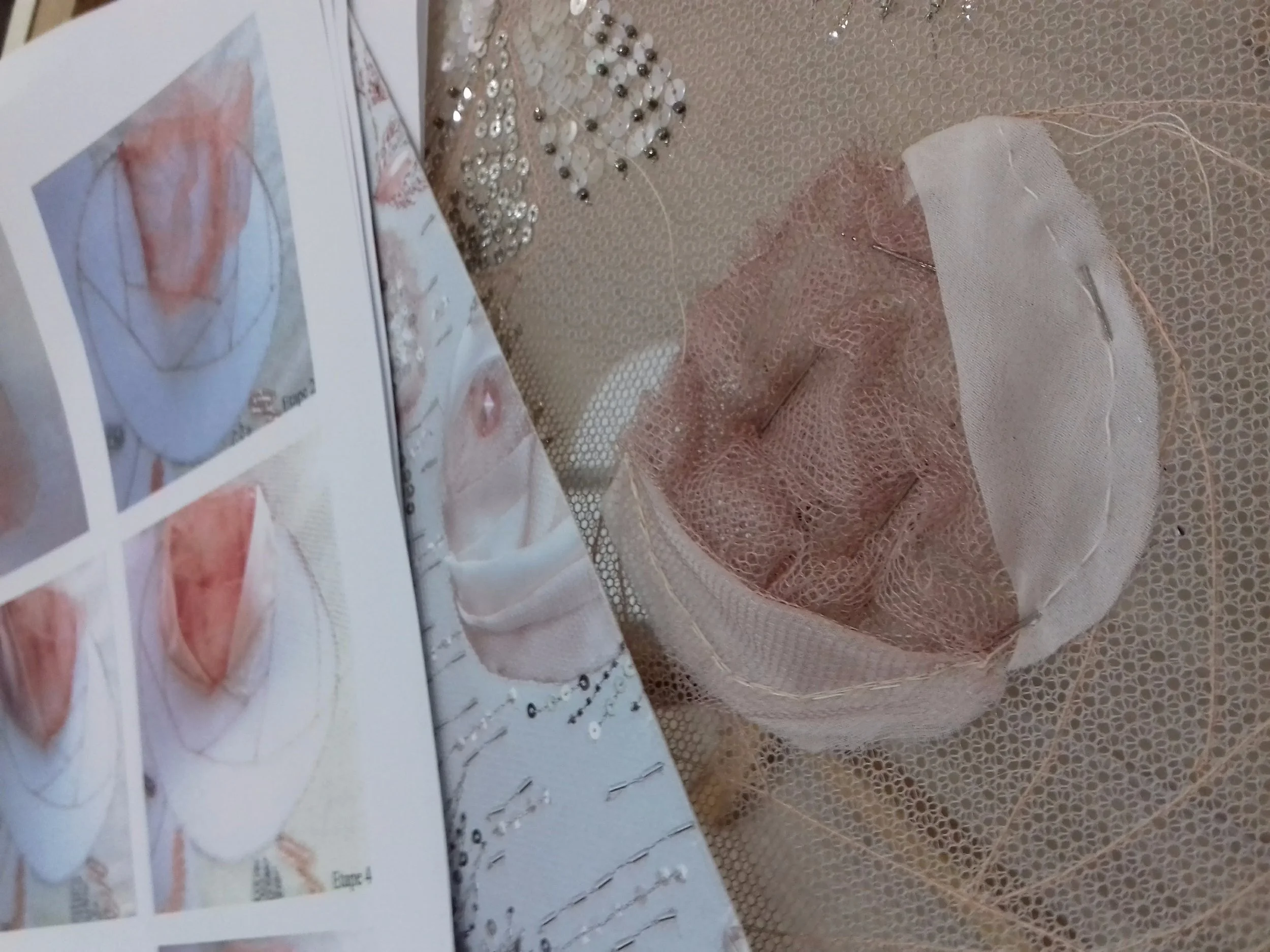
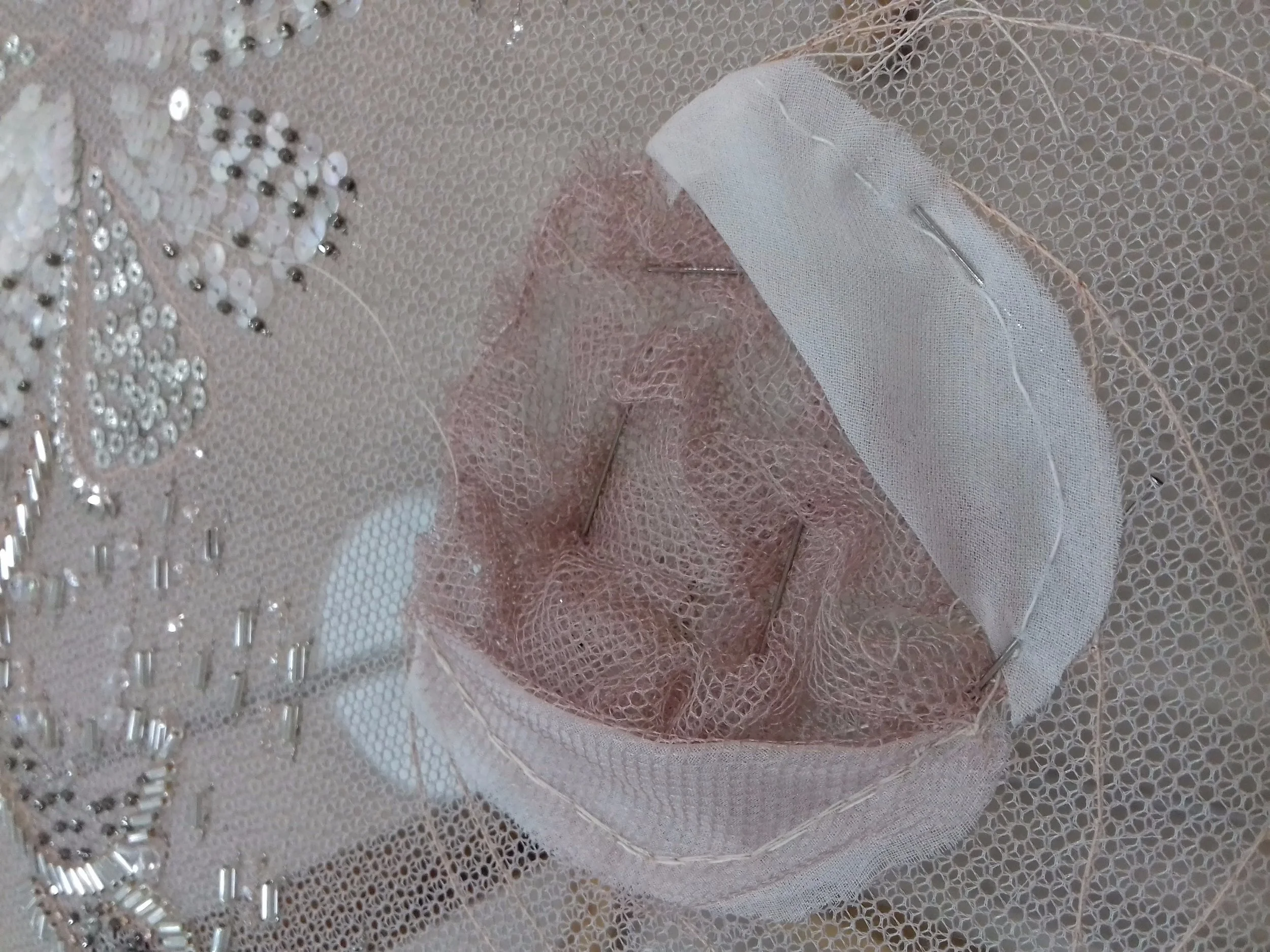
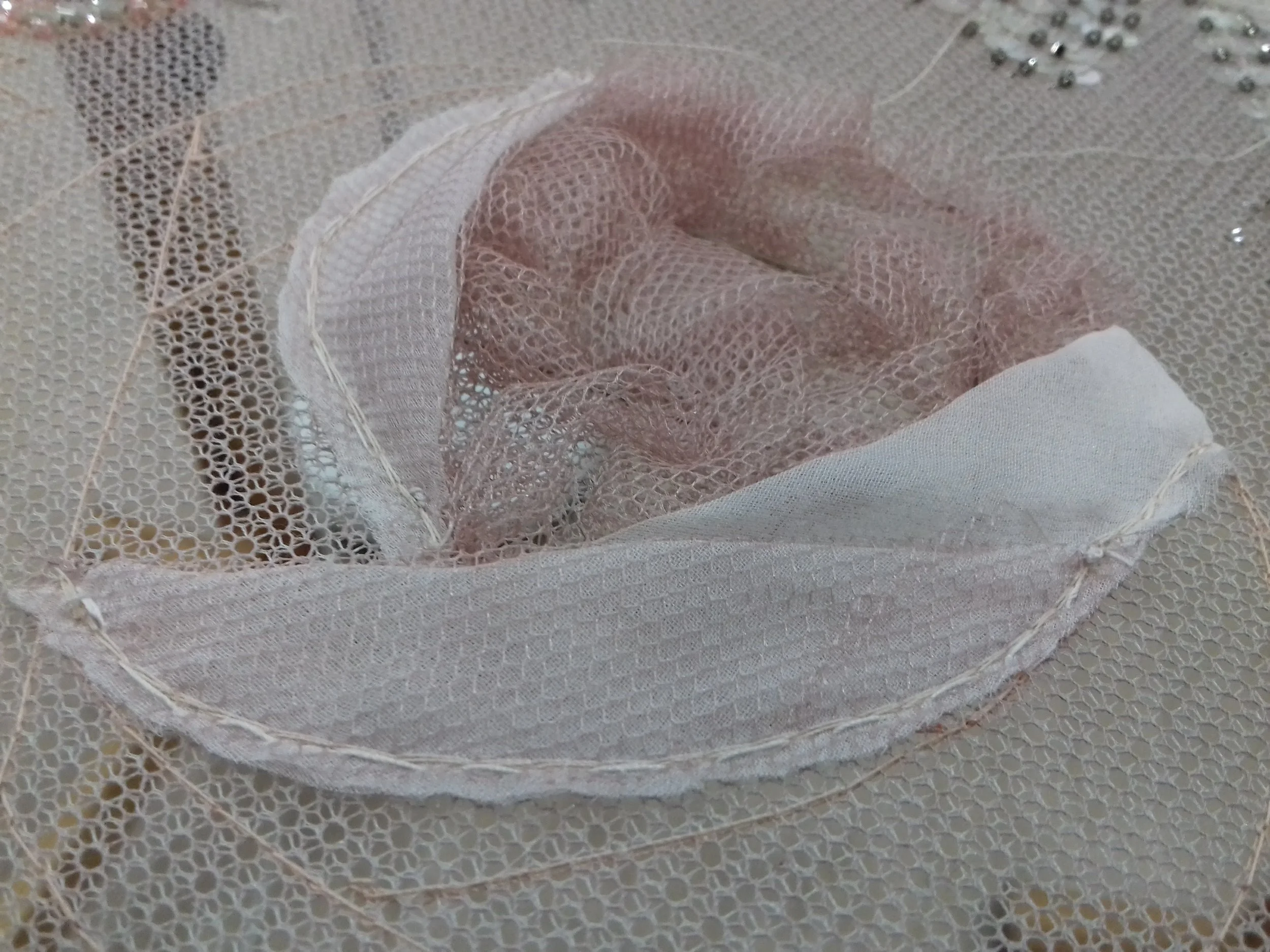
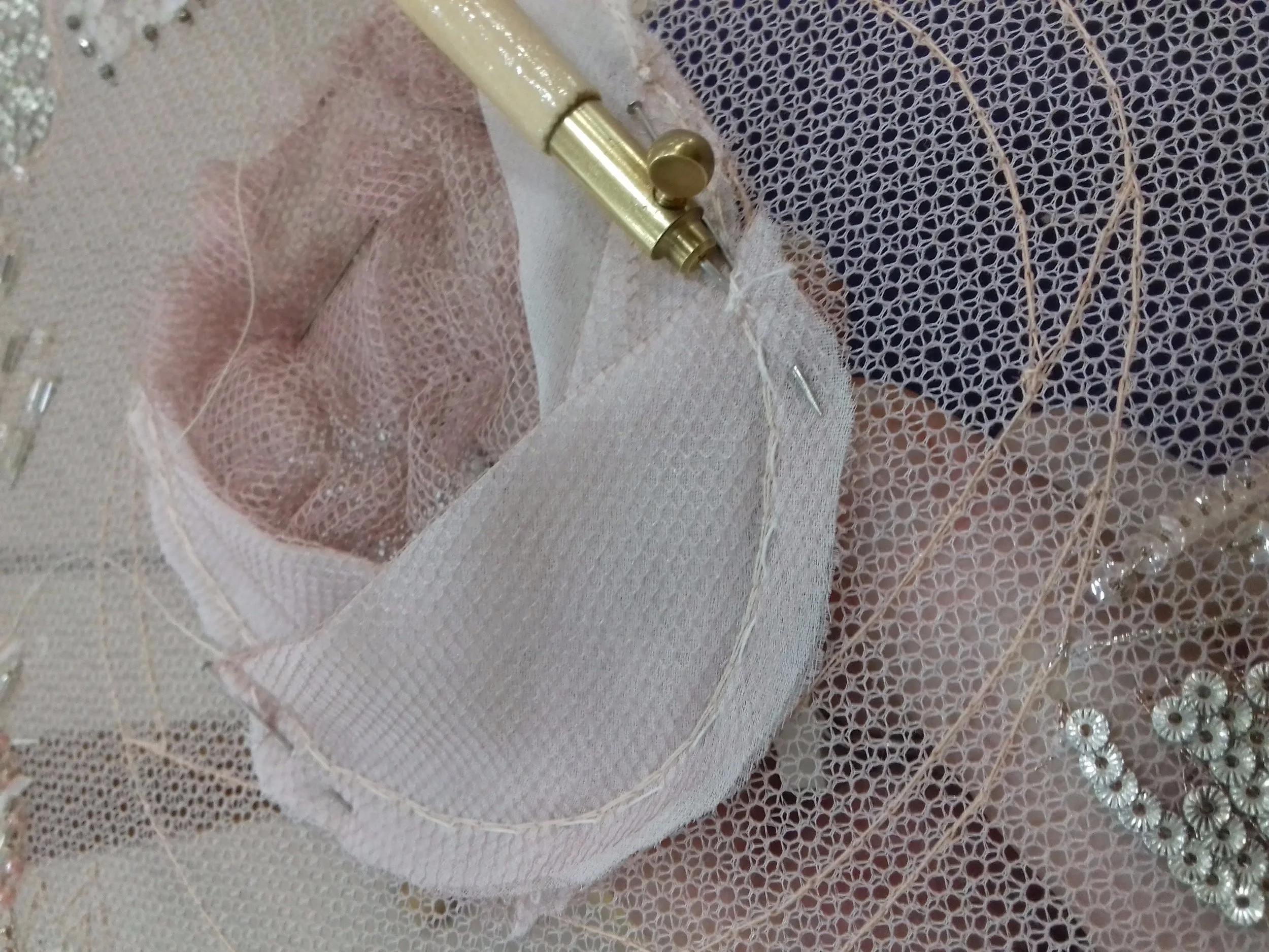
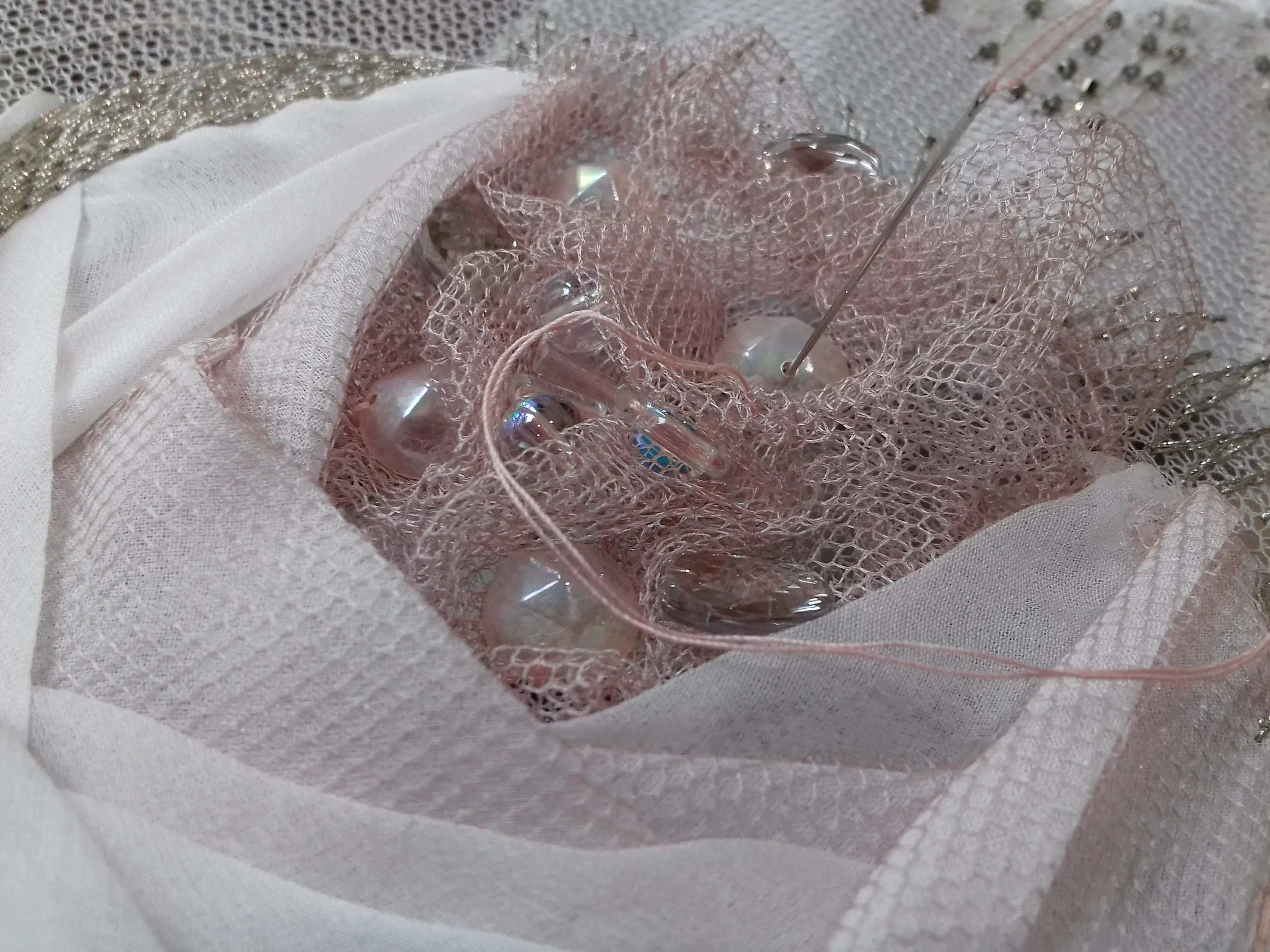
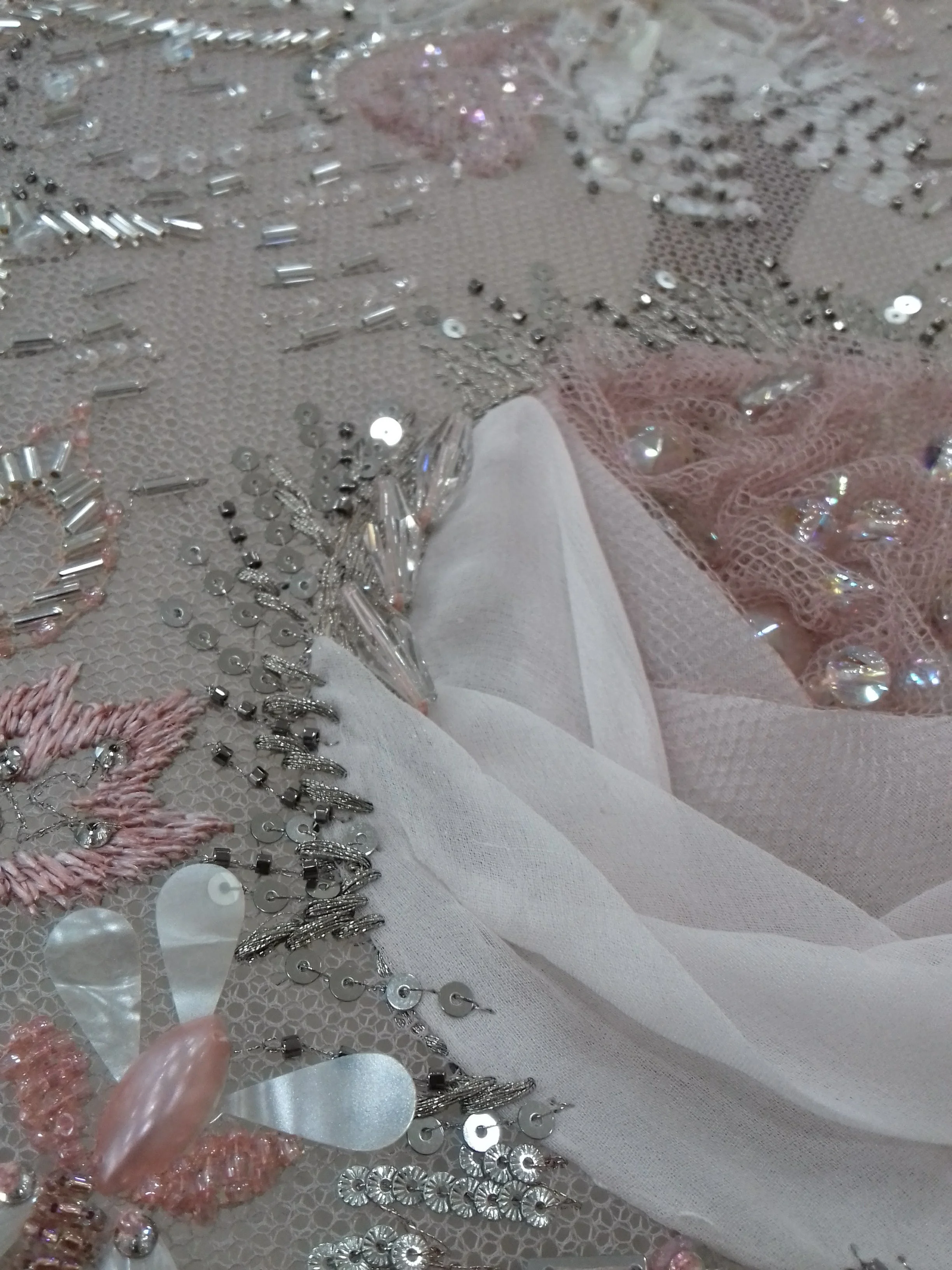
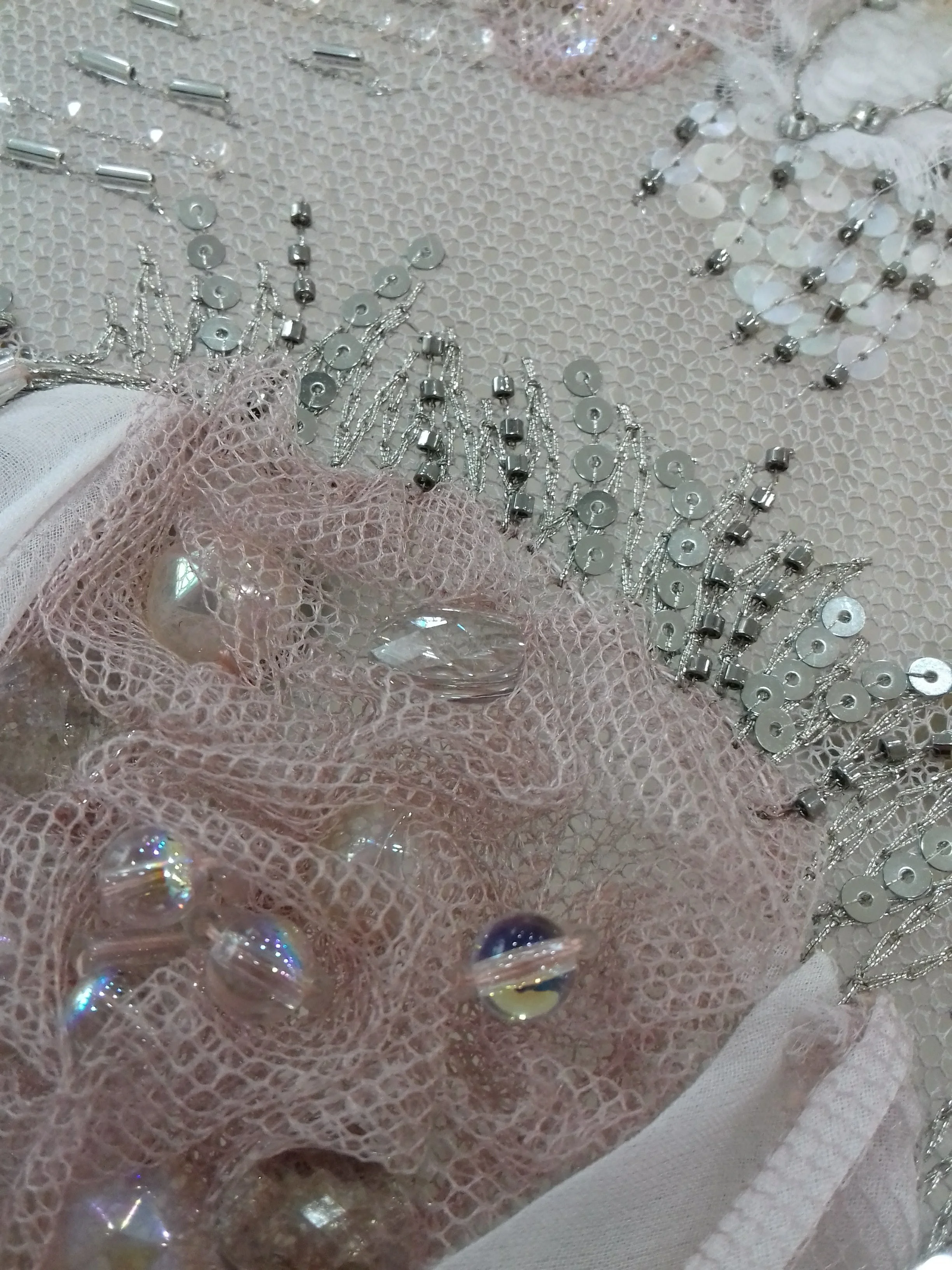
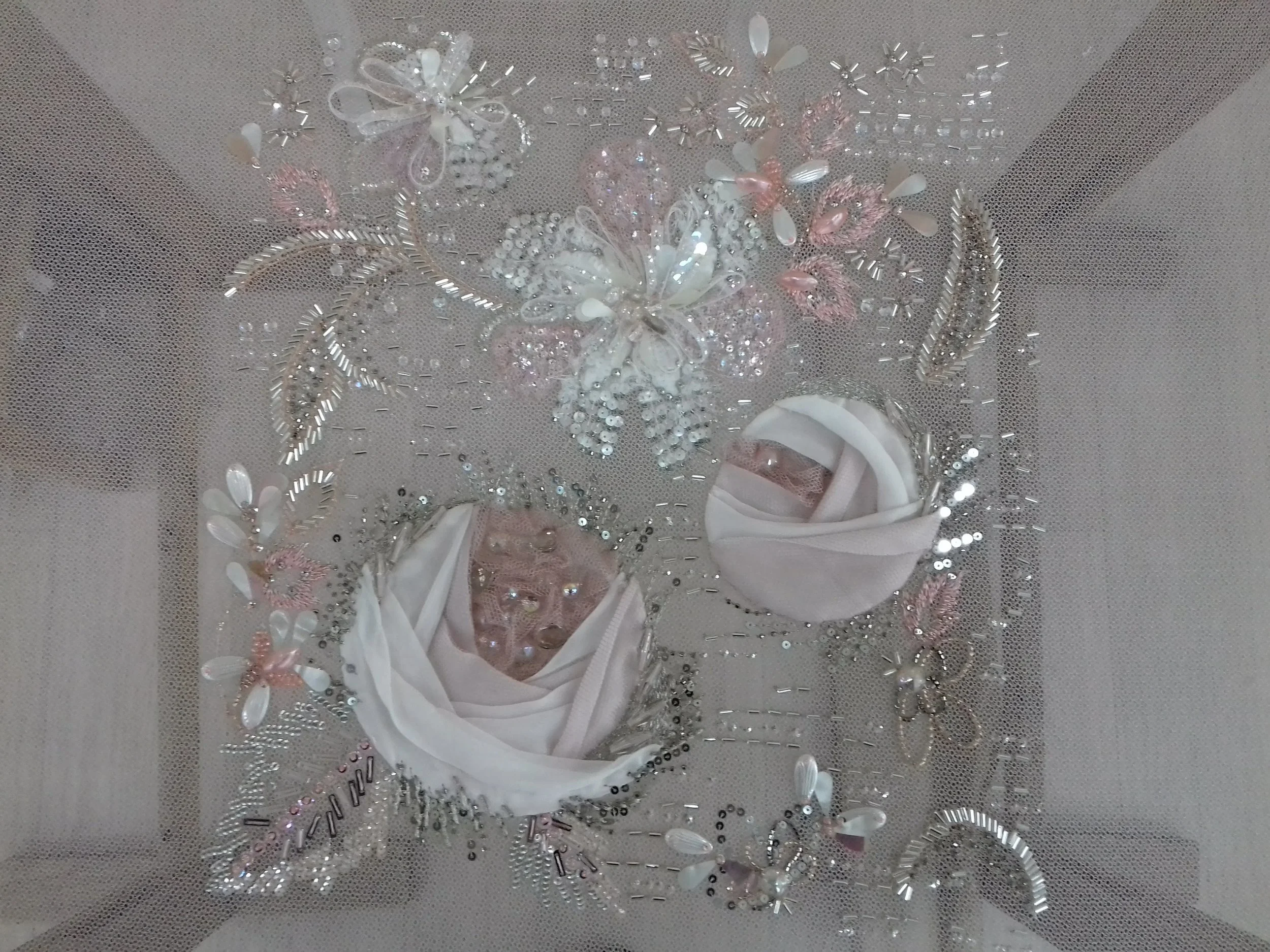
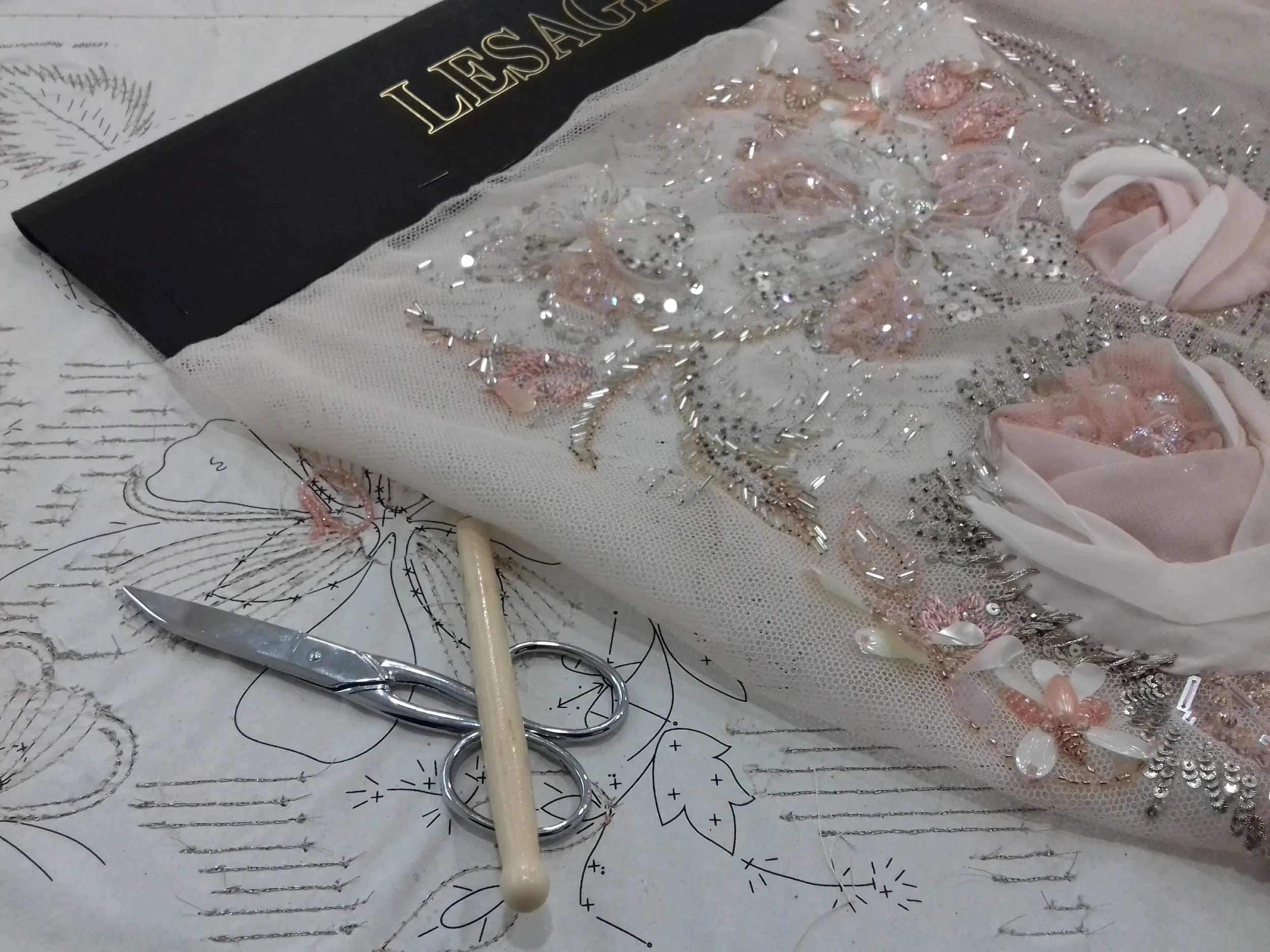
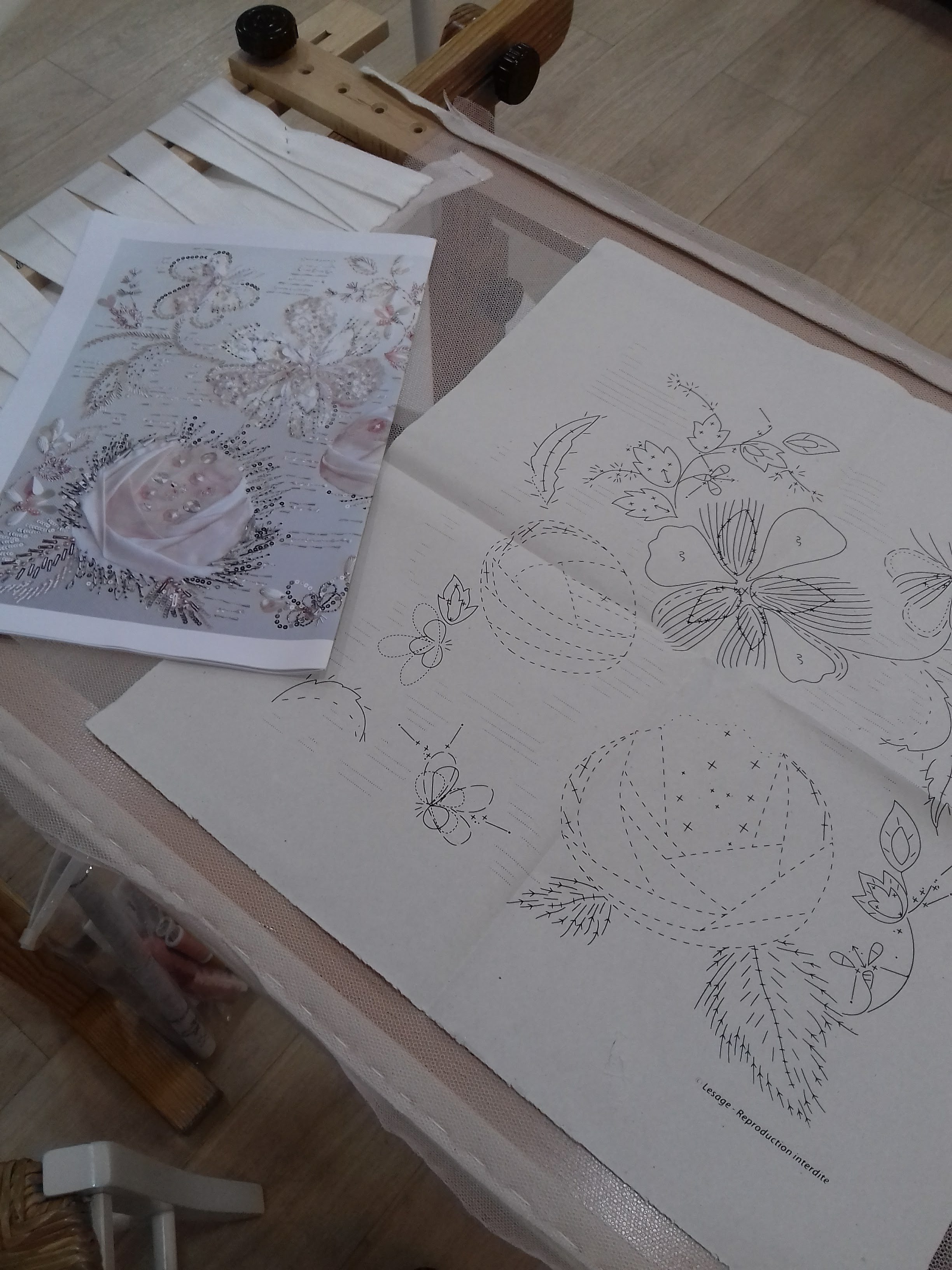
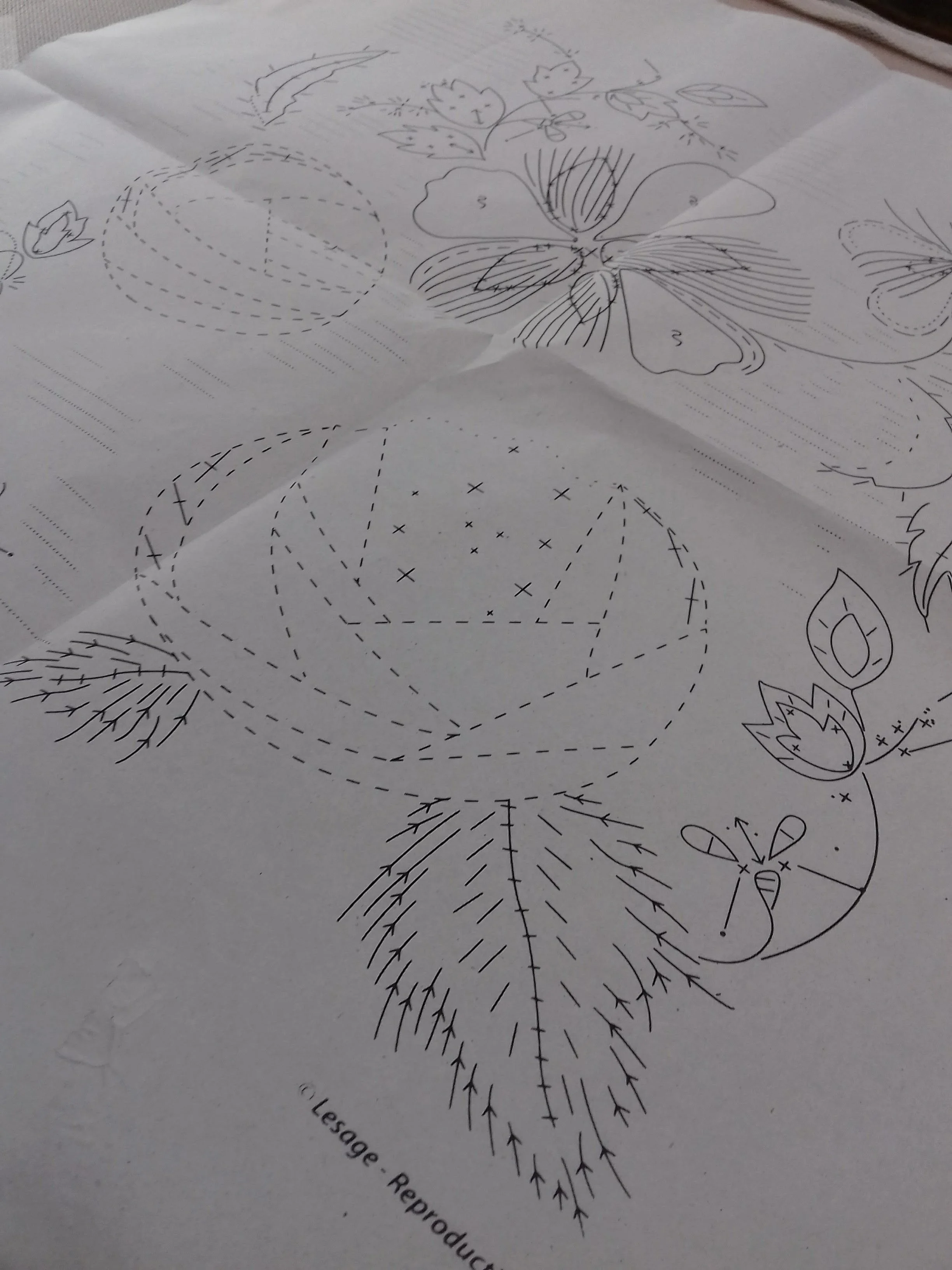
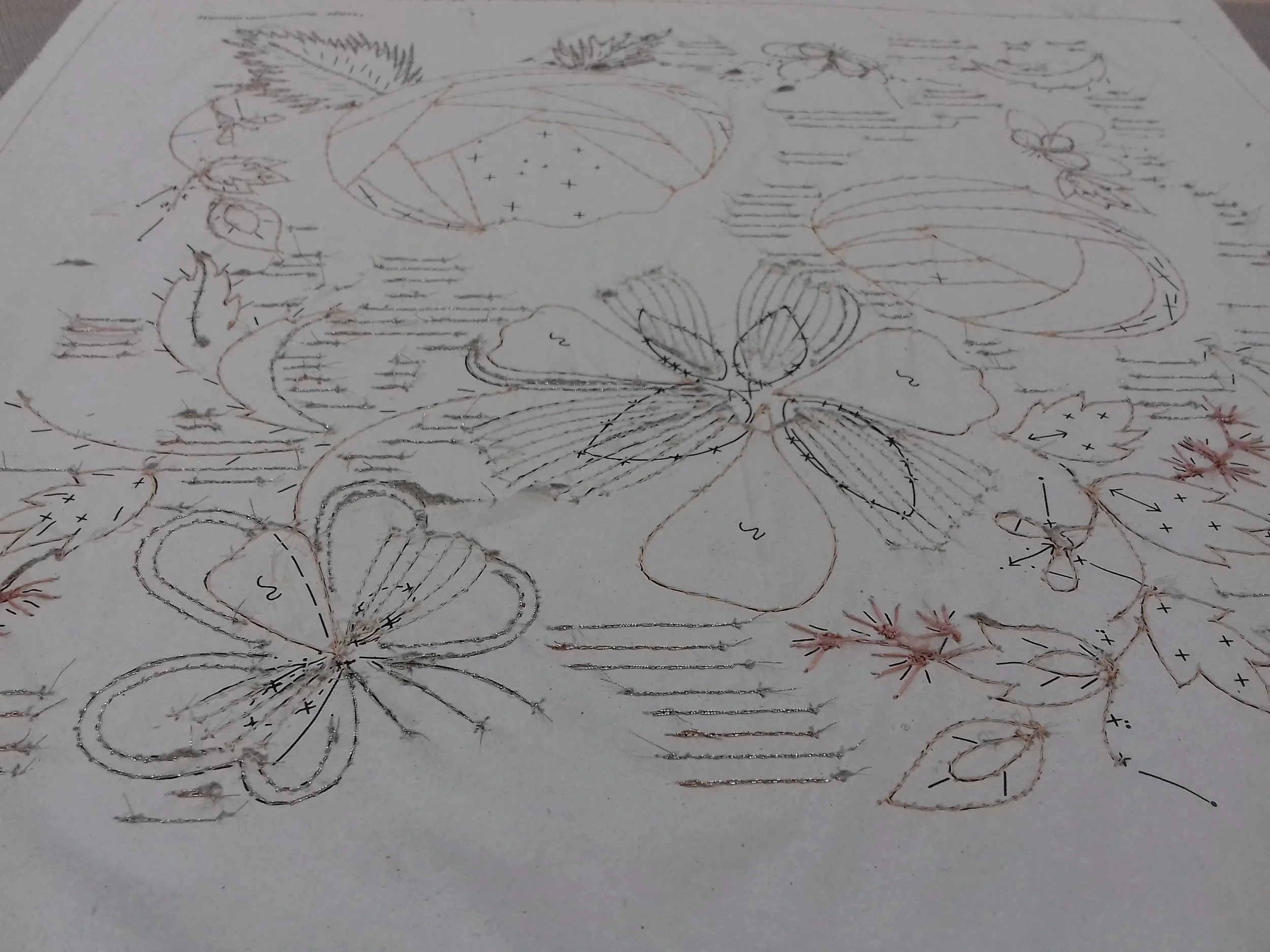
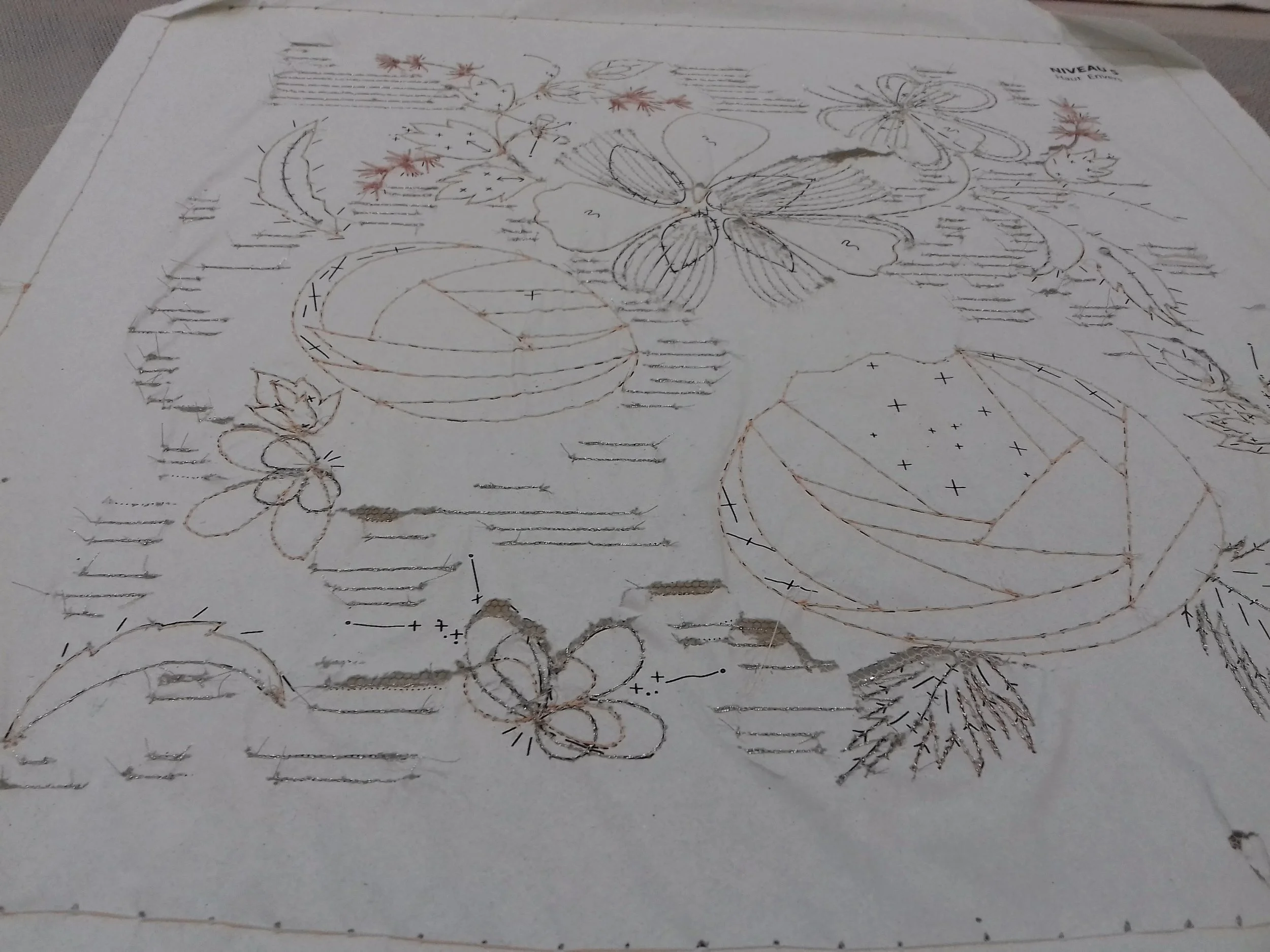
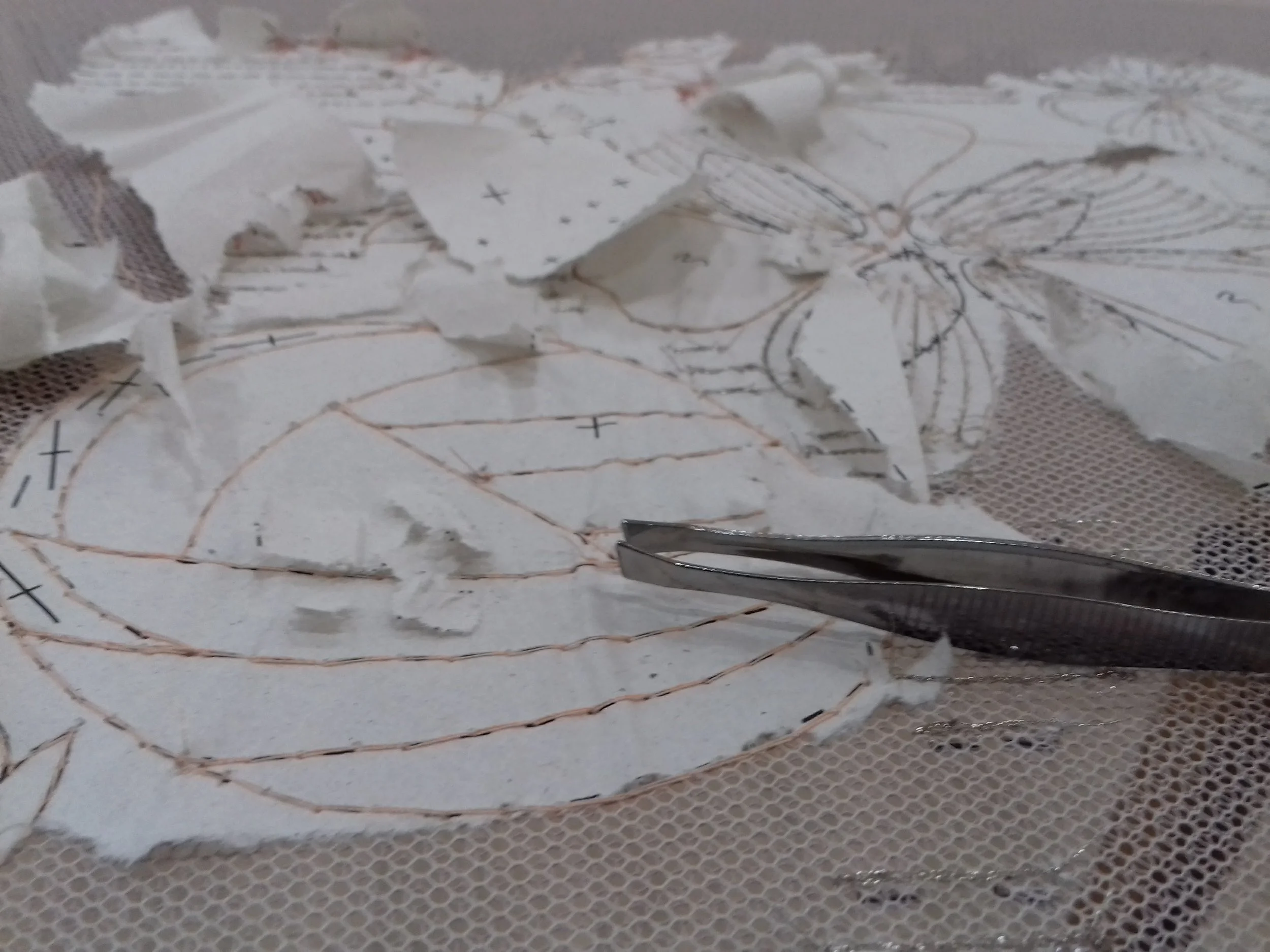
The first section was the rose created with pink tulle and muslin. Thankfully there was a detailed guide included the pattern for how to create and then apply each petal. To start I made the centrepiece using a gathered tulle form that was basted by hand and then applied using the crochet hook. I was shown how to do the first petal in class, folding the fabric in double, pinning the fabric to the pattern paper, cutting the fabric from the pattern, and basting the open edge. At home I completed the remaining seven petals of the large rose saying a silent prayer that my ‘vintage’ iron wouldn’t burn or stain the fabric. Back in class the teacher showed me how to place, fold and overlap the petals over the crushed tulle centrepiece using the previously stitched contours as guidelines. In the end mine was in no way related to the original. Next I added the cabochons, éclats and jewels to the centre.
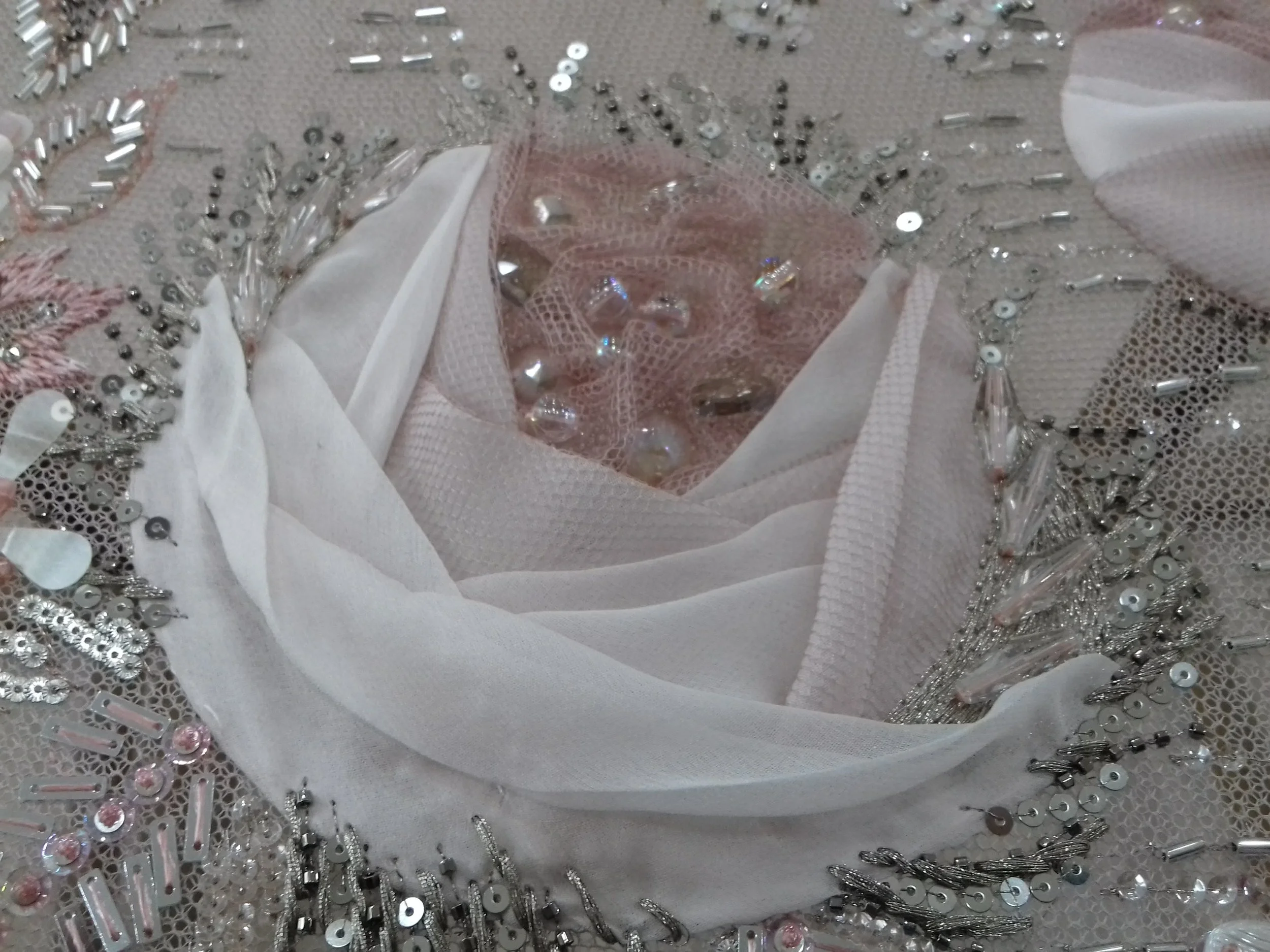
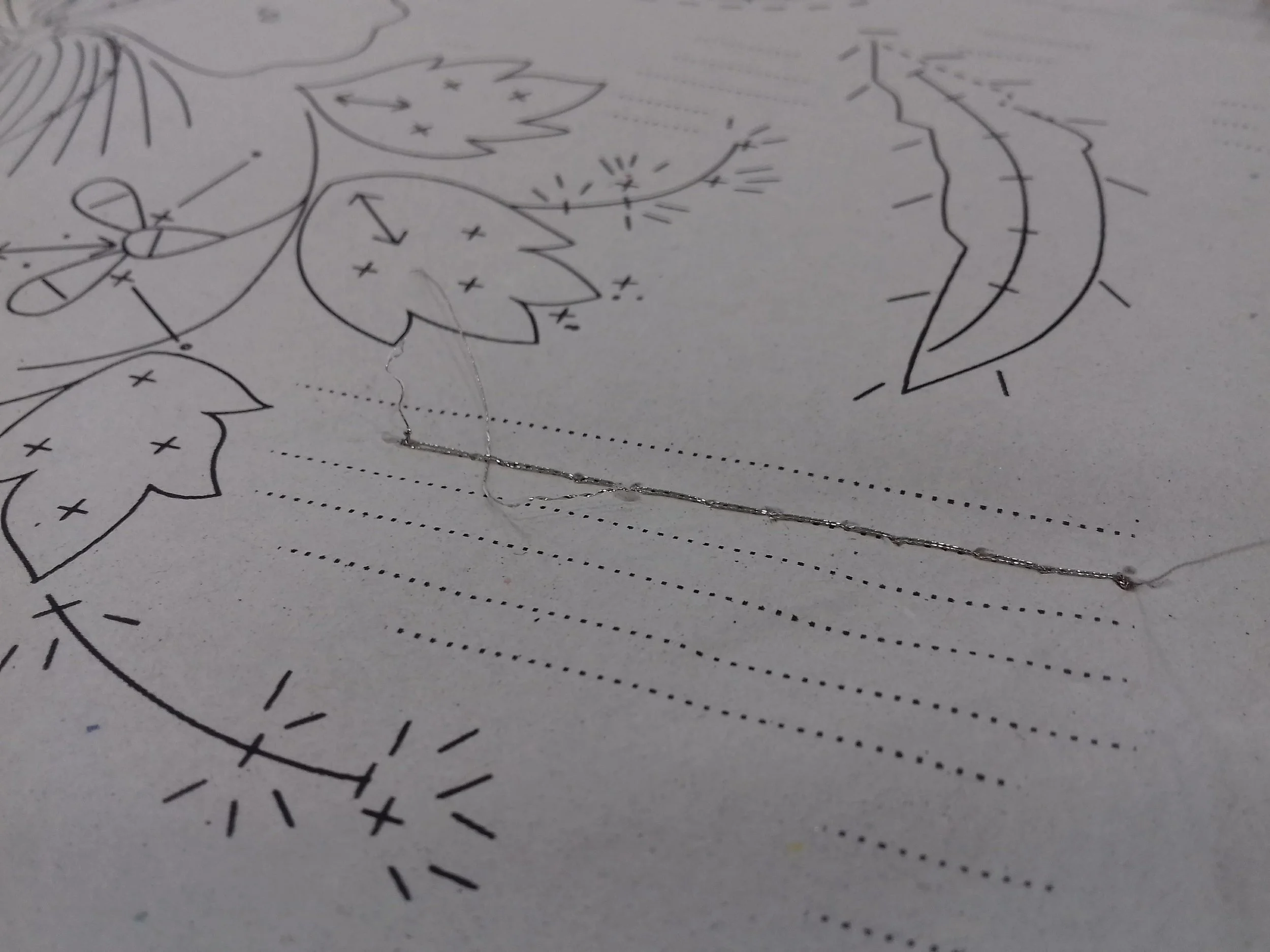
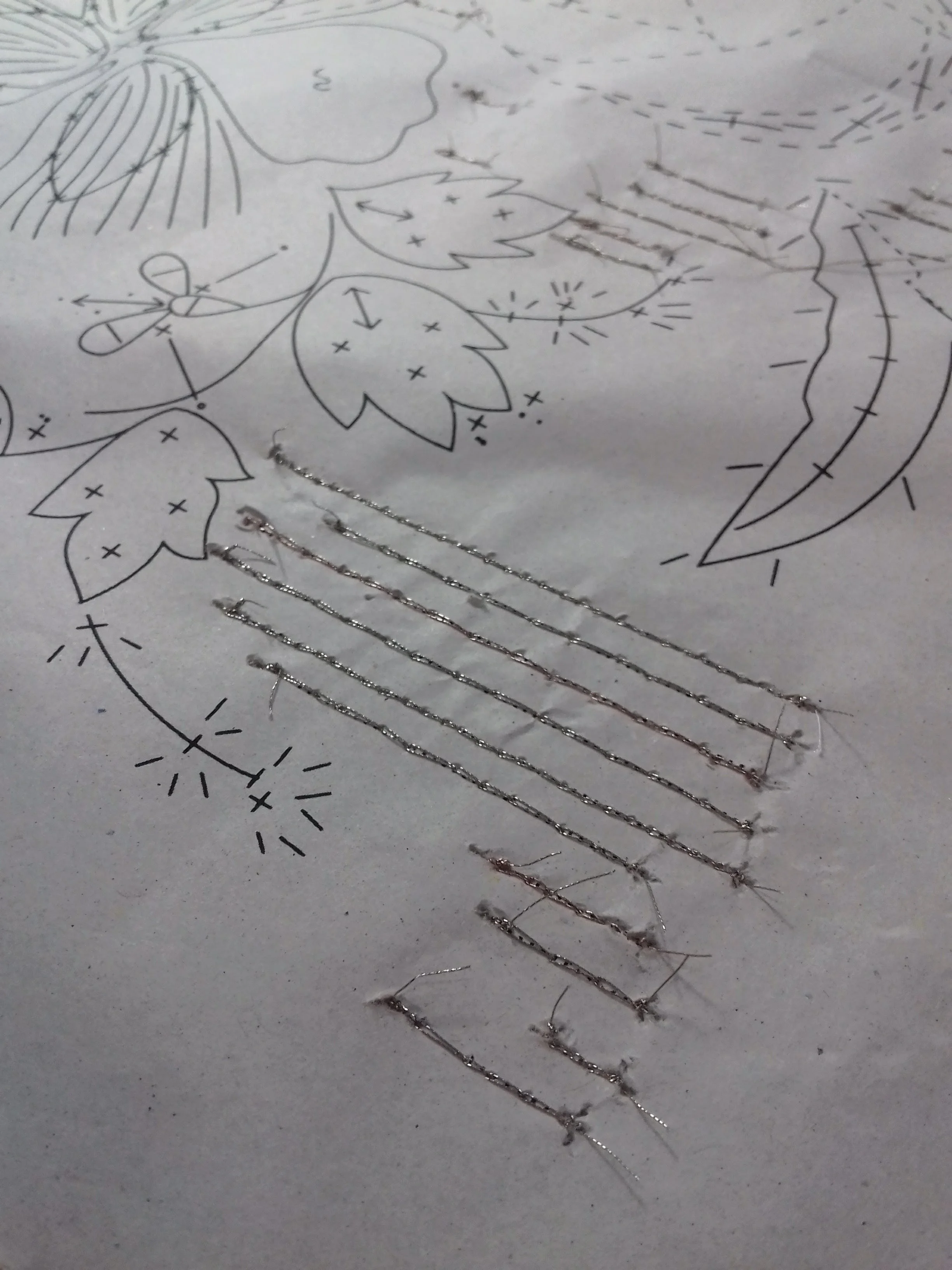
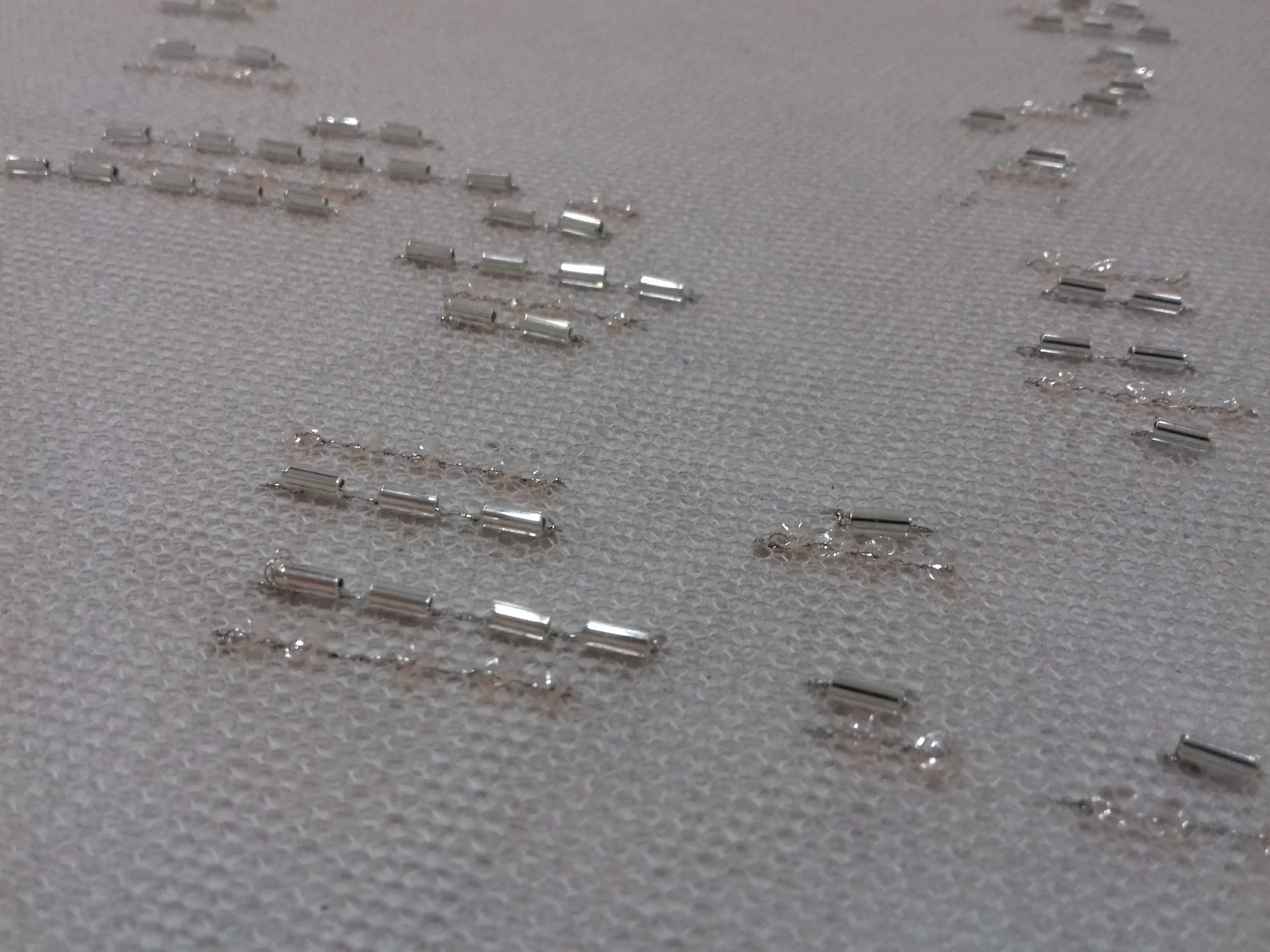
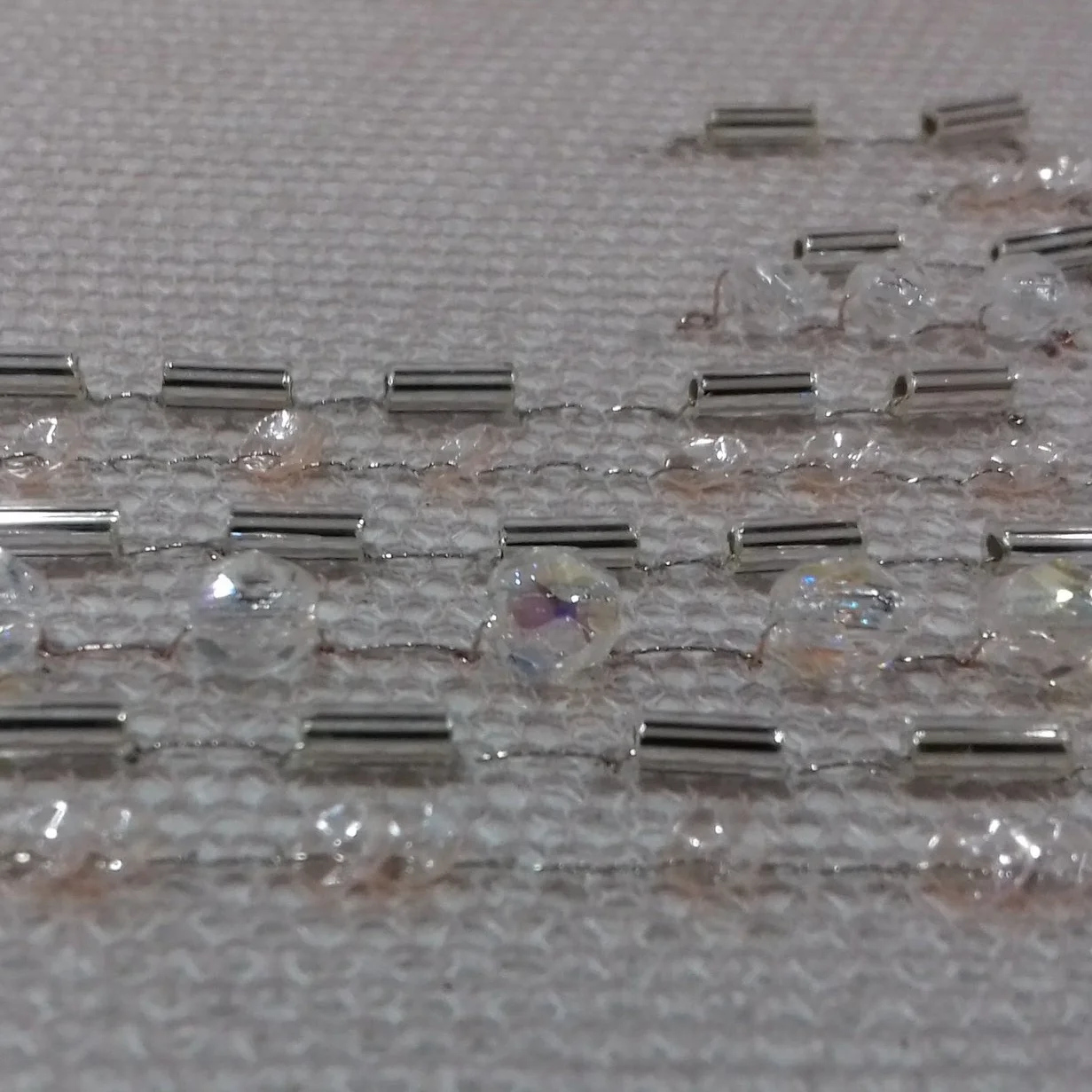
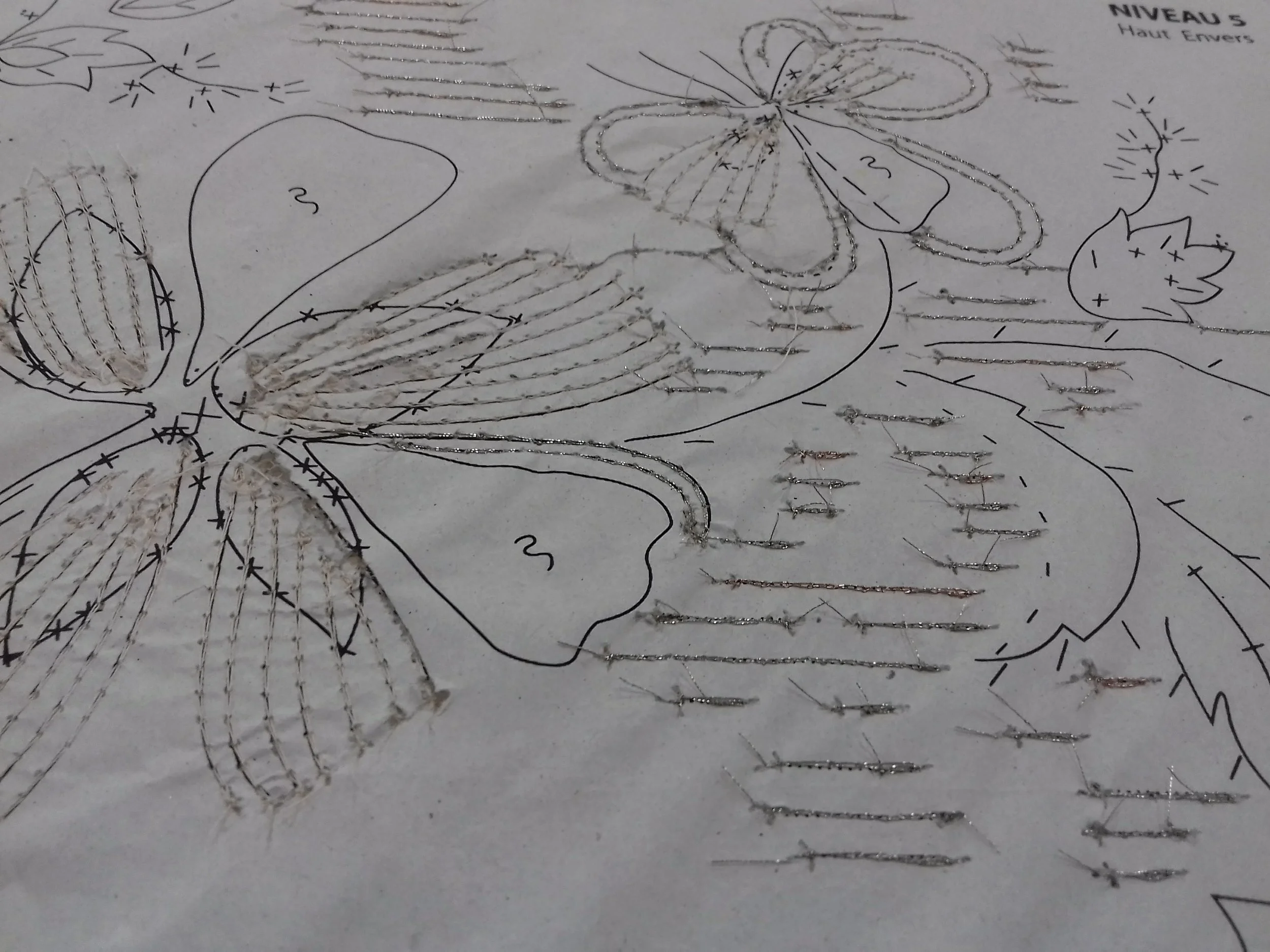
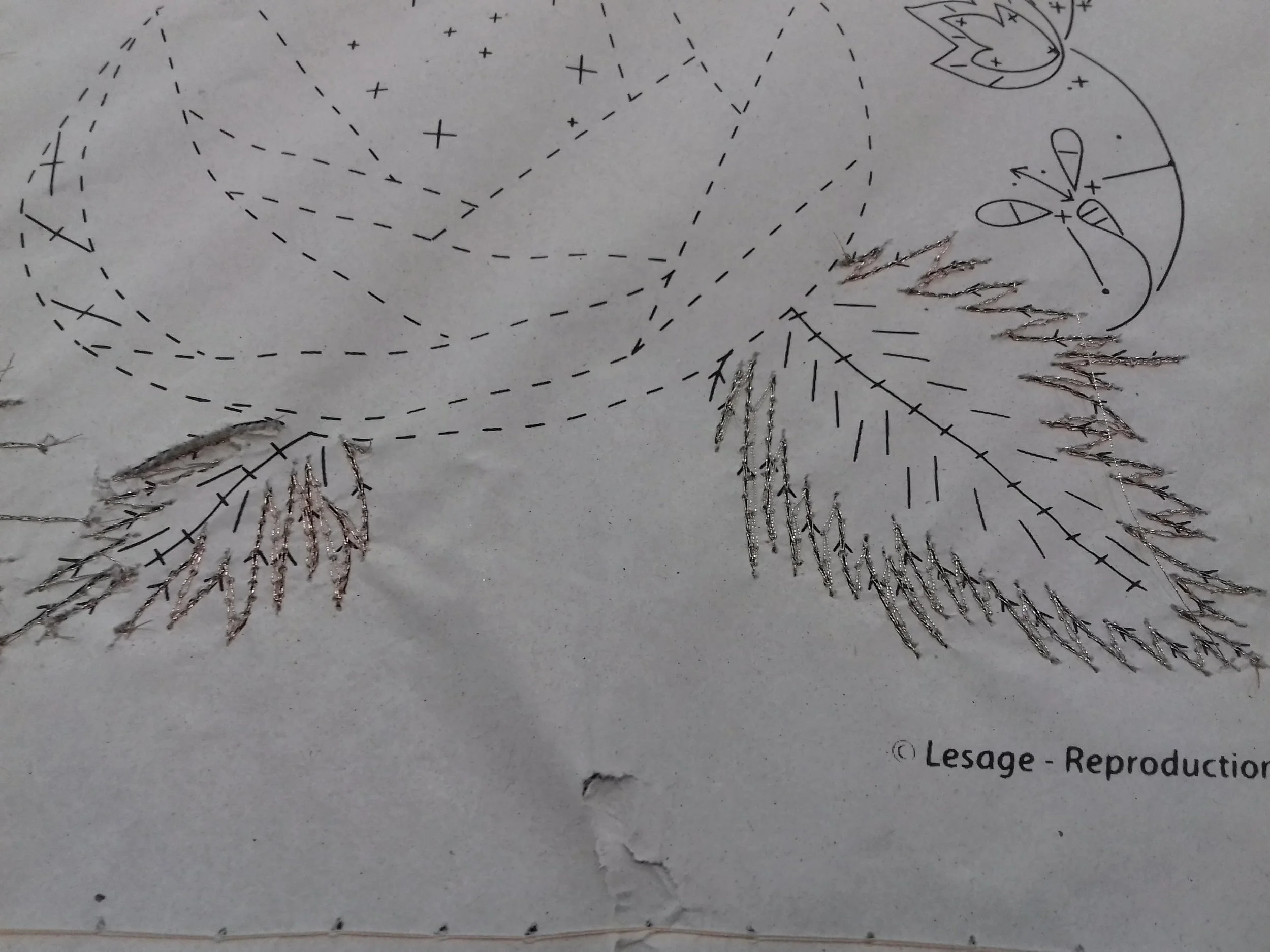
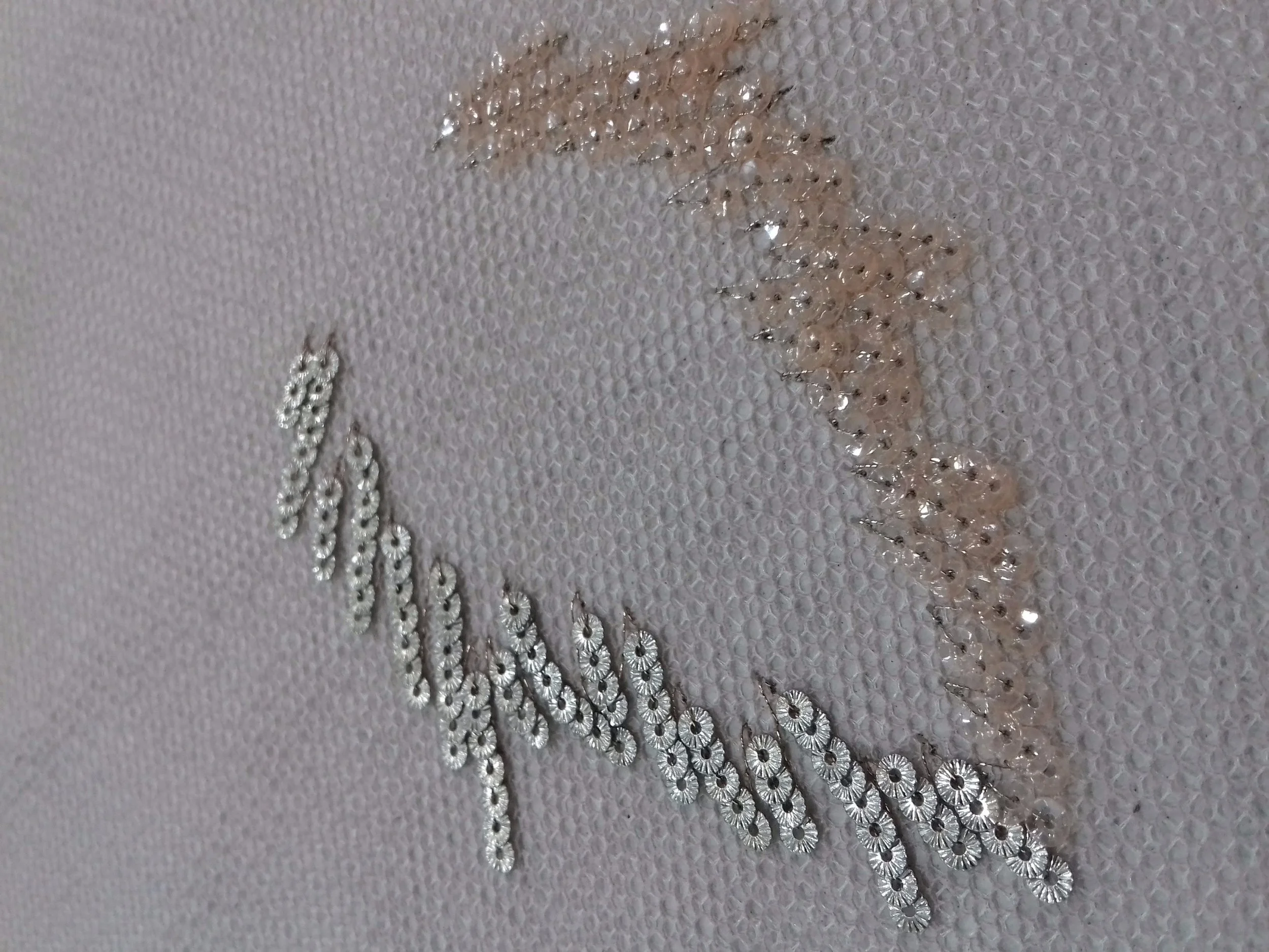
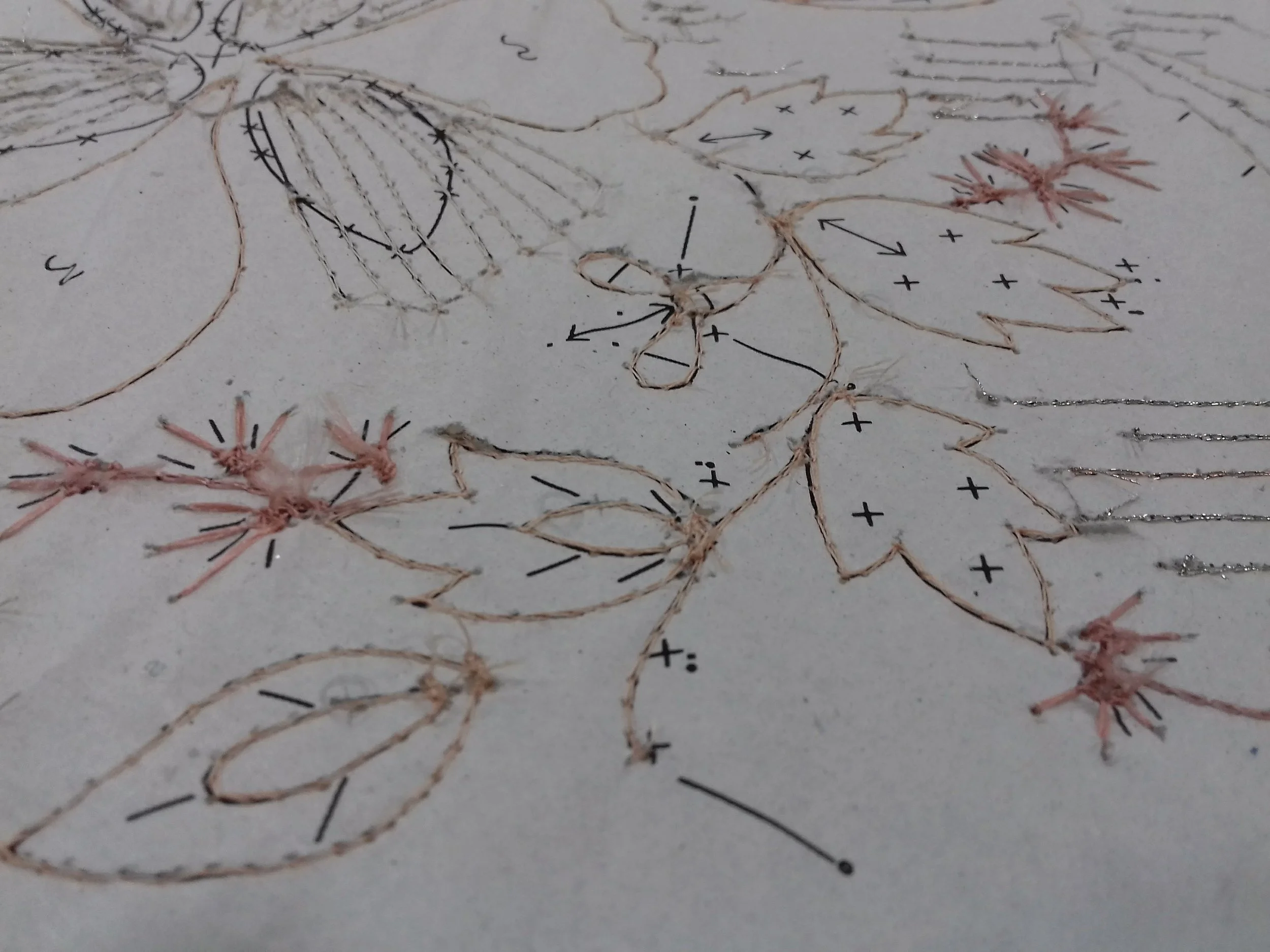
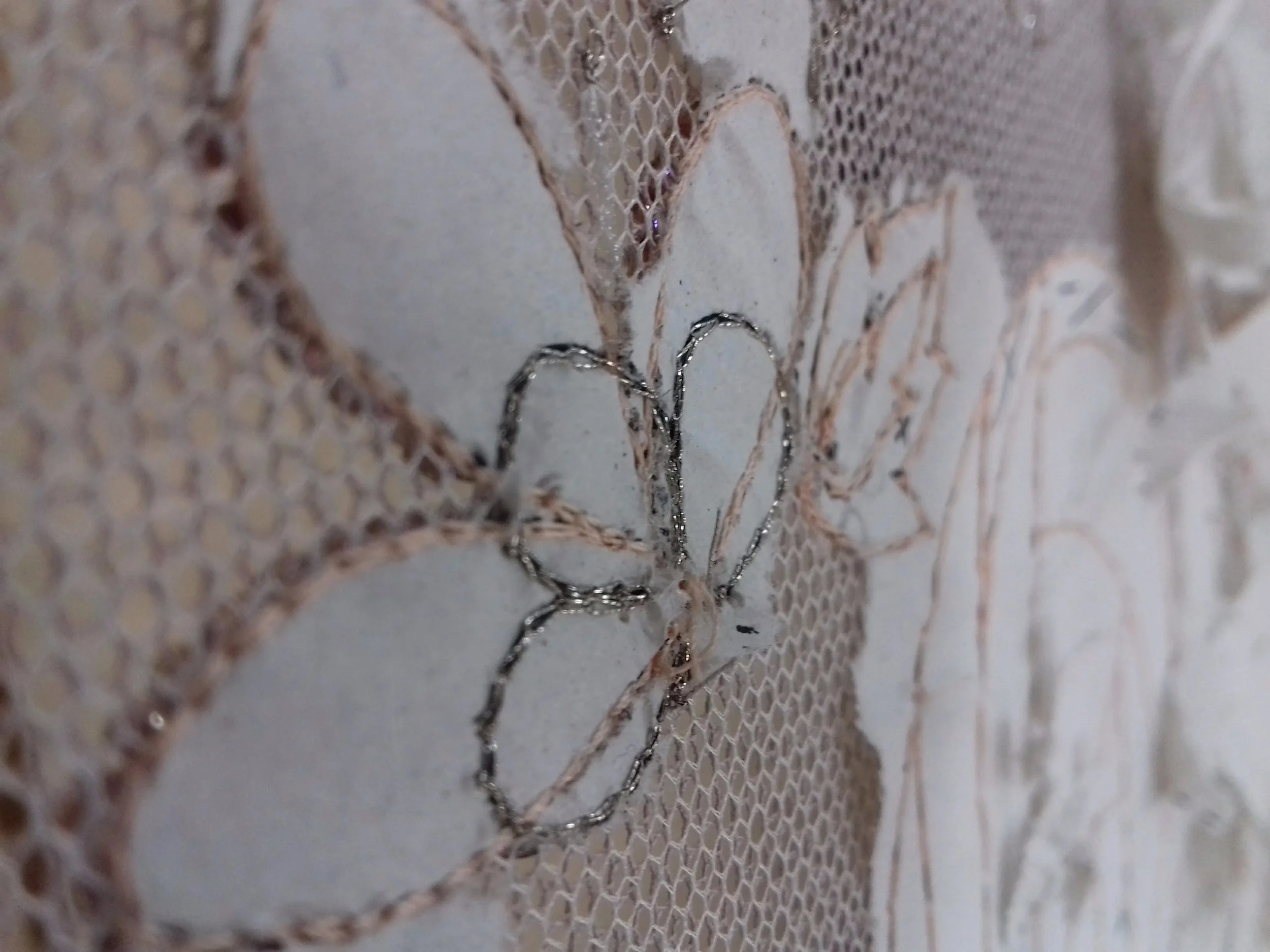
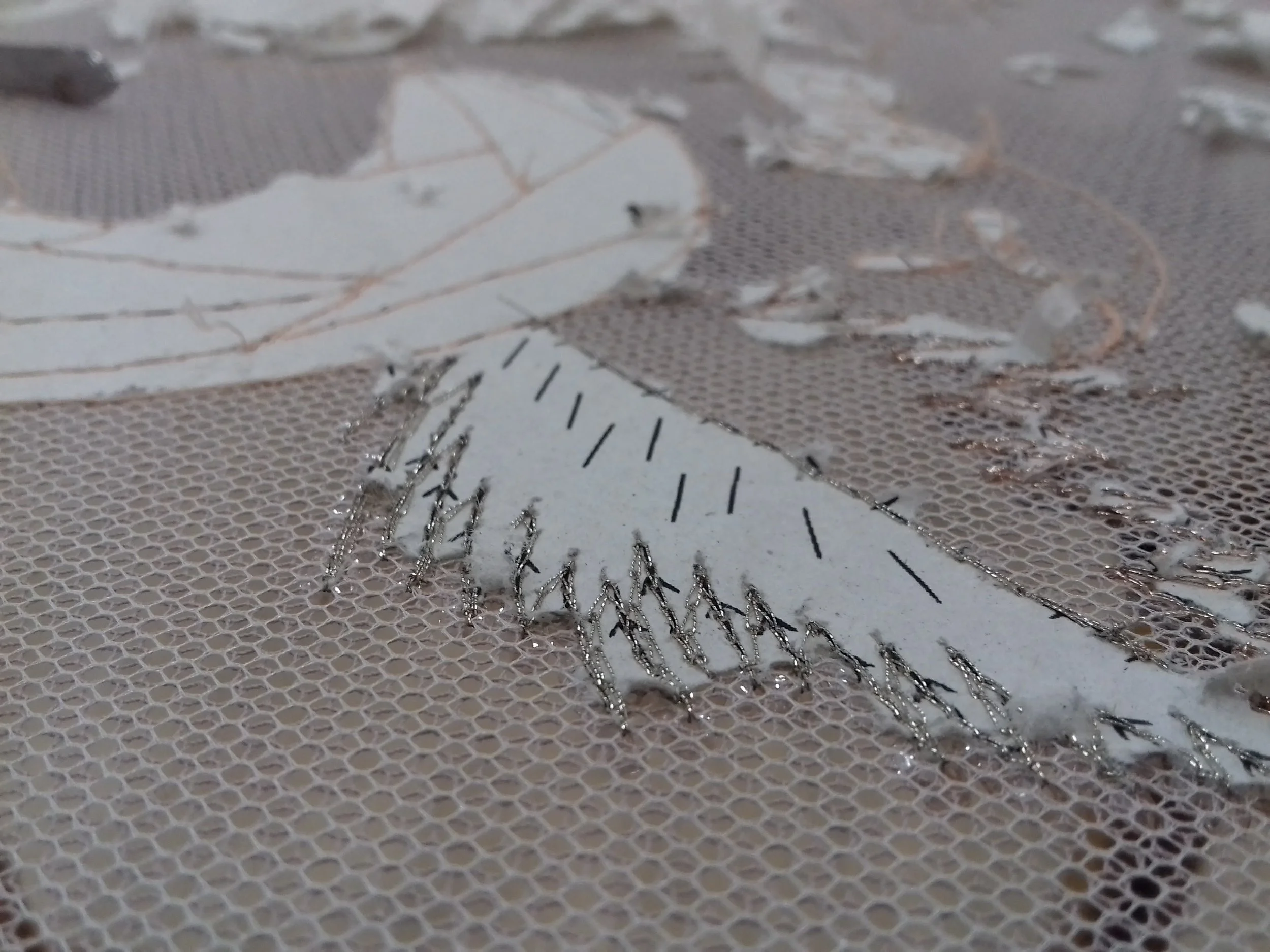
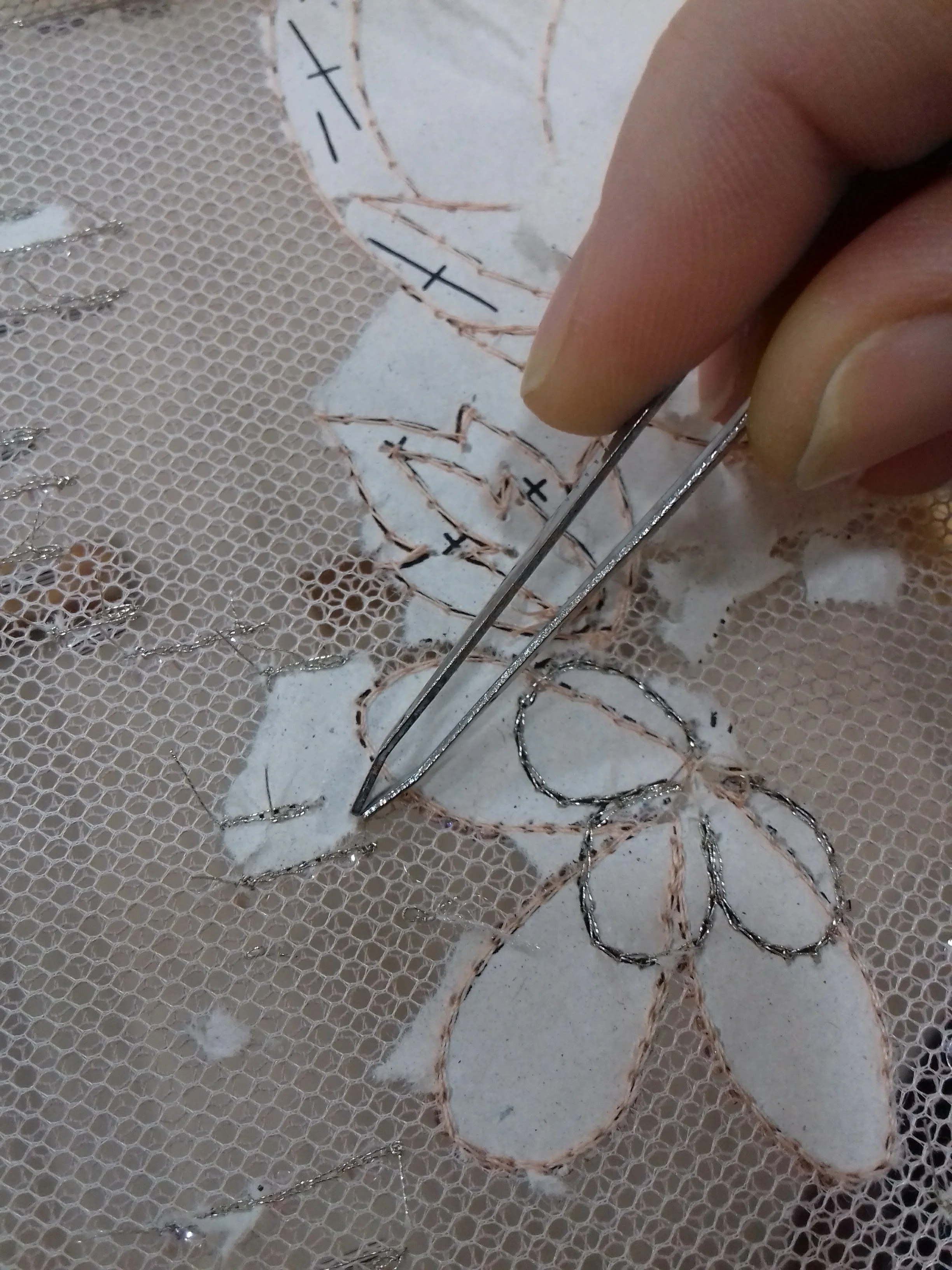
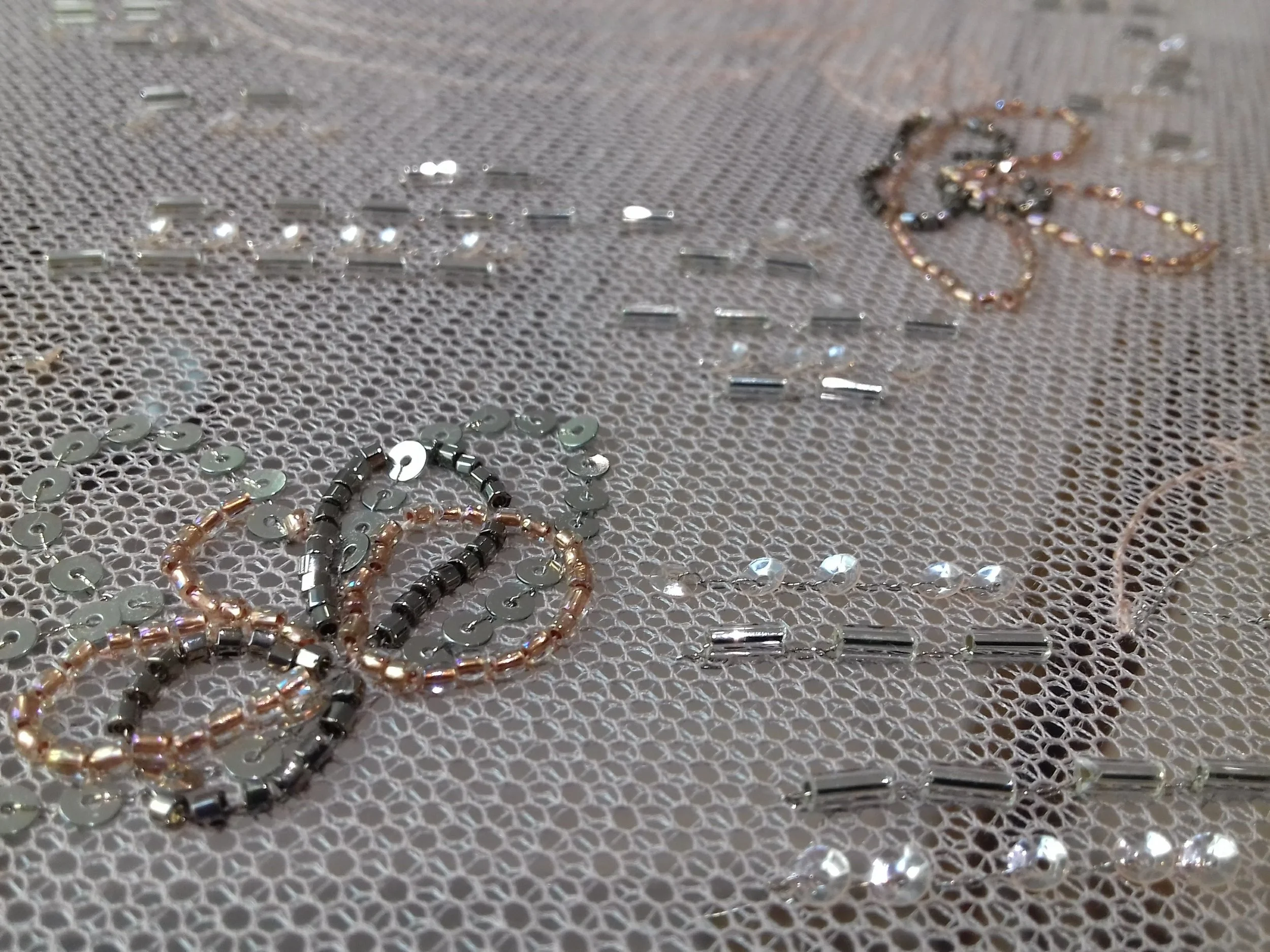
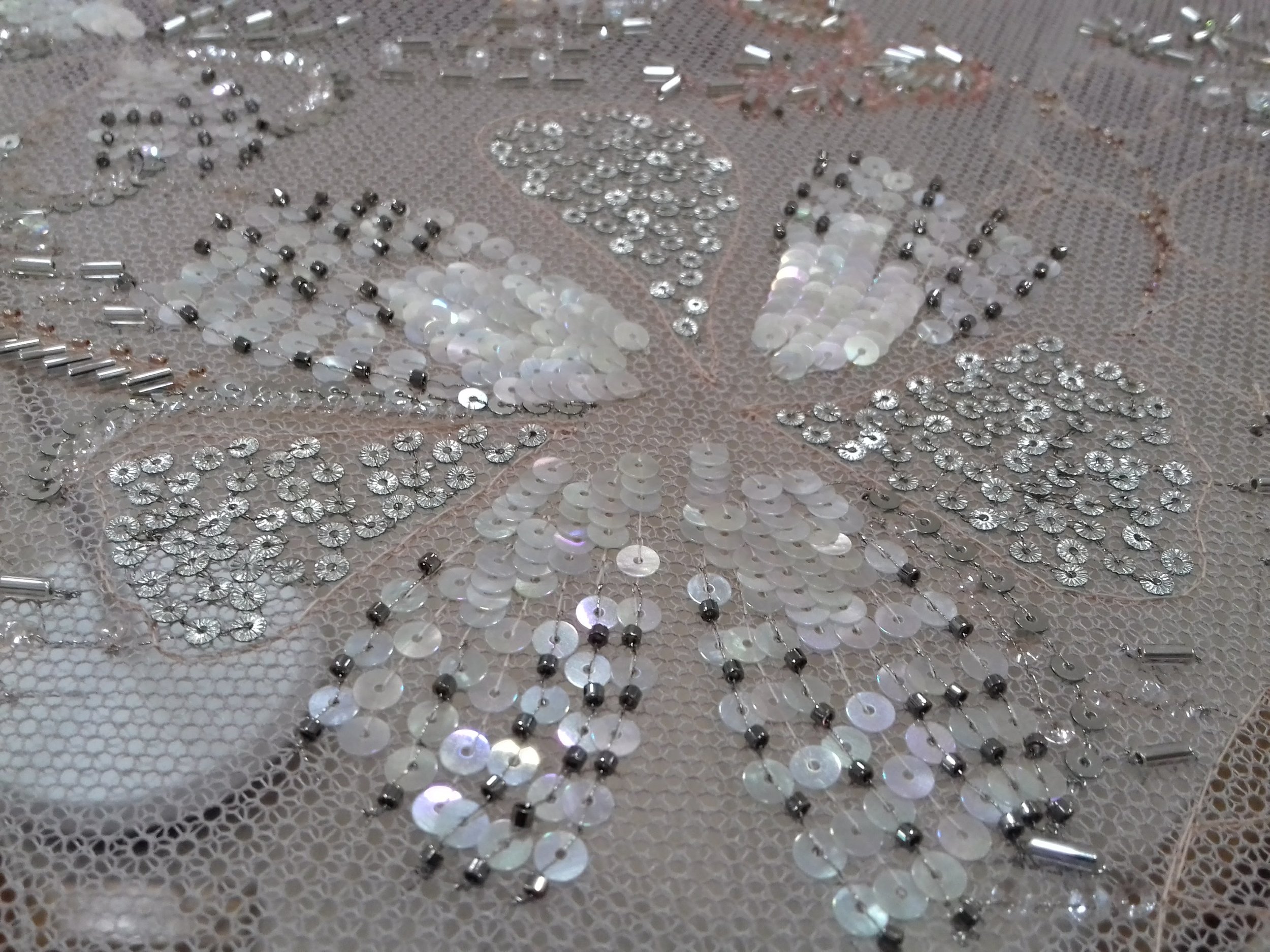
The outlines of the roses were decorated using several stitches and techniques in silver metallic thread. First was as a section of filling chain stitch with a double thickness of thread, with large crystal tassel beads applied on top. Next was a series of stem stitches with quadruple thickness of thread placed between the discontinuous rows of silver sequins and tube beads. I loved how changing the thickness of thread and stitches immediately changed the texture and effects. The leaves surrounding the roses were already outlined in pink cup and vintage silver ‘sunshine’ sequins, the centres were decorated with rows of beads placed above sequins and flat rectangular silver sequins.
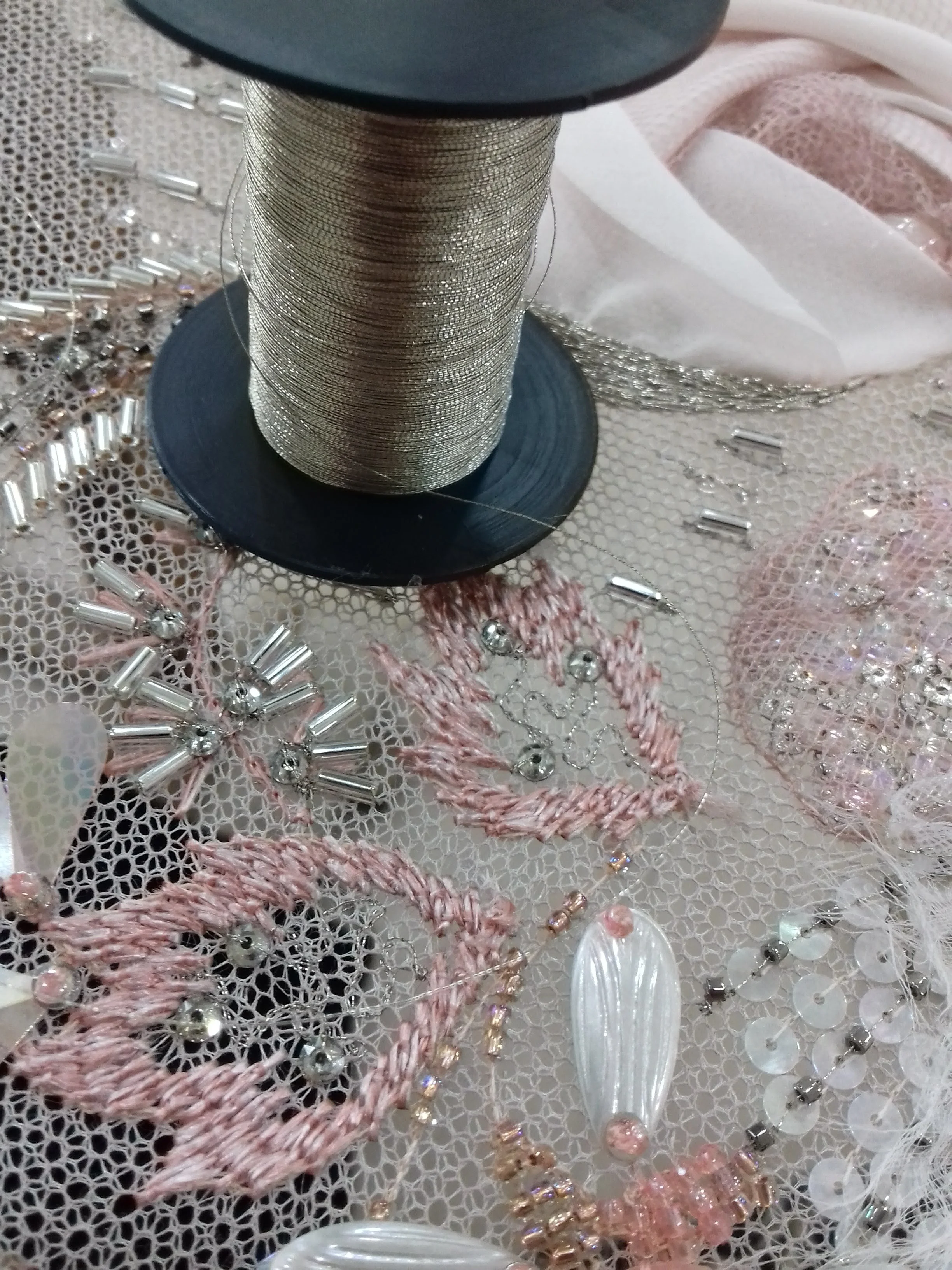
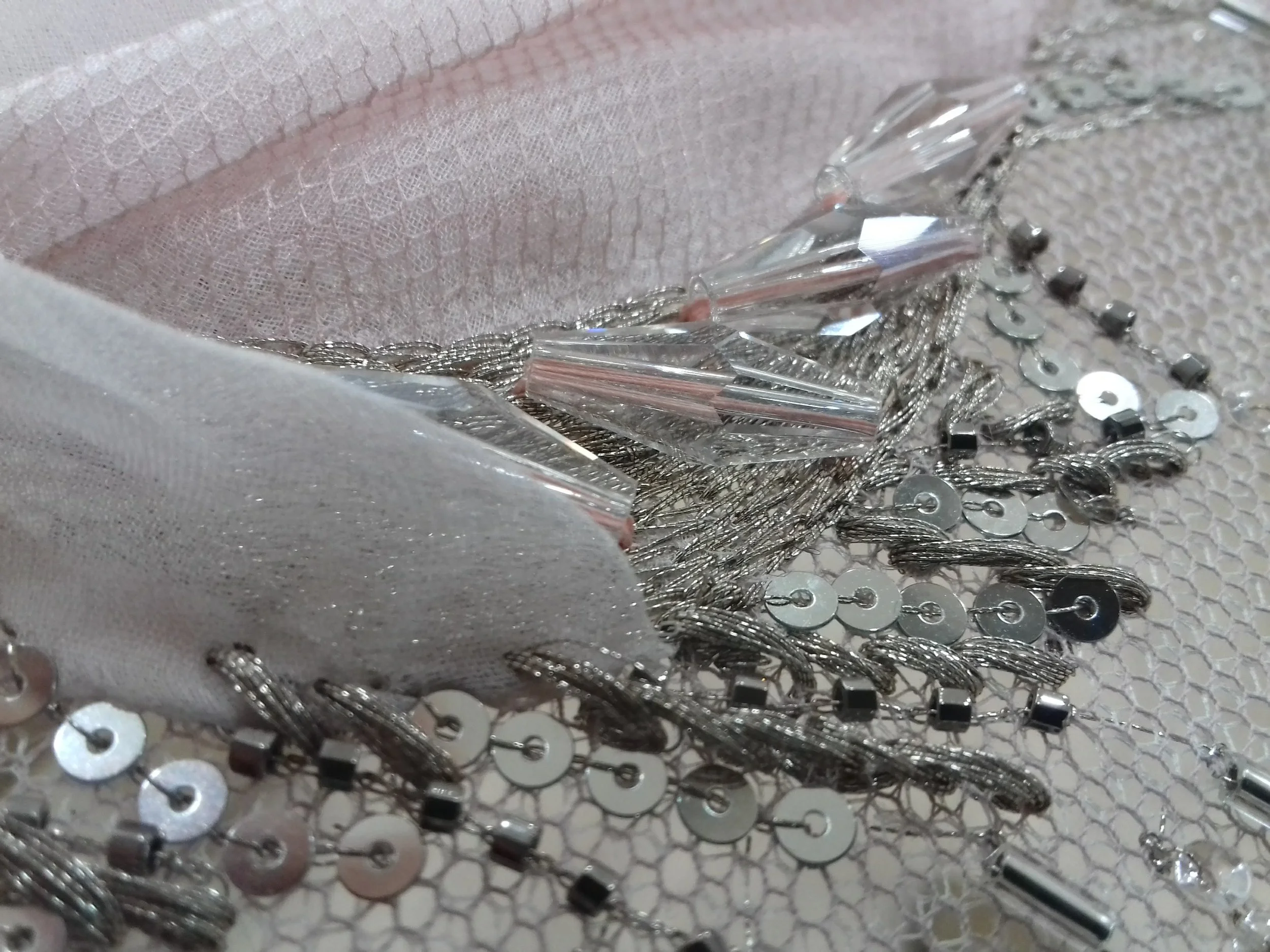
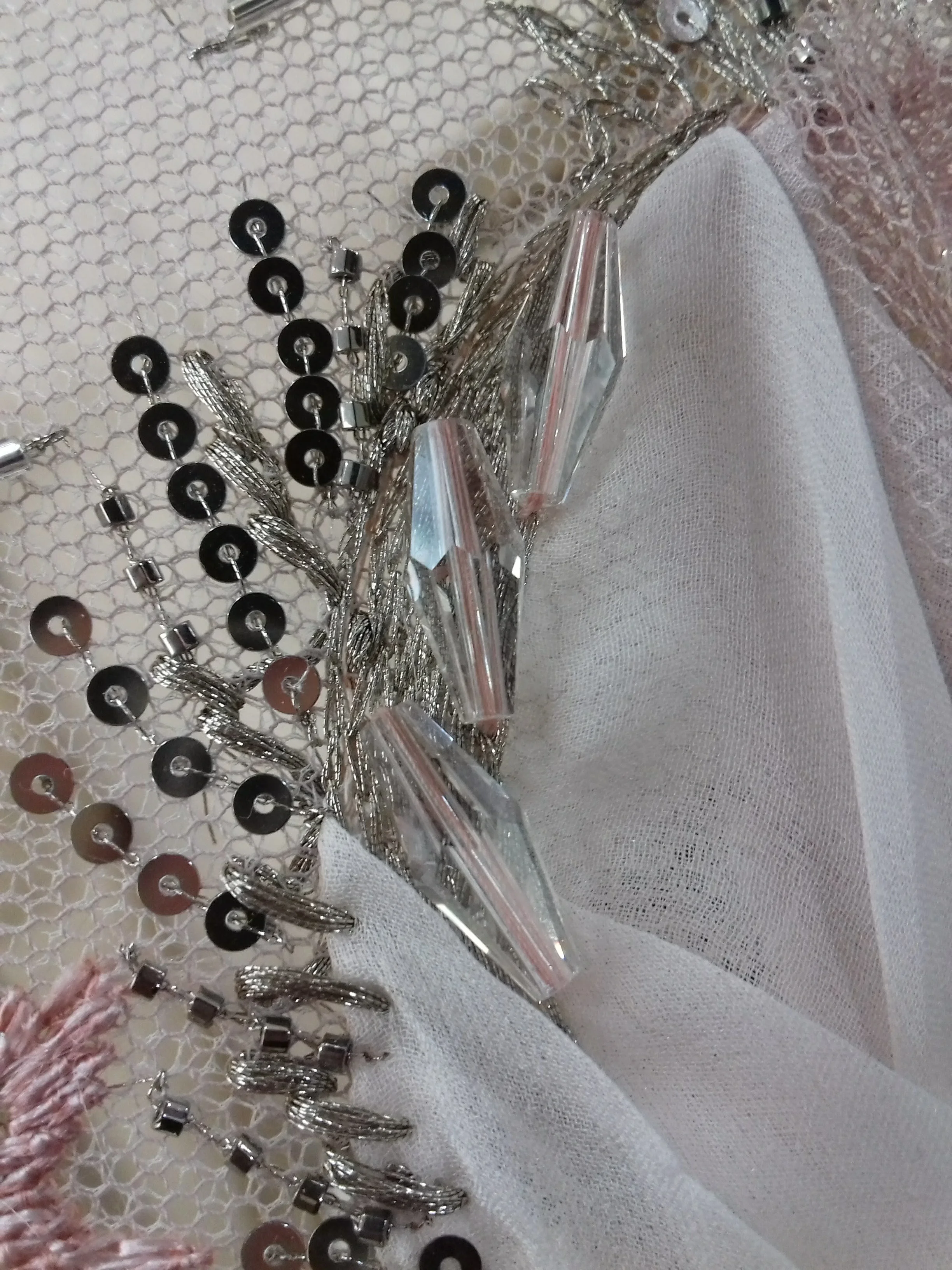
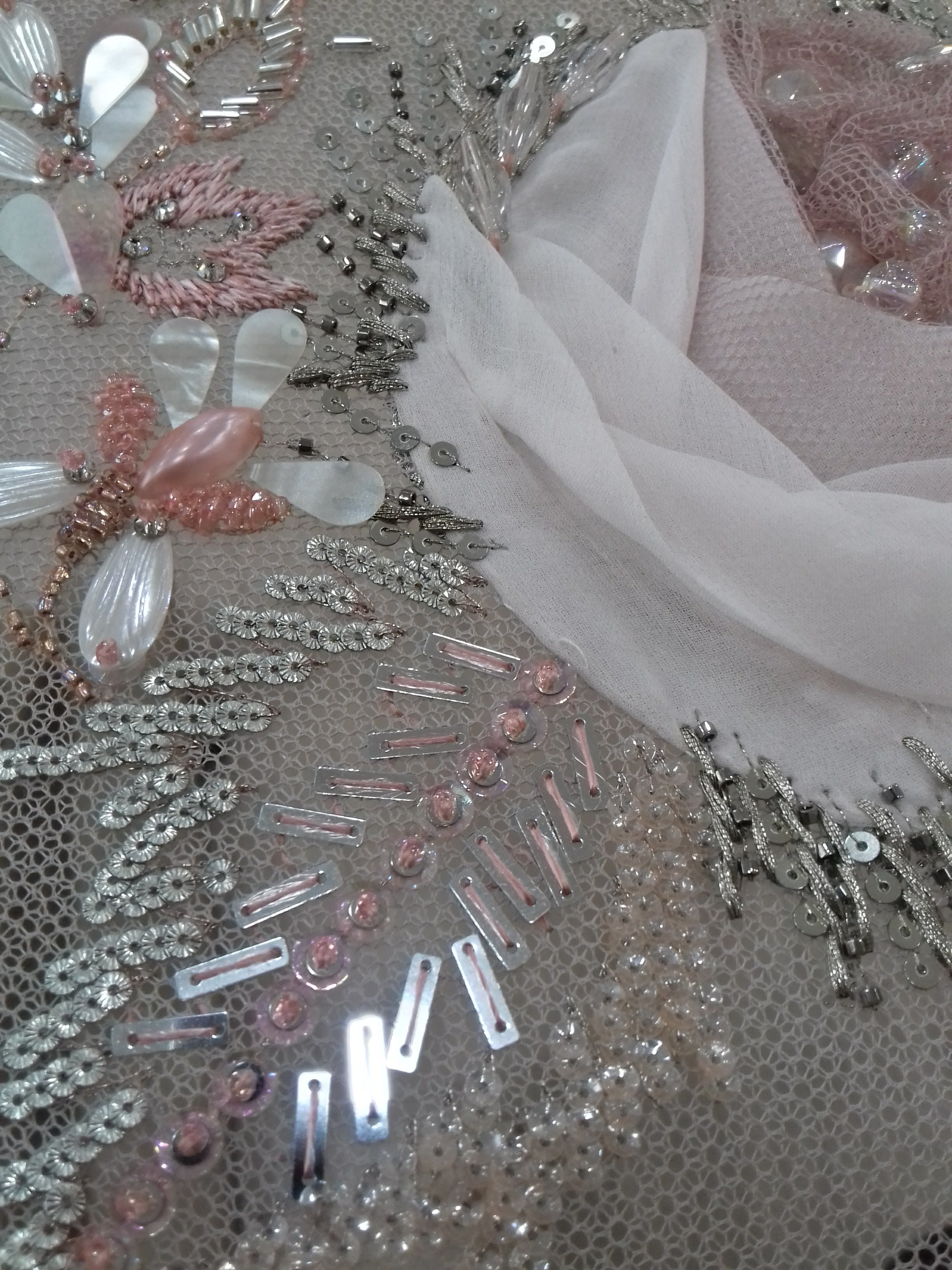
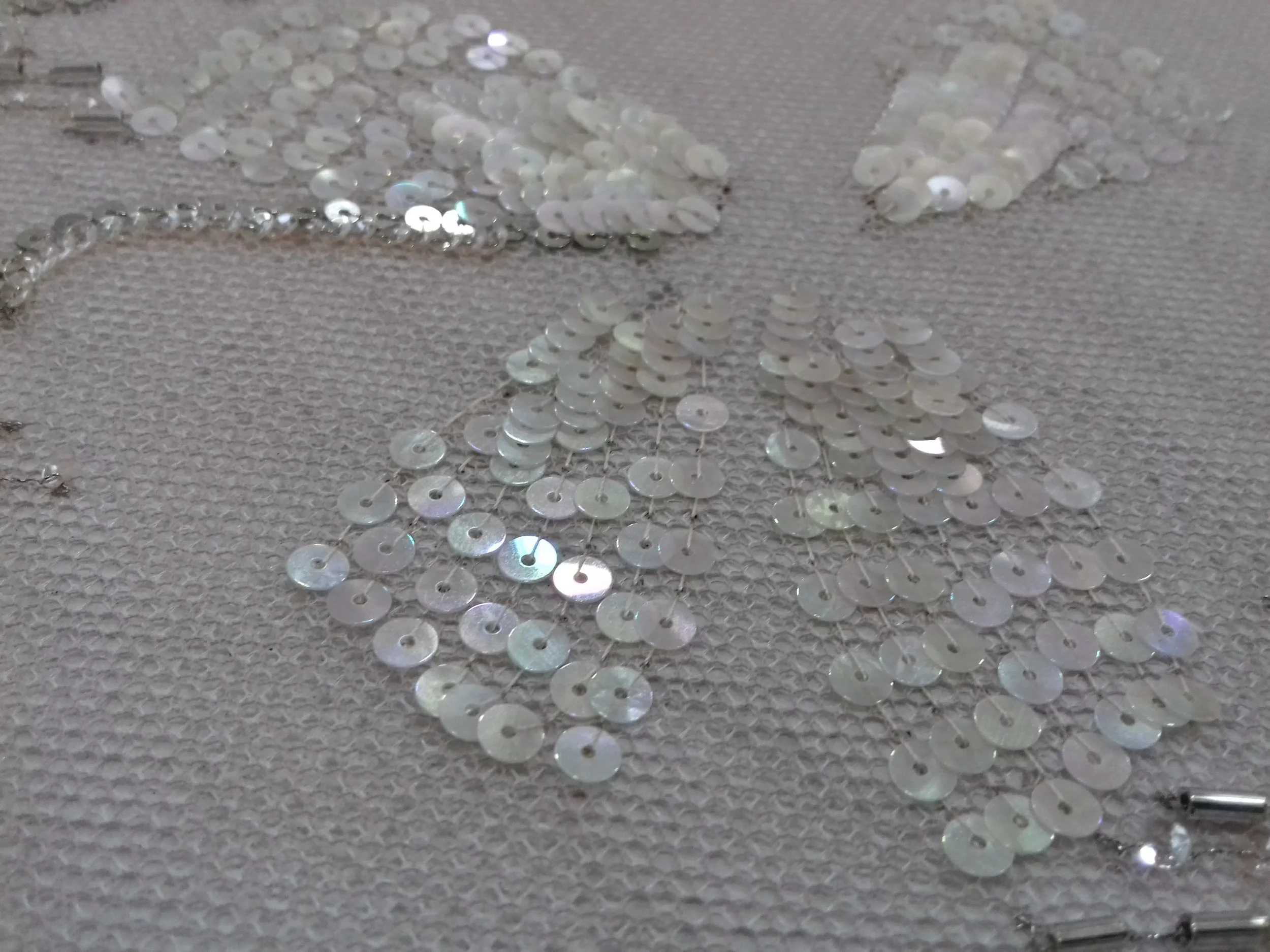
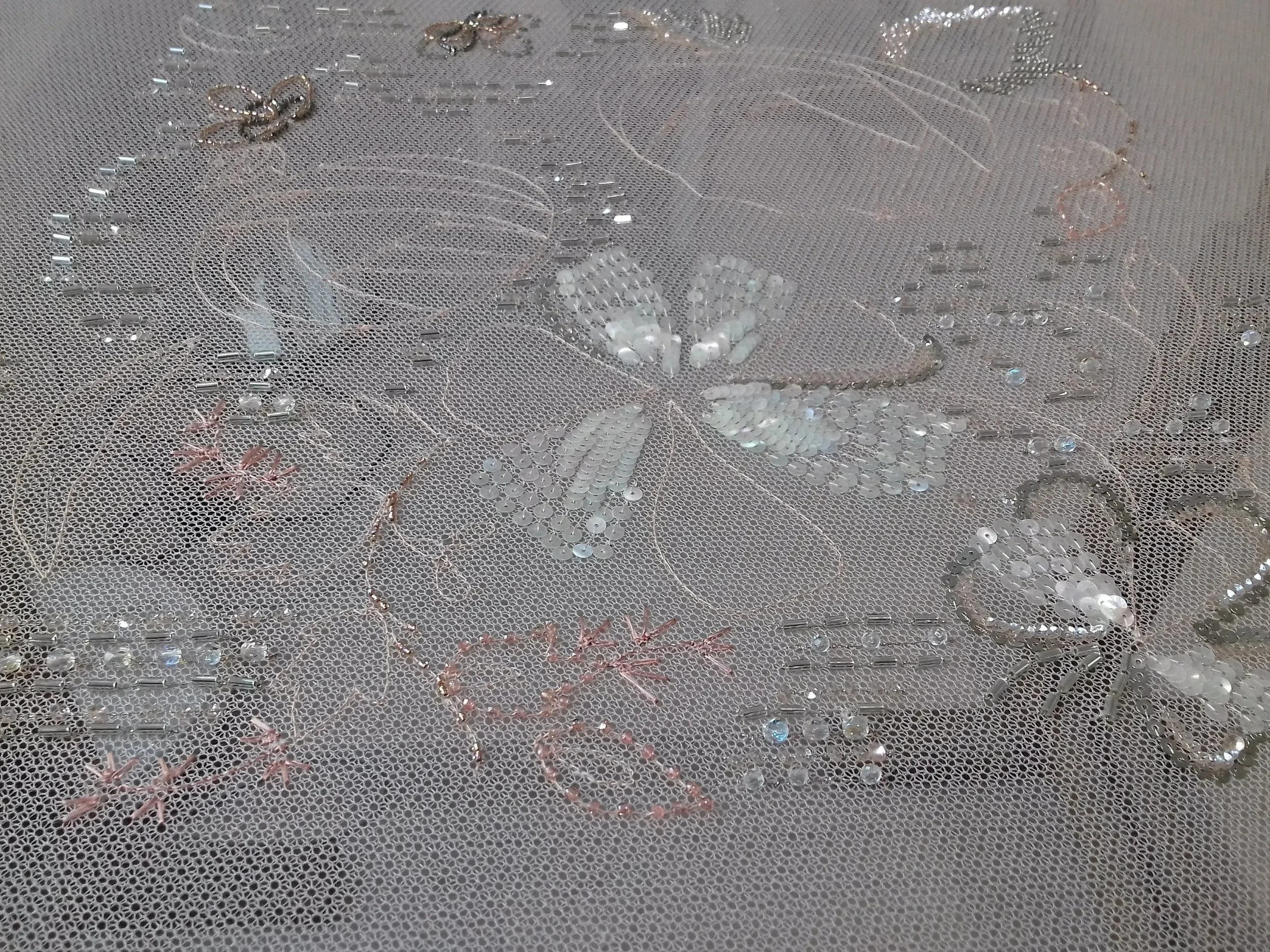
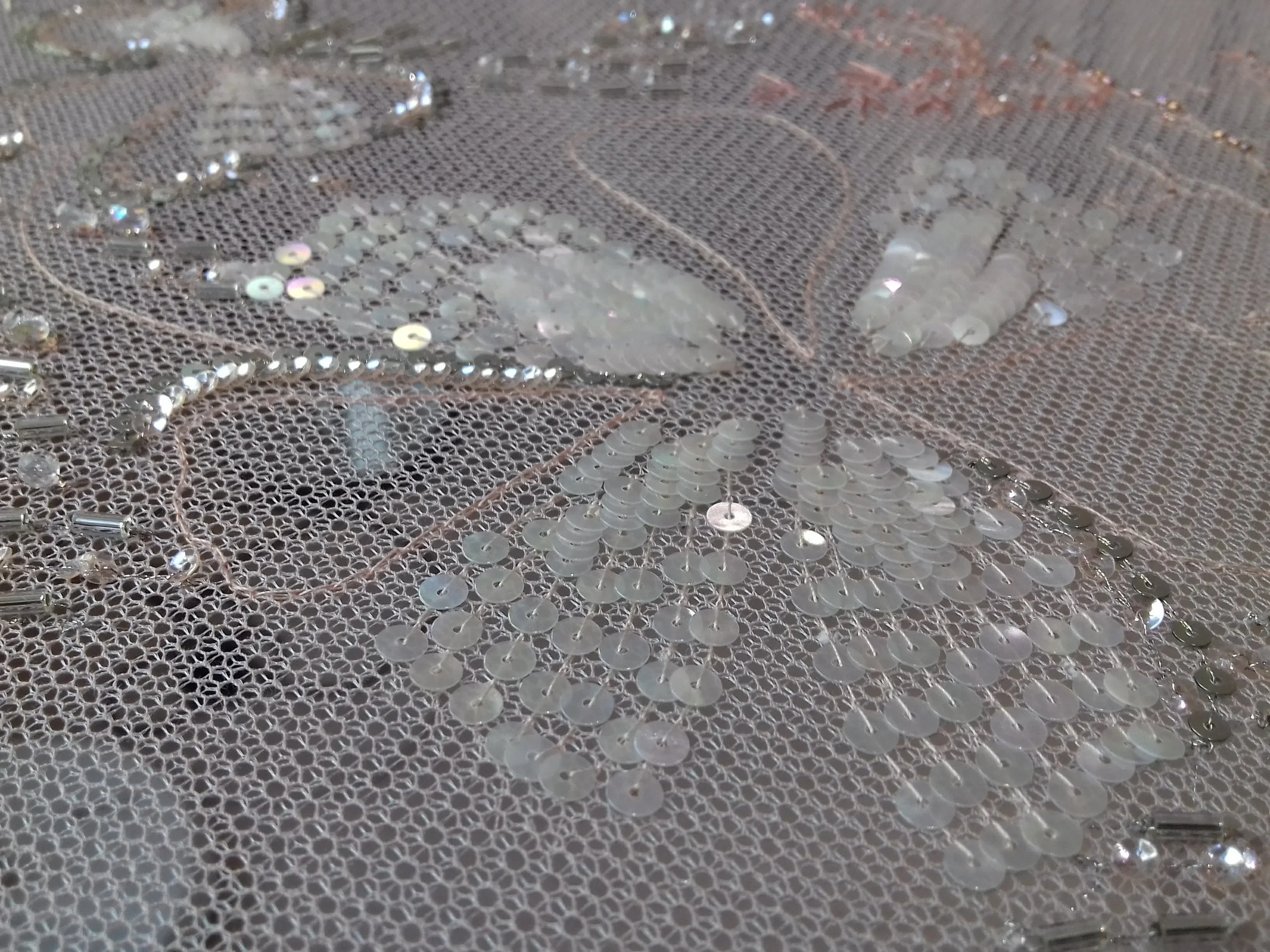
This section of flowers involved adding a layer of tulle or white muslin to the petals. The fabrics hid the sequin and bead work below and I was a bit reluctant to add the puffy petals! The muslin was frayed at the edges to add texture. I applied silver sequins to ribbons of crinoline and then arranged the ribbon in loops in the centre of the flower. The centre was then filled with Rhodoïd sequins in opaque white and large translucent cabochons and spheres. (Rhodoïd is a synthetic plastic material, I thought it was a shape I had forgotten from primary school!).
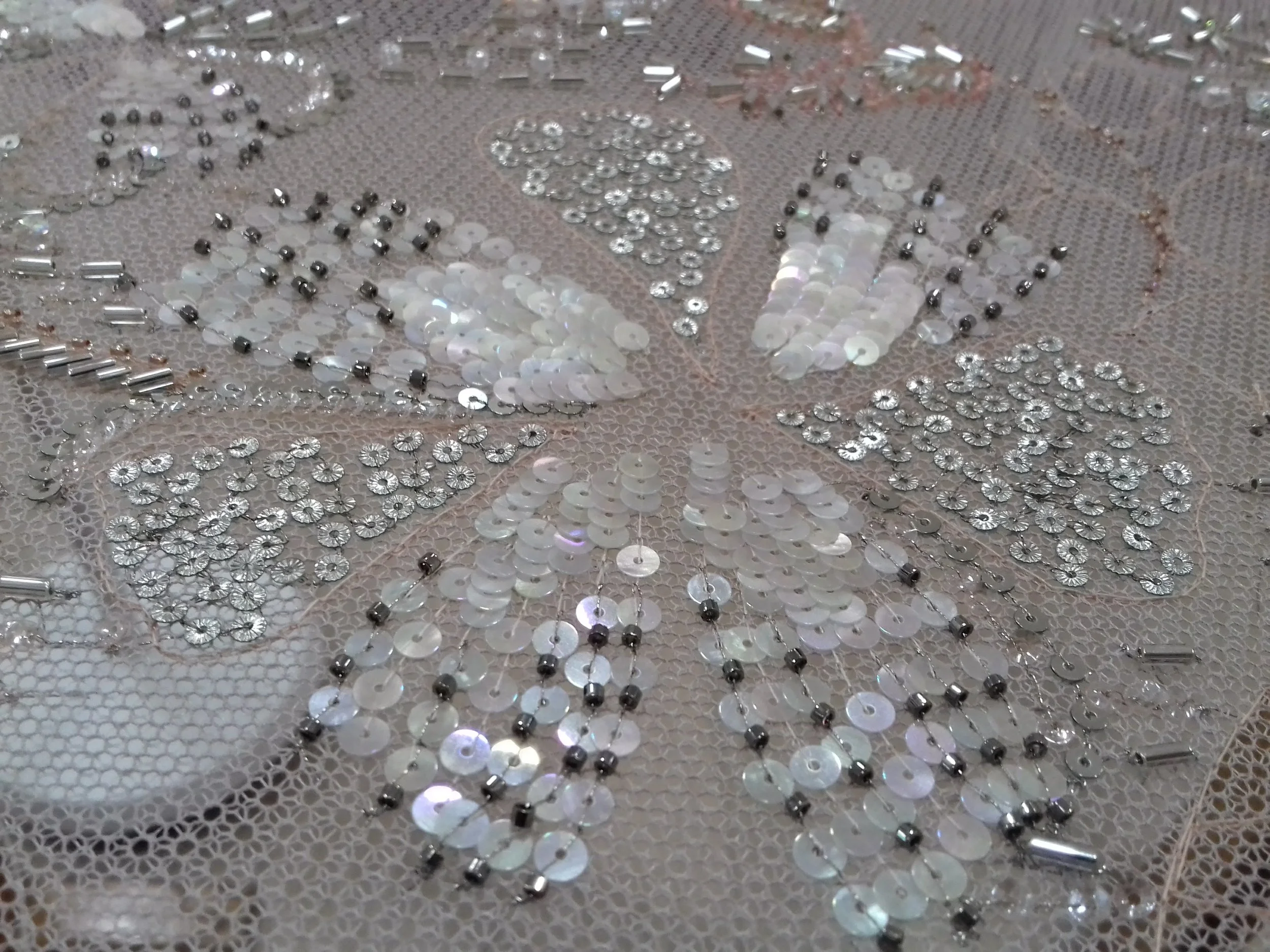
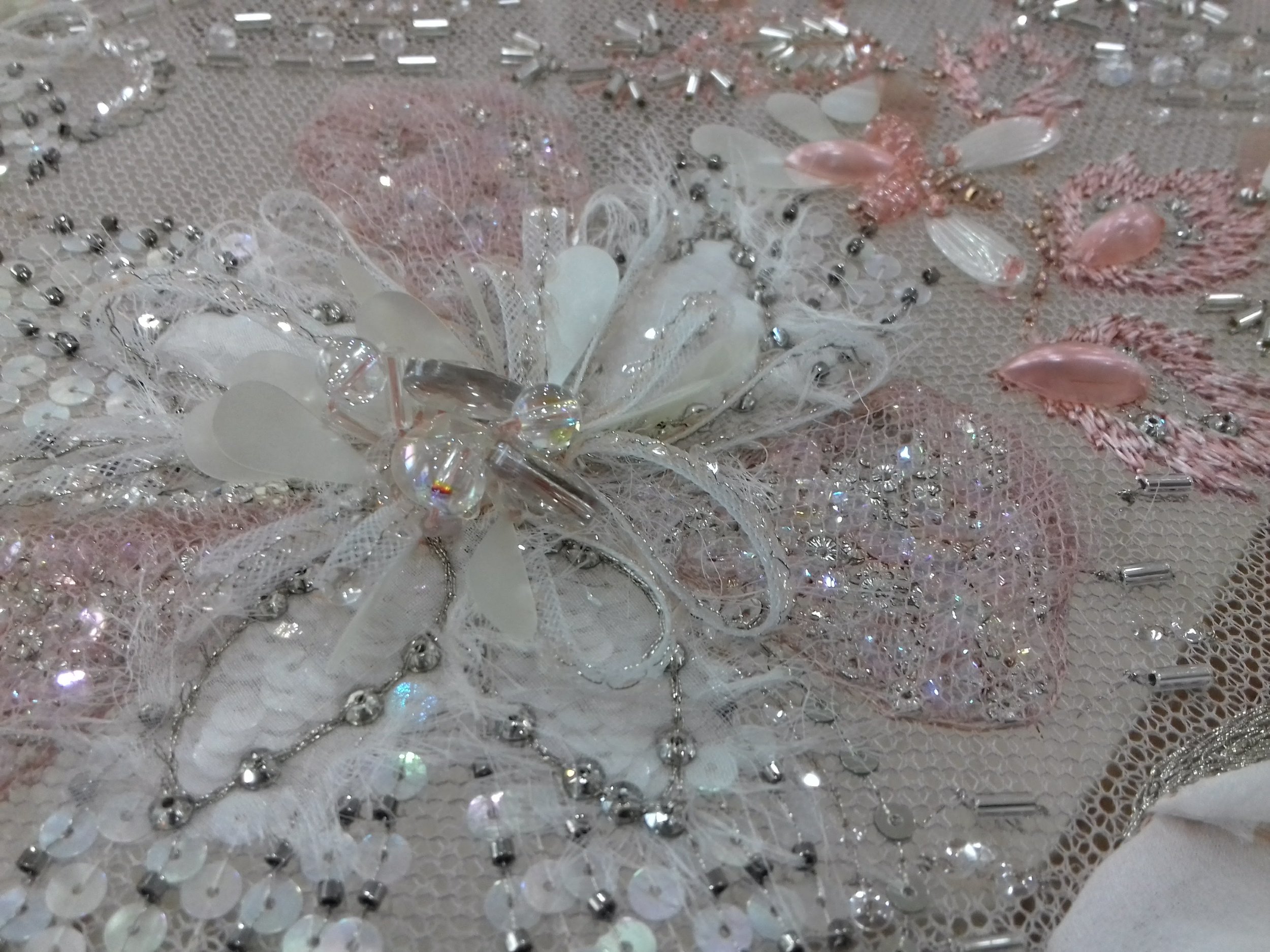
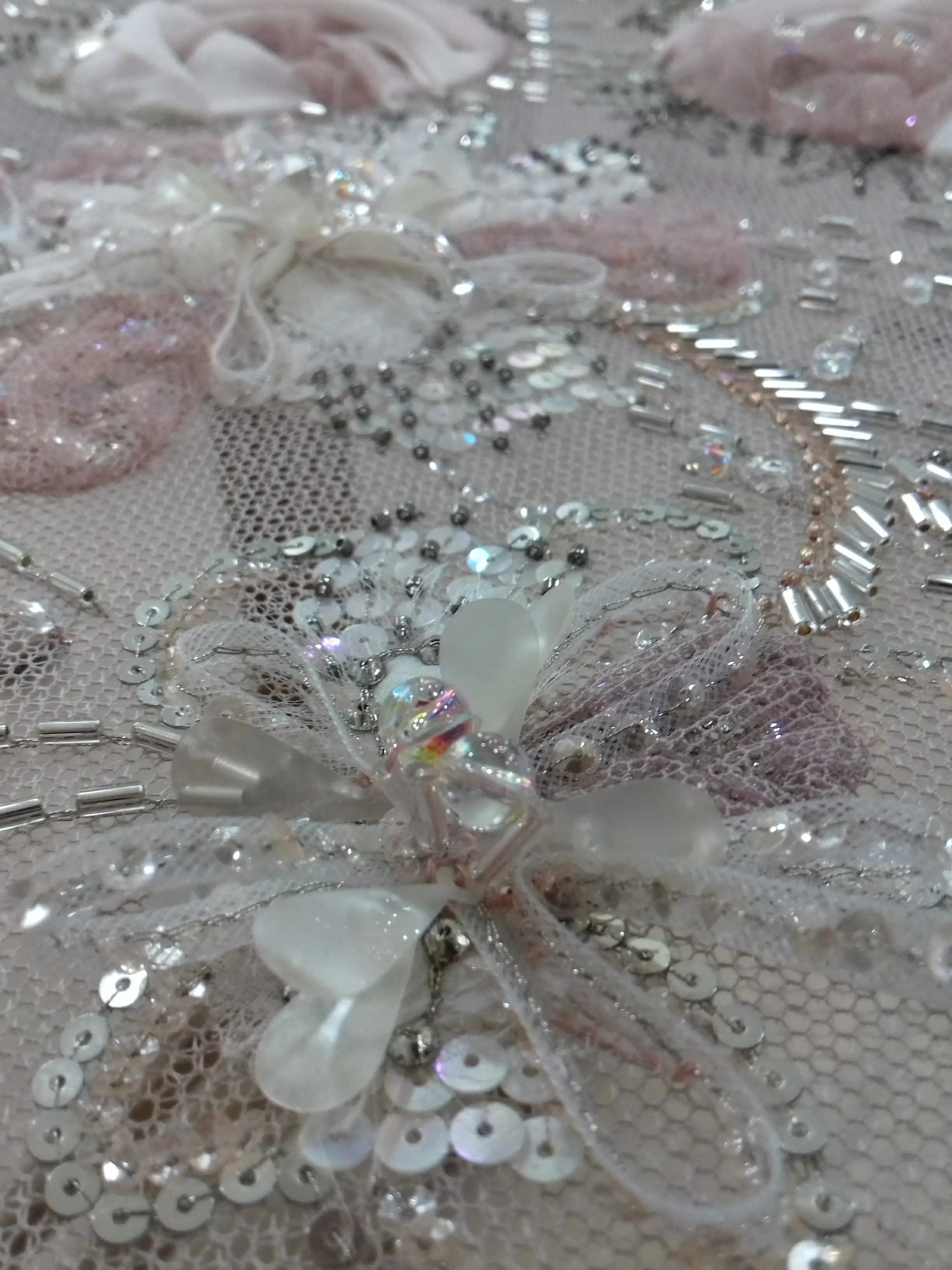
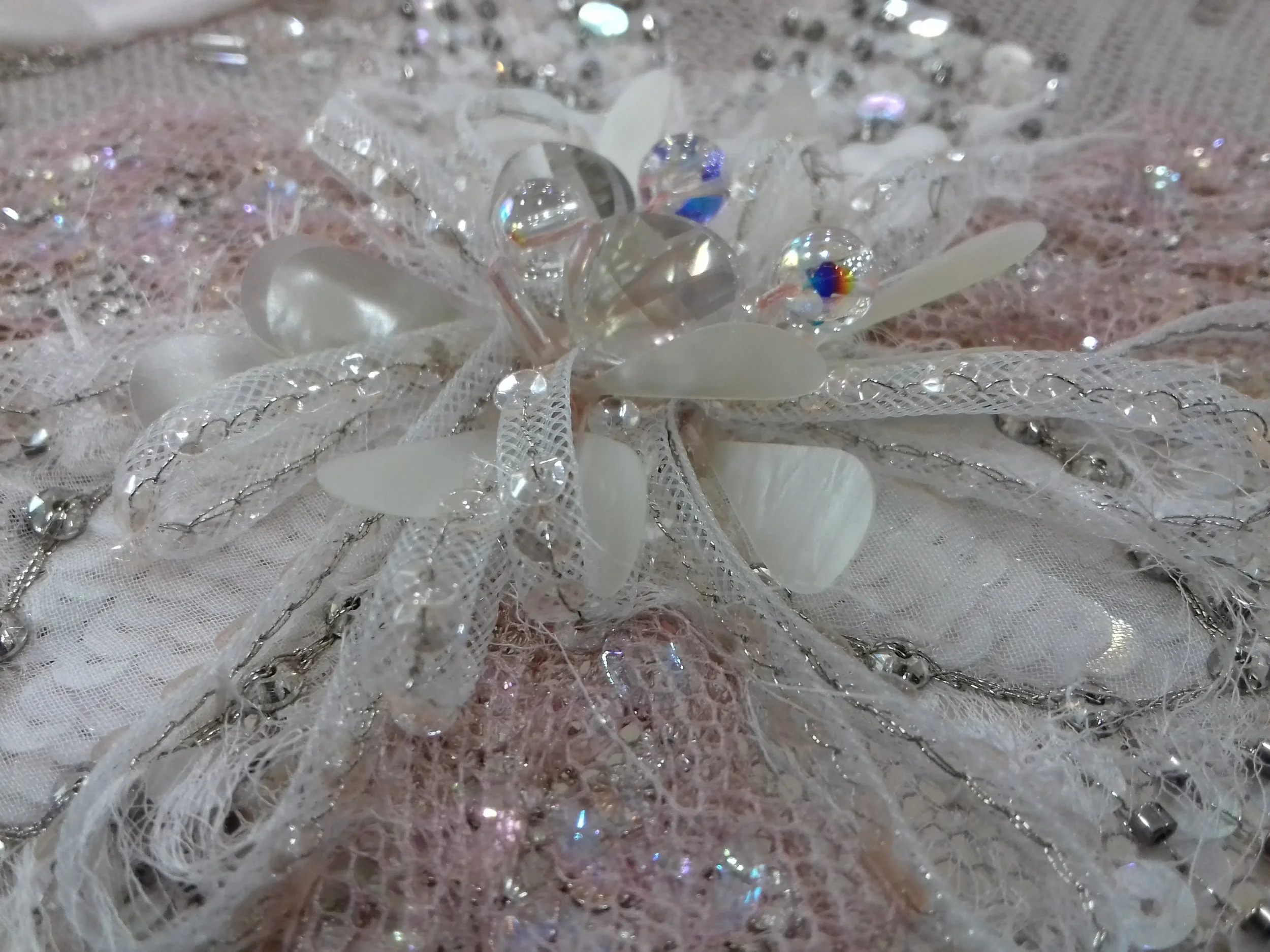
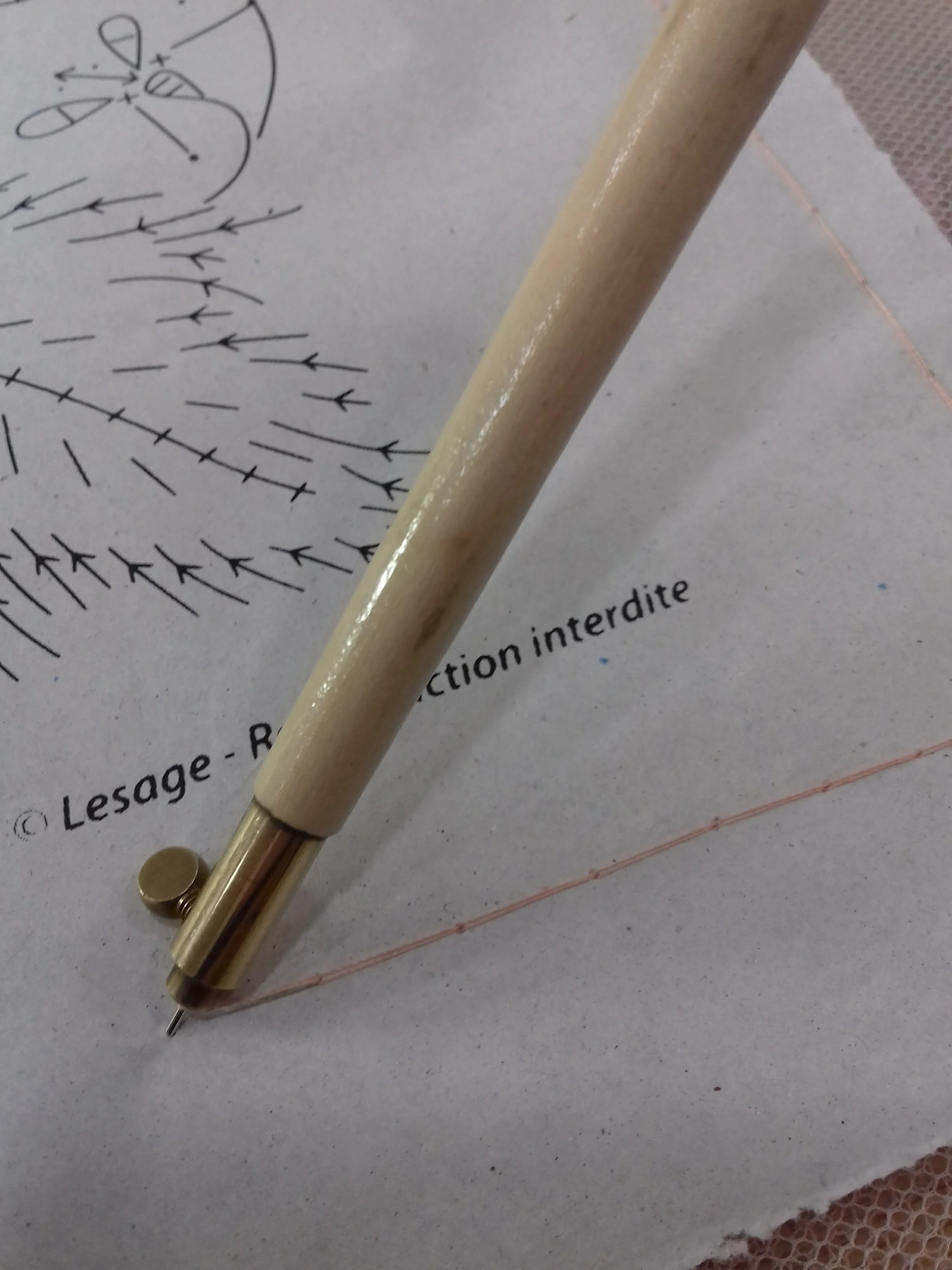
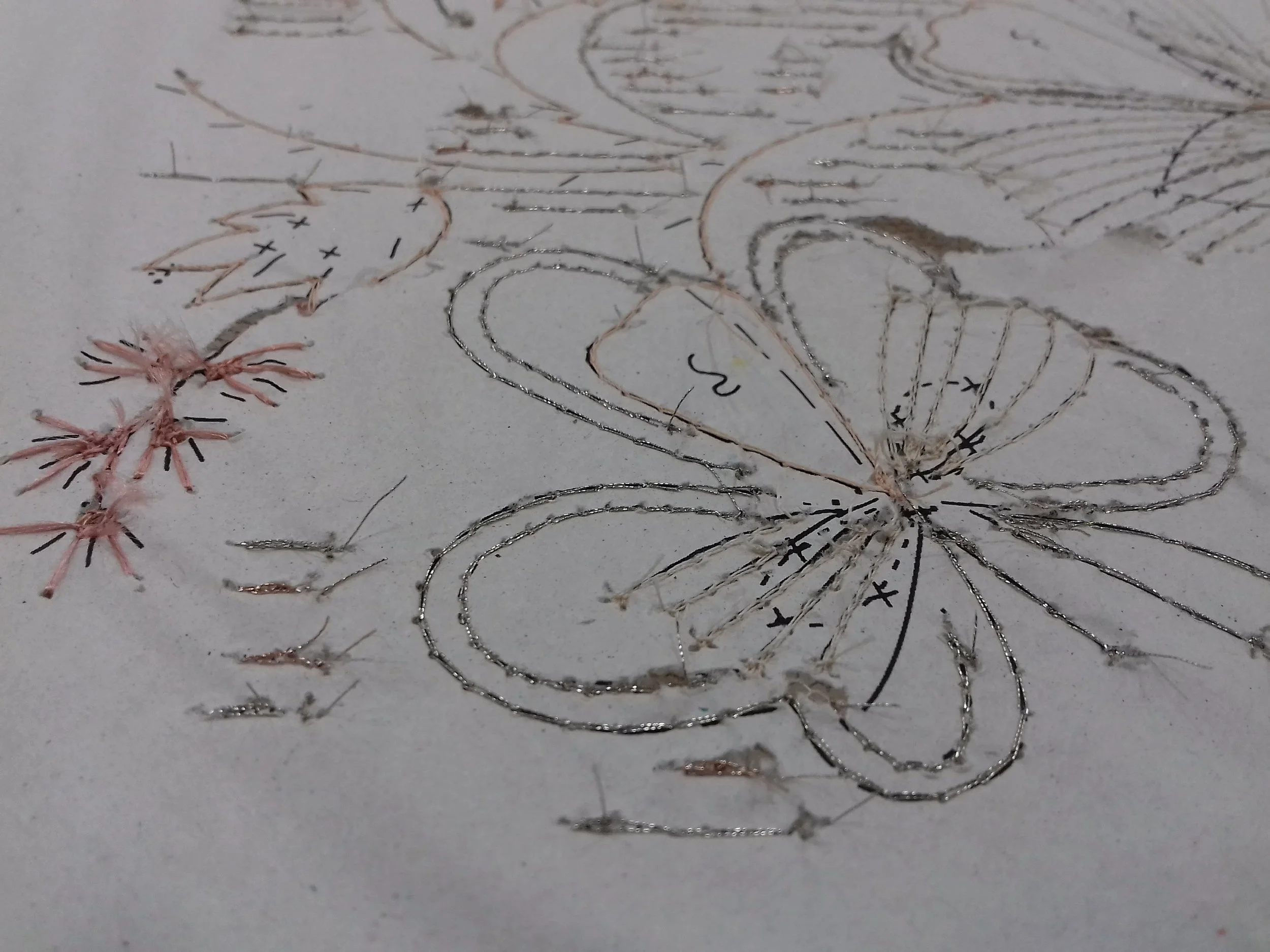
I worried for the foliage section with a double thickness of silk thread in harmonious tones of pink but there was no need. Using my largest crochet hook to catch the threads there were no angry knots of frayed thread and I breathed a sigh of relief when it was finished. Swarovski jewels and vermicelli metallic thread designs were added to the centres. And the finishing touches were lovely rhodoïd sequins in pearlescent whites and pinks added at the final stages, anchored in place with translucent éclats and beads.
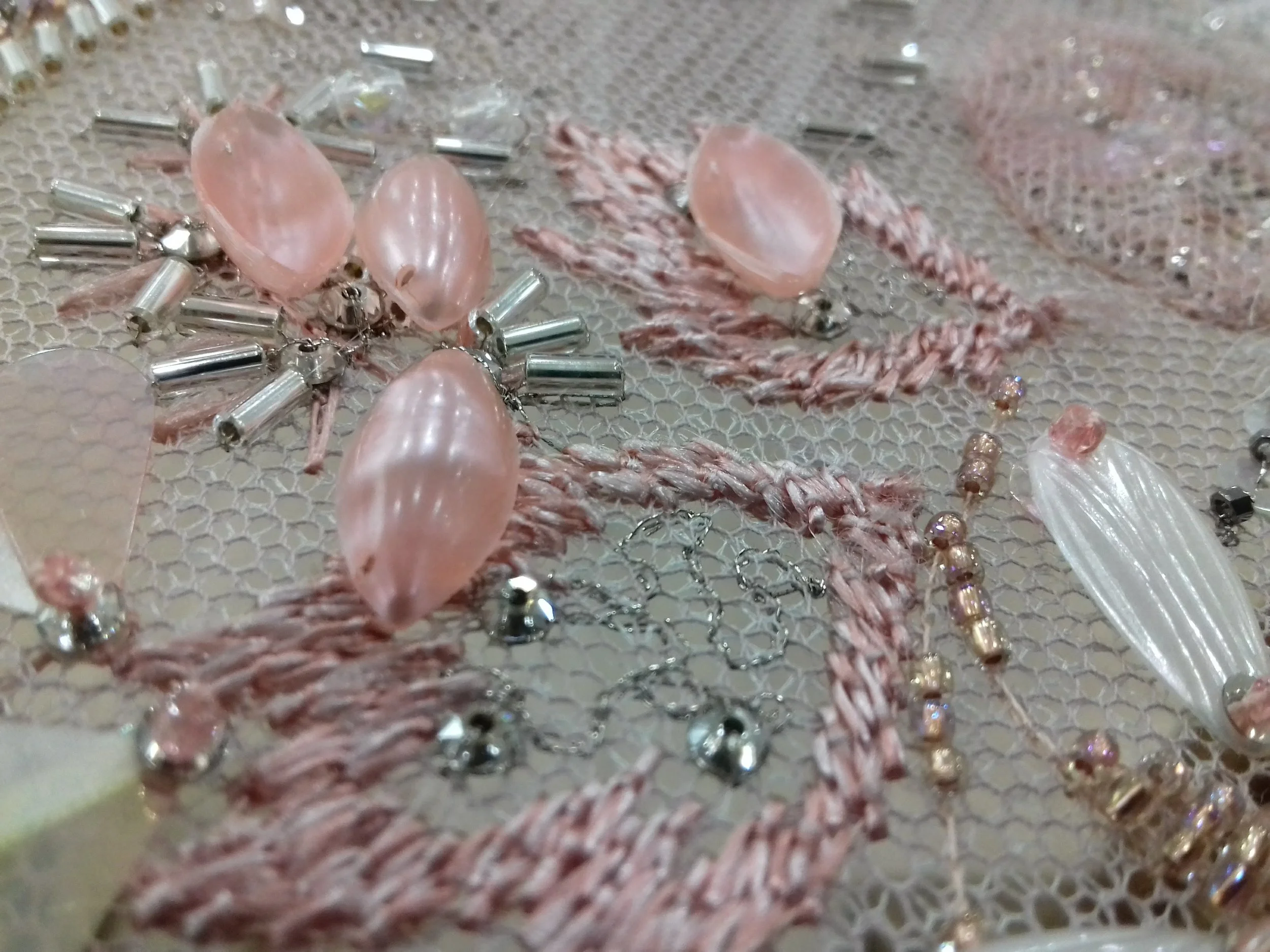
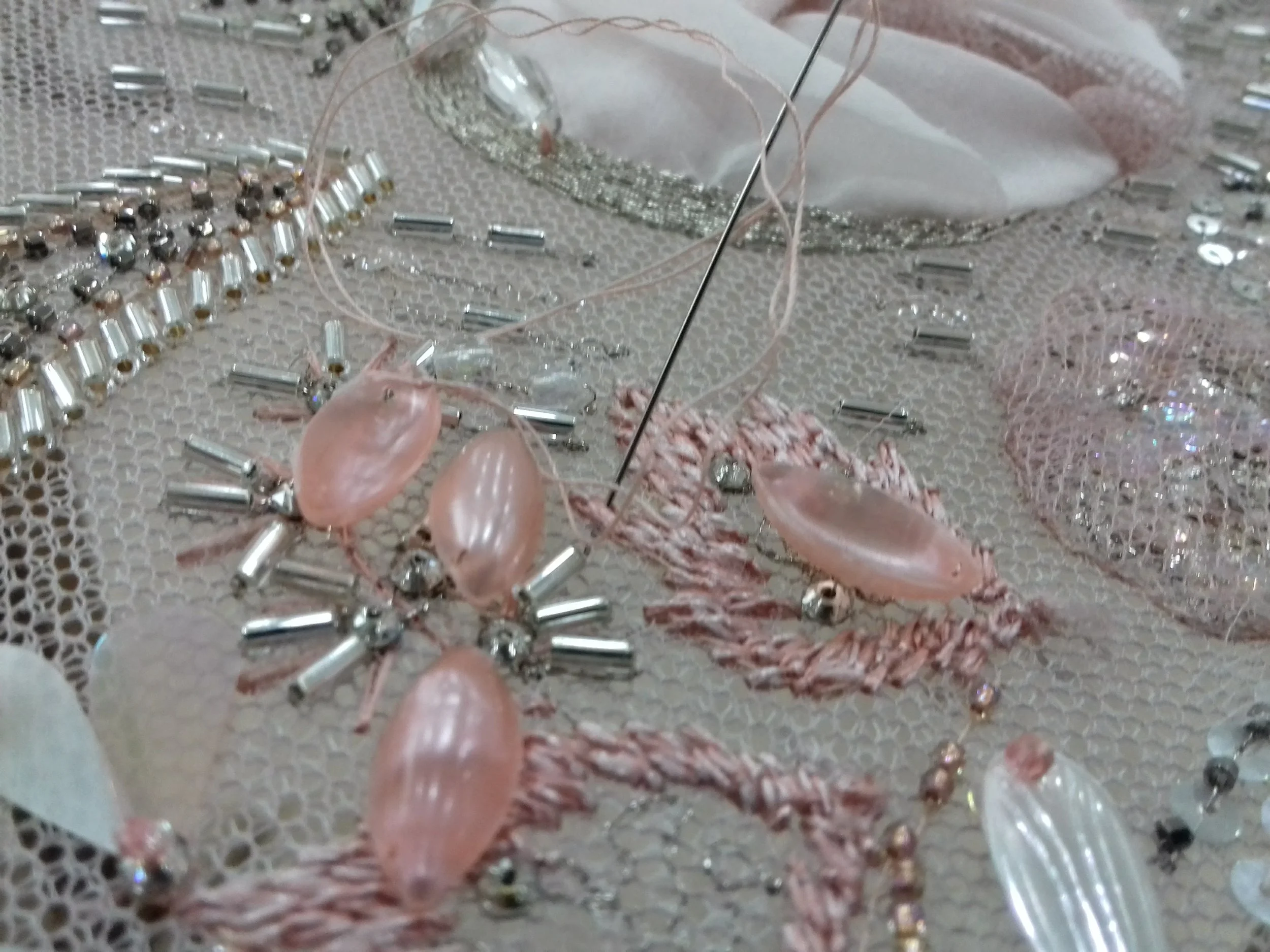
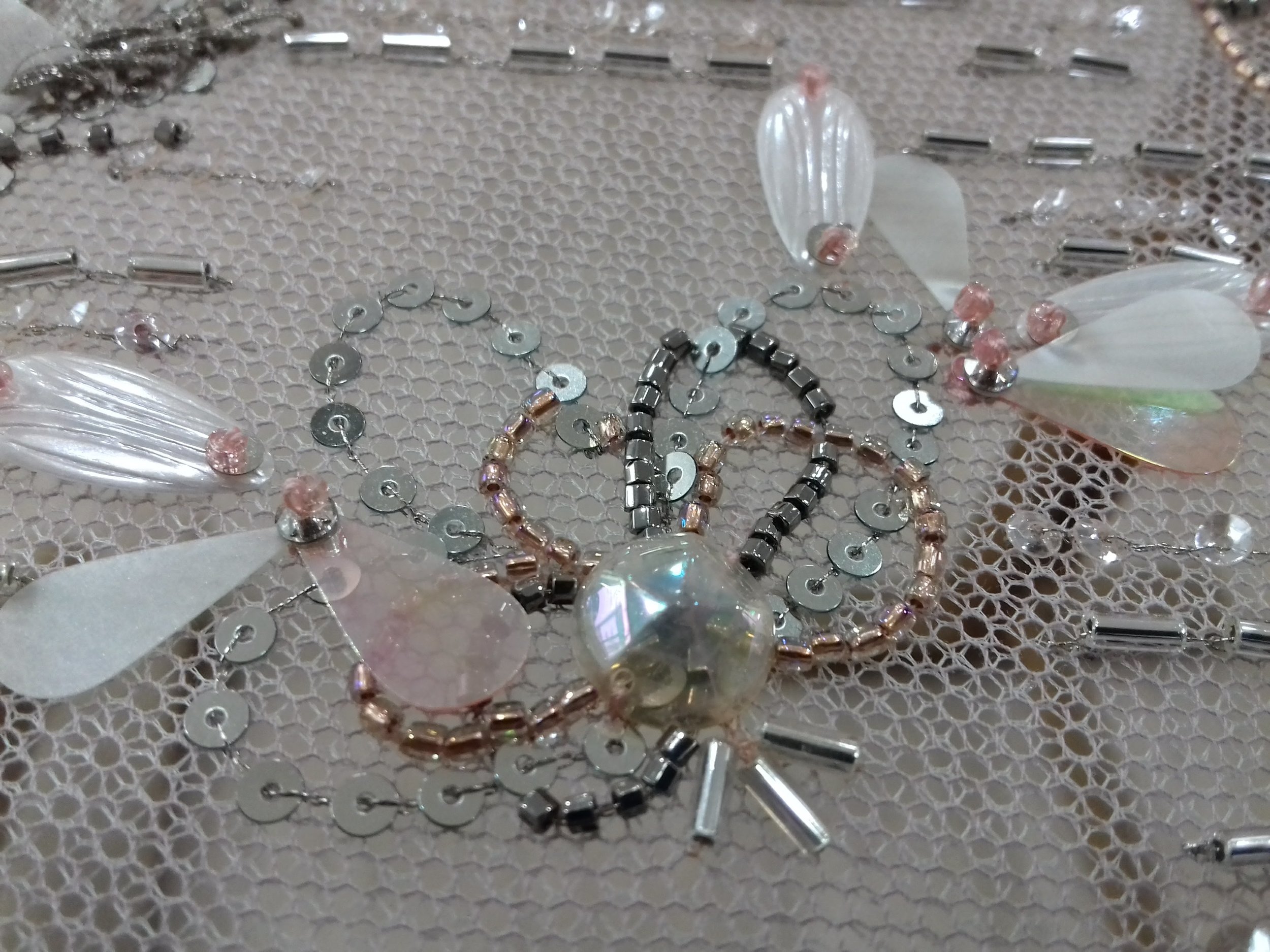
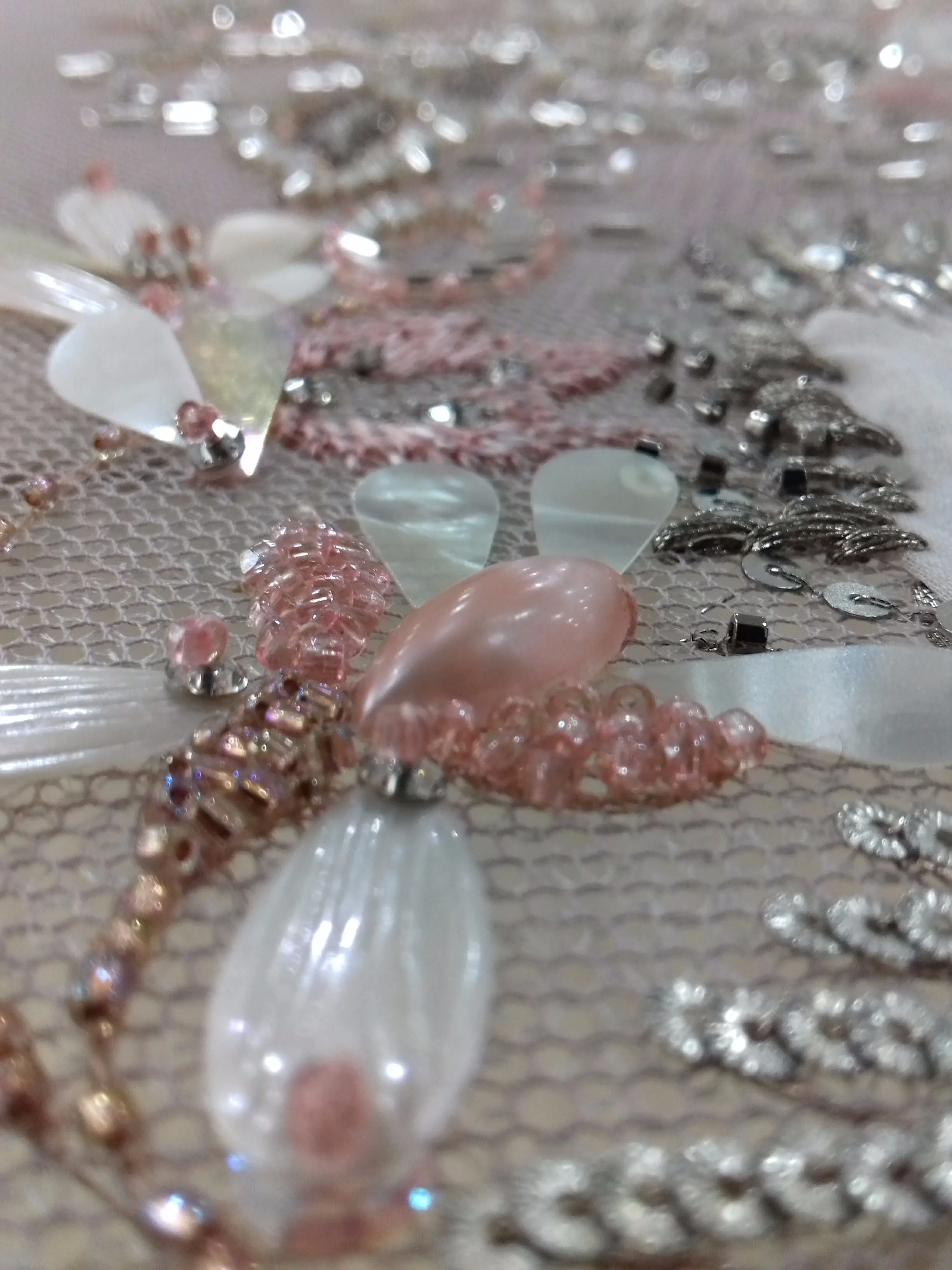
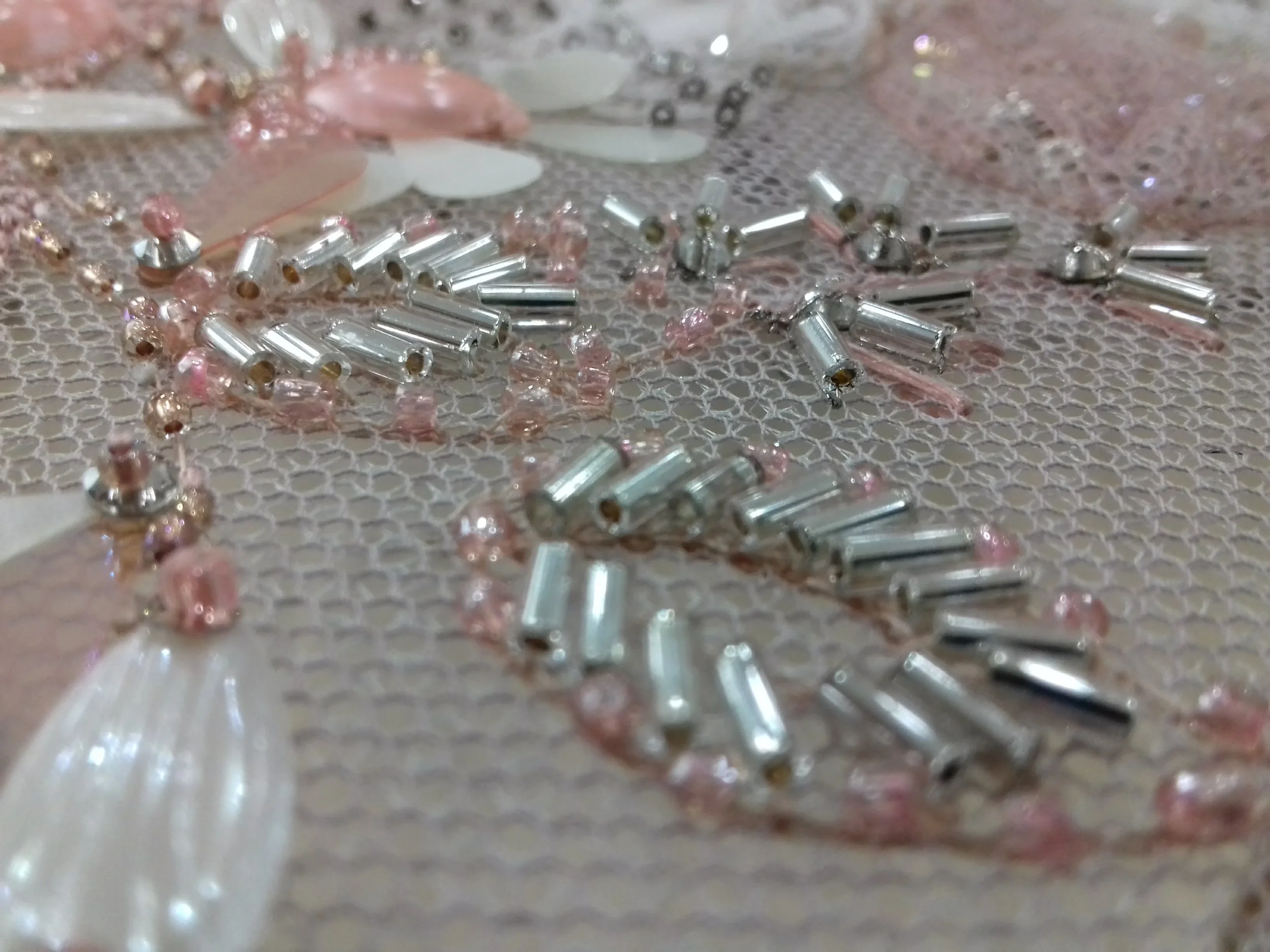
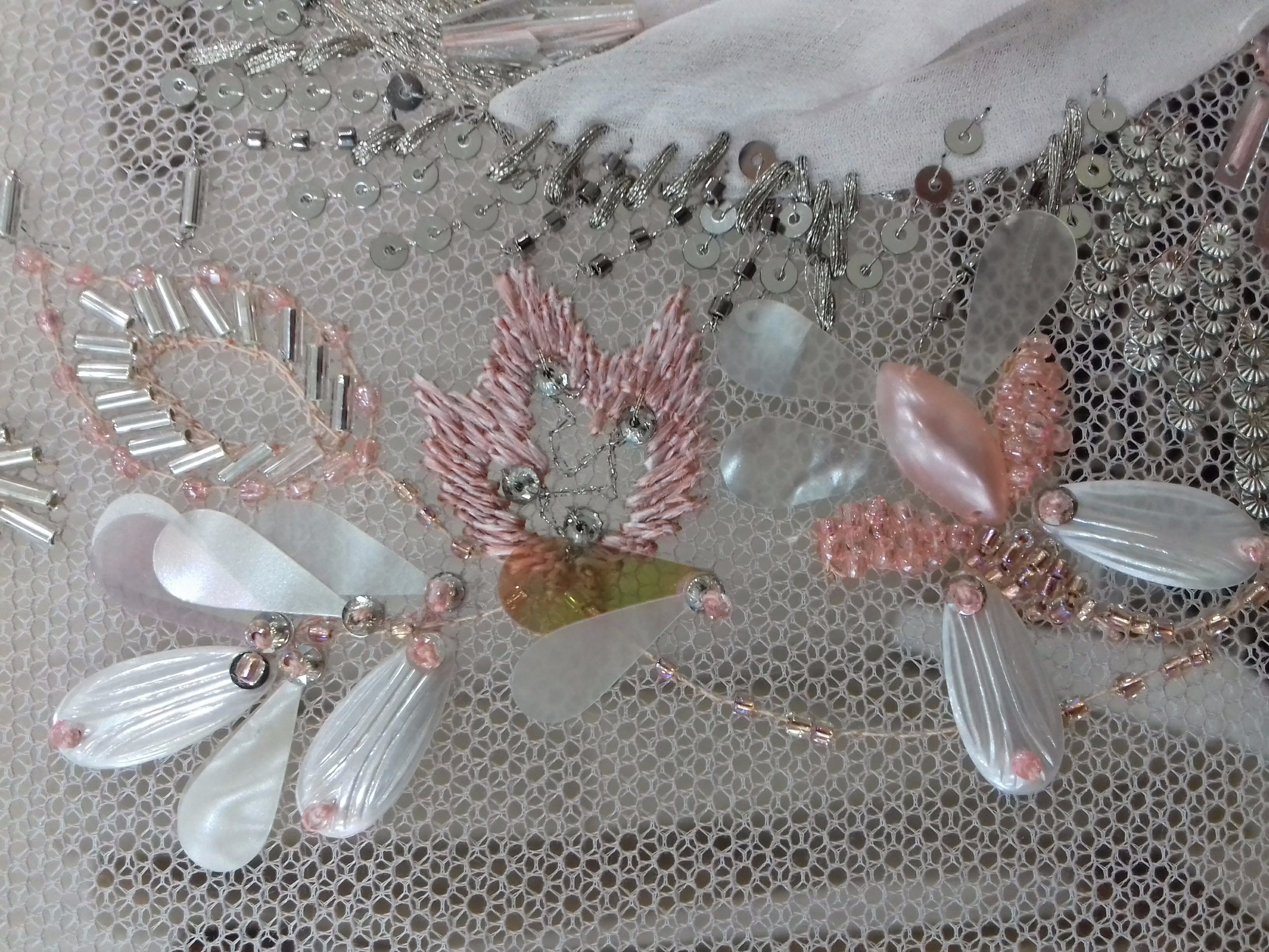
I was delighted that I stayed on to do the Années 50, I loved using all the different sequins and beads and seeing how they add so much texture and depth to an embroidery. The techniques used for fabric manipulation were interesting as well, again simple embellishments that instantly elevate the intricacies of an embroidery.

I said goodbye and thank you to my teachers, it would have been amazing to stay on, to continue learning the techniques and discovering the materials, and they kindly said I could come back anytime. It had been such a long journey to get to this point and for the last time the doors of École Lesage closed behind me. Out on the street I suddenly felt a rush of excitement for what was to come, I was ready for the next adventure but would just need to stock up on my materials first…..
Textile Tours of Paris
Join Rebecca on a tour of Paris’ charming haberdasheries nestled deep in the winding streets of Le Sentier, the city’s historic textile and fashion district. Enjoy a Sunday morning with Rebecca on a Flea Market Tour as she guides you through the labyrinth alleys of Paris’ oldest marché-aux-puces to uncover hidden treasure troves filled with vintage lace, linen, passementerie, golden threads and gossamer lingerie. To find out more visit Textile Tours of Paris.
Quisque iaculis facilisis lacinia. Mauris euismod pellentesque tellus sit amet mollis.