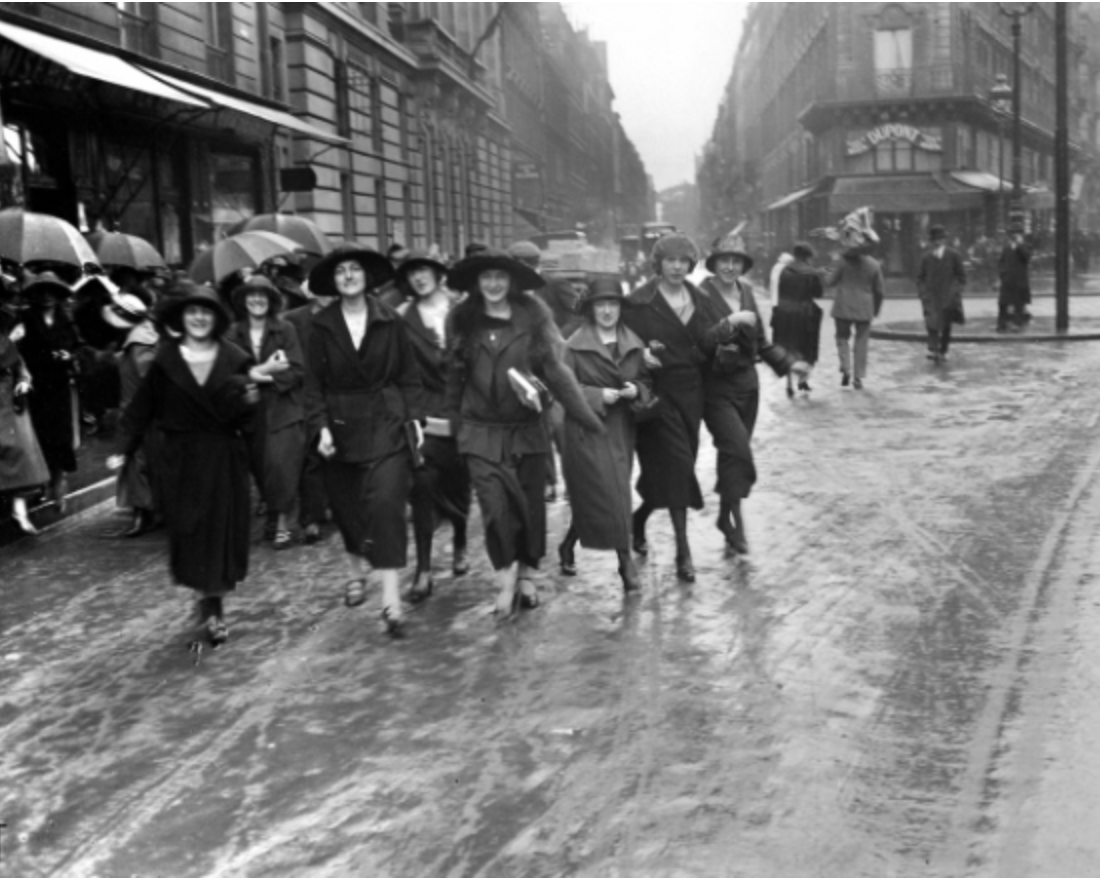
The term Midinette first appeared during the Belle Époque era and it referred to the young women who worked in the luxury fashion houses of Paris. They had their lunch outside the home at midday, often bringing their packed lunches to the Tuileries Gardens or saving up their wages to dine in the surrounding restaurants.
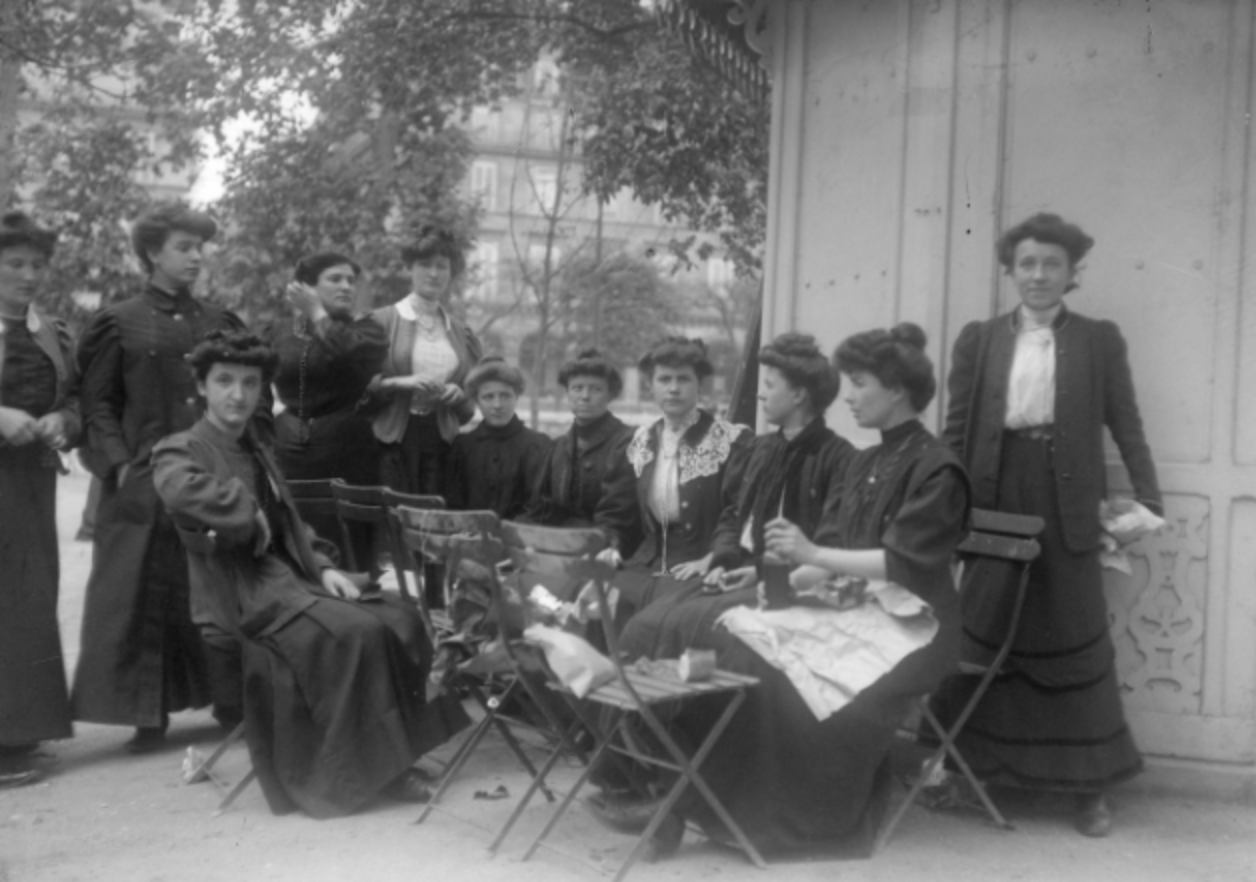
The Midinettes were mostly from Montmartre and Belleville, the working class areas of Paris and they began their training at 12 or 13 years of age. According to a labour inspection survey in 1902 there were 172,000 needleworkers in Paris alone, the majority female. Surrounded by exquisite luxury fashions and materials all day, they were admired for their own stylish appearance using their savoir-faire to accentuate their outfits despite their limited means.
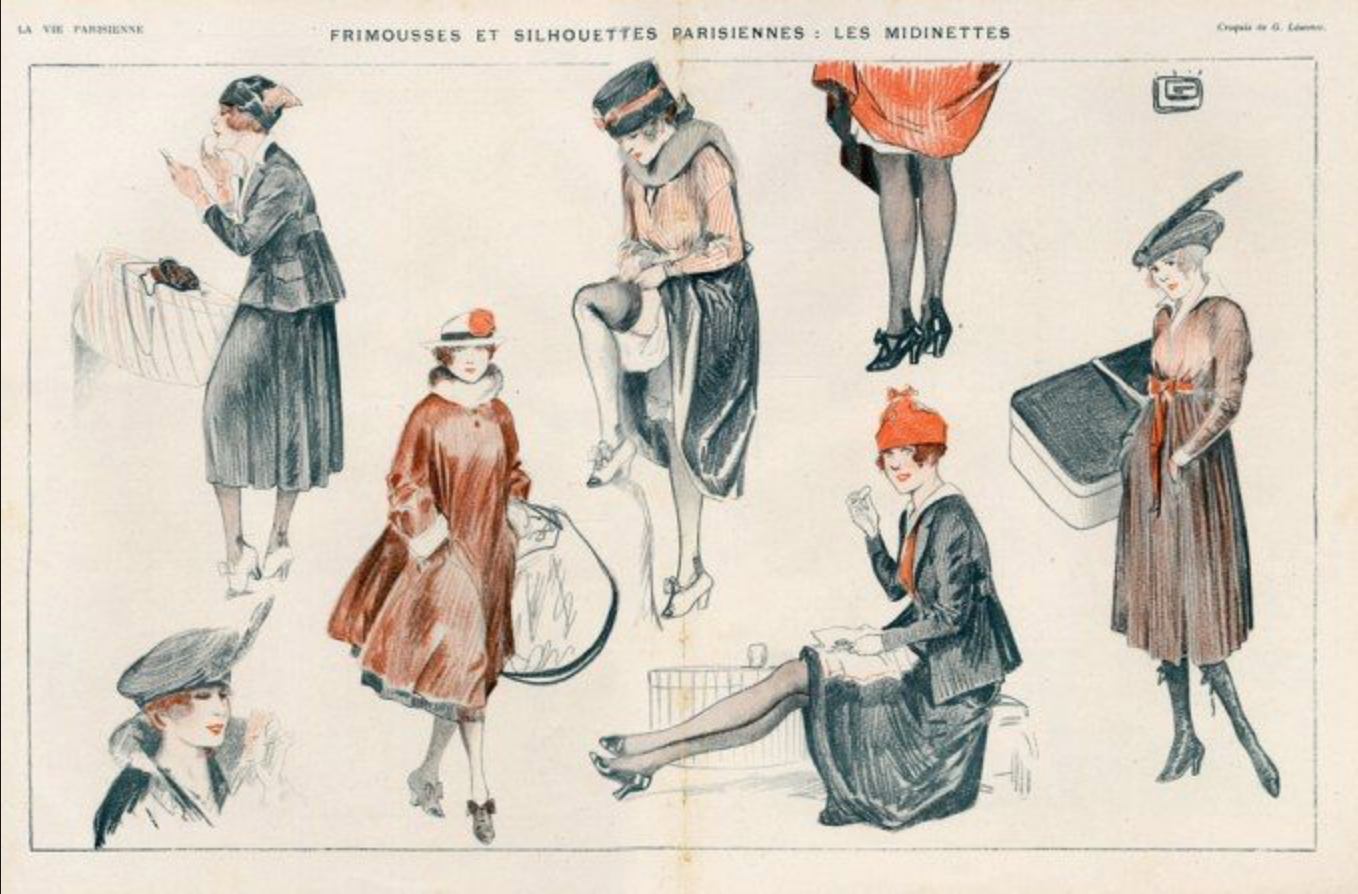
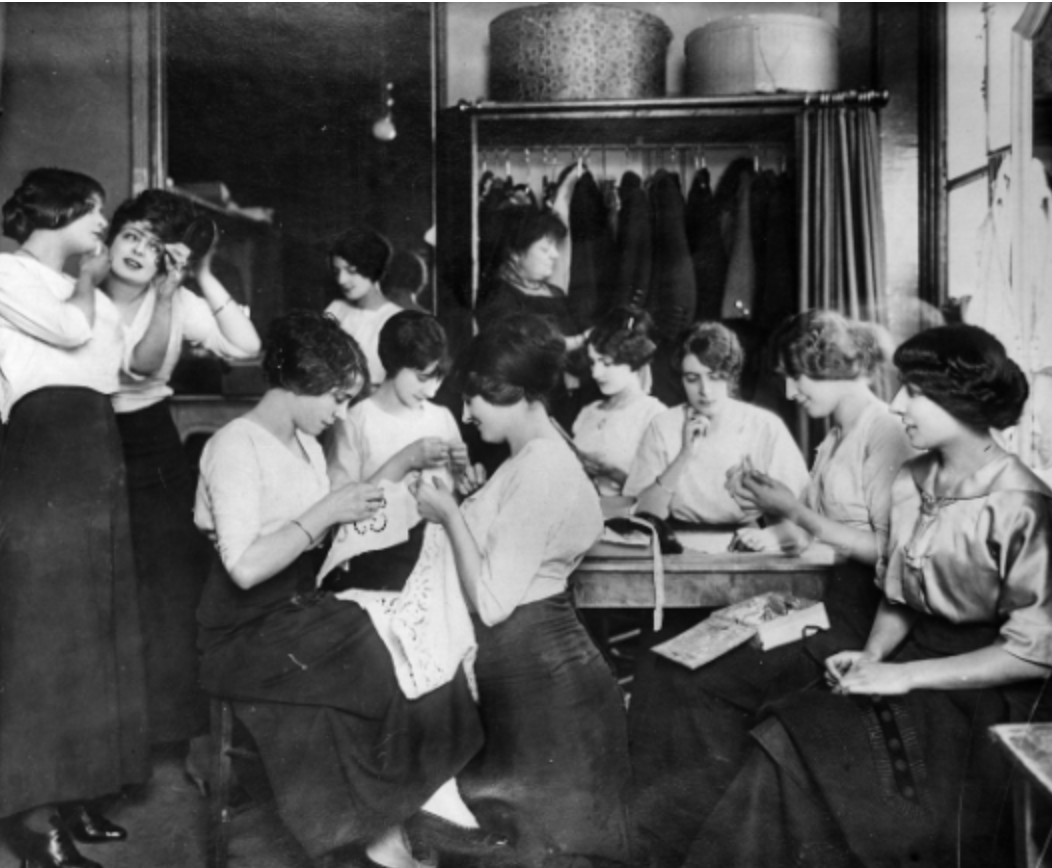
There were serious concerns for the Midinettes amongst the social reformers of the day. They were exposed to dangers in the workplace such as the temptations of luxurious items and lifestyles they could neither afford nor access. The most serious danger for the Midinettes was encountered in the restaurants they frequented due to their susceptibility to falling in love very quickly and their ambitions of marrying above their social class which left them exposed to moral temptation. And so social reformers made efforts to save the virtue of Parisienne Midinettes, Telephone Operators and Administration Employees by opening several female-only working-class restaurants in the area to ensure an affordable meal free of added temptations.
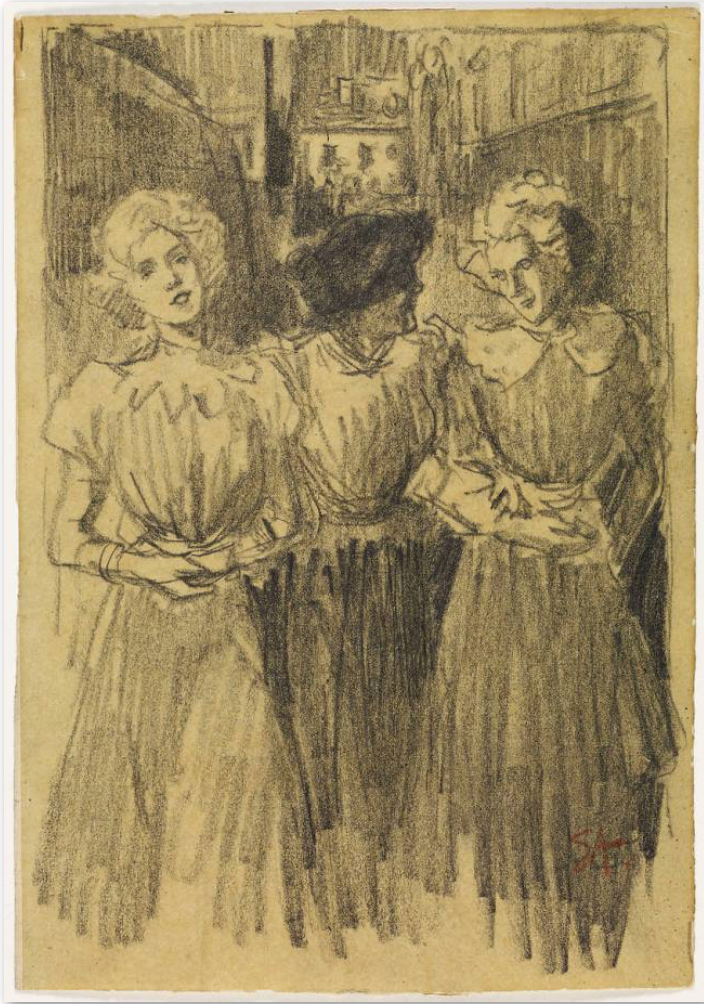
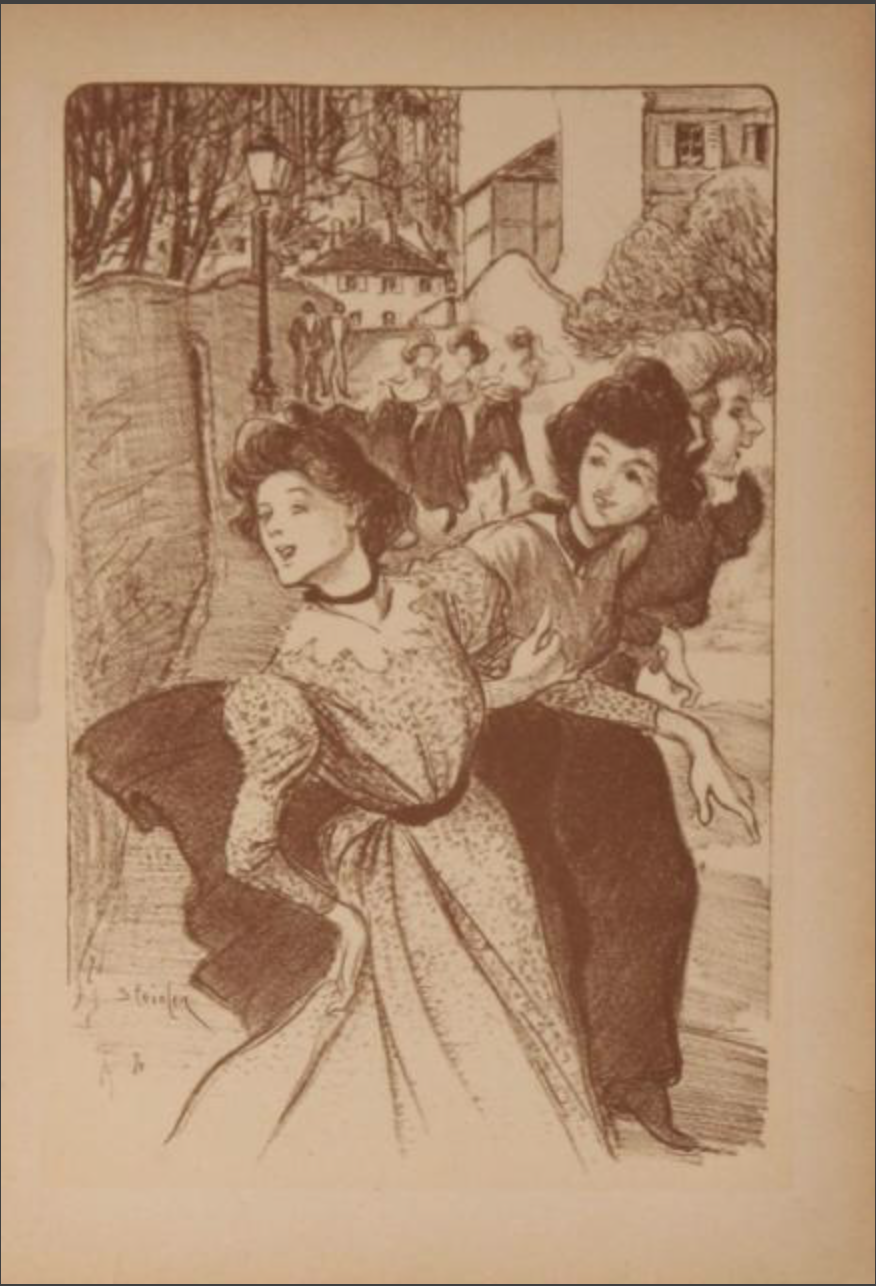
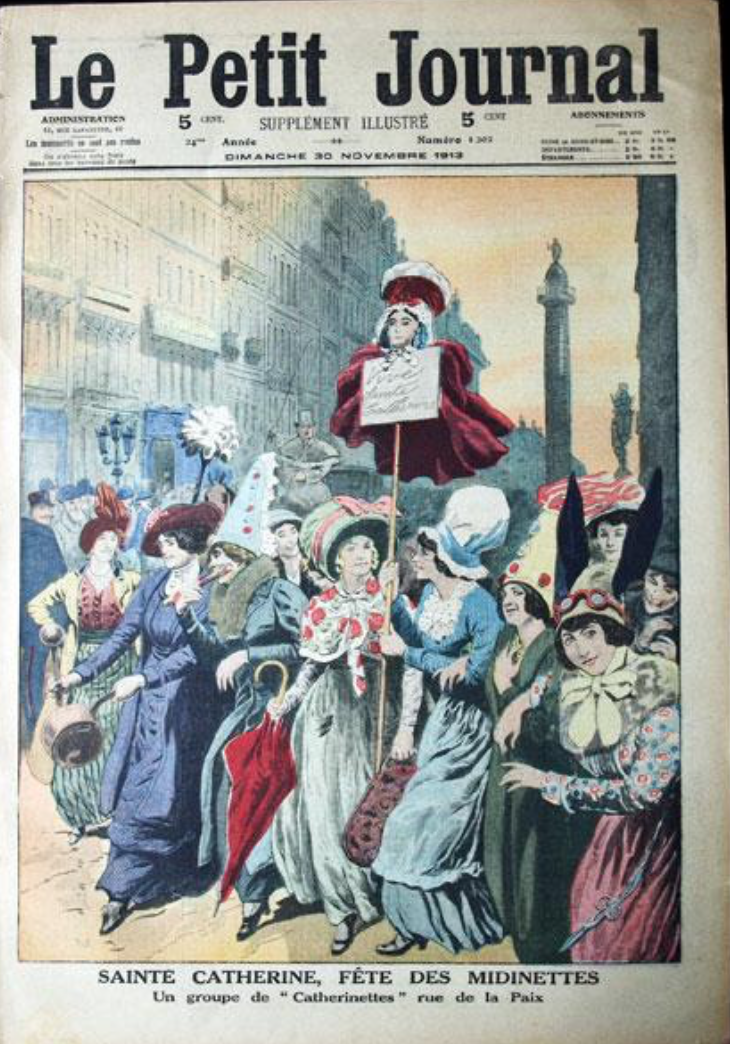
The Midinettes took St. Catherine as their patron saint and she is still celebrated in Haute Couture maisons and ateliers on the 25th of November. Single women who are 25 years old are given a hat decorated with green and yellow by their colleagues and sometimes gifts from their supervisors in the hopes of a prompt marriage. A statue of St. Catherine still stands watch in Sentier, the fashion district of Paris since the 19th century.
And between looking for a husband the Midinettes gave France the weekend! 20,000 Midinettes took to the streets of Paris, marching from the Champs-Élysées along the Grand Boulevard in 1917. Forced to work a half day on Saturdays, they were protesting for a 5 day week like the English model and it was promptly granted by the Chambre Syndicale de la Couture.
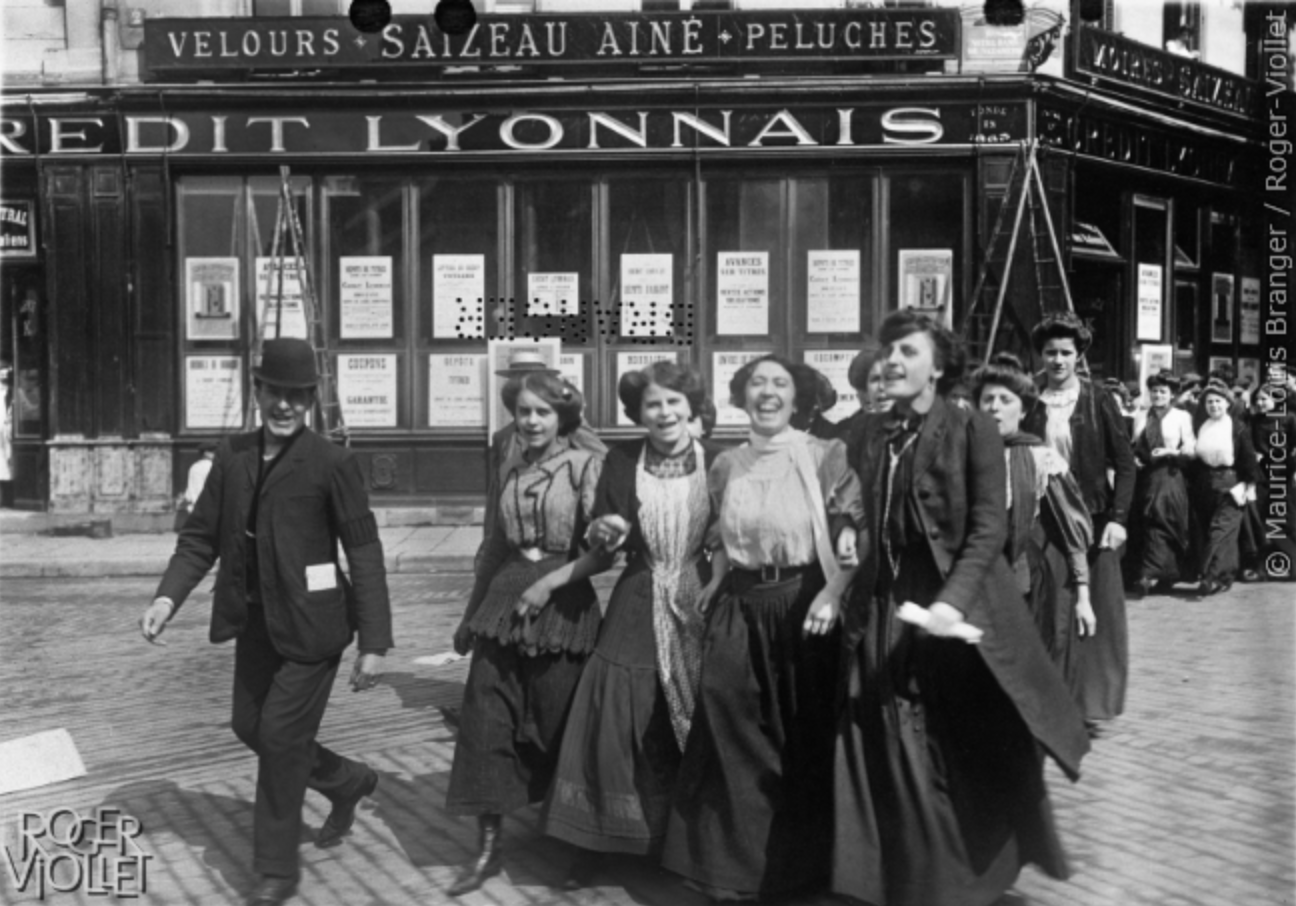
I had decided to join the ranks of the Midinettes, perhaps not in the search for a husband or labour rights, but definitely in working in the Haute Couture maisons and ateliers of Paris. I had previously asked the teachers at École Lesage what the best approach would be to find work and they mentioned several recruitment agencies for me to register with. I was amazed and encouraged that there were several recruitment agencies for Haute Couture embroiderers! I took one more shorter course at École Lesage that focused on working with tulle….
Textile Tours of Paris
Join Rebecca on a tour of Paris’ charming haberdasheries nestled deep in the winding streets of Le Sentier, the city’s historic textile and fashion district. Enjoy a Sunday morning with Rebecca on a Flea Market Tour as she guides you through the labyrinth alleys of Paris’ oldest marché-aux-puces to uncover hidden treasure troves filled with vintage lace, linen, passementerie, golden threads and gossamer lingerie. To find out more visit Textile Tours of Paris.
Further Reading
Les Midinettes Révolutionnaires, Anne-Marie Bouchard
Les midinettes parisiennes à la Belle Époque : bon goût ou mauvais genre?, Anaïs Albert
Les midinettes, avant-garde oubliée du prolétariat, Claude Didry
MAIS D’OÙ VIENNENT LES MIDINETTES?, Sarah Pons
Founding Father of Haute Couture: Charles Frederick Worth, Dressed the History of Fashion
Quisque iaculis facilisis lacinia. Mauris euismod pellentesque tellus sit amet mollis.